
 CN
CNInterpretation of the application policy for specialization and innovation
As an important force in the industrial chain, specialized, special and innovative enterprises have received strong support from governments at all levels in recent years. Many small and medium-sized enterprises want to apply for specialized, specialized, special and innovative qualifications, but they are not familiar with relevant policies and application processes and have gone through many detours. Today, we will start from the latest policy requirements and give you a comprehensive interpretation of the relevant content of the application for specialization, specialization, and innovation. Especially for enterprises in Shanghai and the Yangtze River Delta region, they can focus on local support policies.
First of all, let's take a look at the background of the specialized, specialized, specialized and innovative policy. The state has launched a specialized, specialized and innovative enterprise cultivation plan. The purpose is to guide small and medium-sized enterprises to follow the path of professional, refined, characteristic and novel development, and enhance the core competitiveness of small and medium-sized enterprises., make up for the shortcomings of the industrial chain and supply chain. At present, my country has cultivated more than 90,000 specialized, specialized and new small and medium-sized enterprises, including more than 14,000 specialized, specialized and new "little giant" enterprises. These enterprises all have core technologies in their respective segments and are promoting high-quality manufacturing. An important force for development. For enterprises, those who are evaluated for specialization and innovation can not only receive a one-time cash subsidy, but also enjoy a series of policy dividends such as tax exemptions, additional deductions for R & D expenses, financing support, and government procurement priority, which is important for the enterprise's brand improvement and Market expansion is also very helpful.
Next, let's talk in detail about the core requirements for application. The first is the requirement for gradient cultivation. Enterprises must first enter the innovative small and medium-sized enterprise database before they can apply for specialized and innovative small and medium-sized enterprises. We have also mentioned before the warehousing conditions for innovative small and medium-sized enterprises, mainly in three aspects: basic conditions, innovation capabilities and growth. In terms of basic conditions, enterprises need to be registered in China for 2 years, which belongs to the classification standard for small and medium-sized enterprises. There have been no major violations of laws and regulations in the past three years. In terms of innovation capabilities, you need to have at least 1 valid intellectual property related to the main business, or have received scientific and technological awards at or above the provincial level in the past three years, or have participated in the formulation of relevant standards. In terms of growth, R & D expenses accounted for no less than 1% of revenue in the previous year, or the total R & D expenses were no less than 1 million yuan. At the same time, revenue in the previous year was no less than 10 million yuan, or equity financing in the past two years exceeded 20 million yuan. Here, we should remind everyone that the accounting of R & D expenses must be standardized and calculated in accordance with the collection range of R & D expenses stipulated by the state. It is best to have a special audit report, otherwise it will be easily questioned during the review.
The application conditions for specialized and innovative small and medium-sized enterprises have been improved on the basis of innovative small and medium-sized enterprises. First, they have been engaged in market segments for more than 2 years, indicating that the enterprise has a certain accumulation in this field. In terms of R & D expenses, the total R & D expenses in the previous year are required to be no less than 1 million yuan, and account for no less than 2% of revenue, which is 1 percentage point higher than the warehousing requirement. Intellectual property requires at least 2 valid intellectual property rights related to the main business, or one of the following conditions is met. It has received national and provincial science and technology awards in the past three years, participated in the formulation of international standards, national standards, and industry standards, and has R & D institutions at or above the provincial and ministerial levels, and has more than 50 million yuan in new equity financing in the past two years. In addition, there are also some differentiated requirements in various places. Taking Shanghai as an example, the core products of enterprises are required to belong to the three leading industries and six key industrial areas that Shanghai City focuses on developing, namely integrated circuits, biomedicine, and artificial intelligence, as well as the six key industries of electronic information, life and health, automobiles, high-end equipment, advanced materials, and fashion consumer goods. Enterprises that meet these fields will receive points during the review. Other regions in the Yangtze River Delta also have their own key supporting industry directions. Enterprises can understand the local industry orientation in advance and improve the success rate of applications.
In terms of the application process, the "National Gradient Cultivation Platform for Small and Medium-sized Enterprises" is uniformly used across the country for online application. The specific process is divided into five links: registration, application for innovative small and medium-sized enterprises, application for specialization and innovation, material uploading, and review and publicity. When registering, you need to fill in the real information of the company and complete real-name certification. After that, you can apply for innovative small and medium-sized enterprises. You can fill in relevant information according to the system prompts, upload supporting materials, and review them by the local industry and information technology department. After the review, you will be put into the warehouse. After warehousing, specialized, special and new declarations can be made within the declaration window. More enterprise information needs to be supplemented and filled in, including market segment positioning, core technology advantages, R & D team status, and industrial chain supporting status. The supporting materials uploaded must be true and effective. All copies must be stamped with the official seal of the company, and the scanned copies must be clearly identifiable. After submission, the Ministry of Industry and Information Technology will conduct a preliminary review and review, and conduct on-site verification if necessary. After approval, it will be publicized. If there is no objection to the publicity, it will be identified as a specialized, special and new small and medium-sized enterprise.
Regarding the application time, the application window period varies slightly from place to place. Generally speaking, the first half of each year is from March to May and the second half of the year is the centralized application period. Taking Shanghai as an example, the application time in 2025 is from April 10 in the first half of the year. From May 10 to May 10, and from September 5 to October 10 in the second half of the year, enterprises need to pay attention to the notices from the local Ministry of Industry and Information Technology in advance and arrange the application time reasonably. The review cycle is generally 2-3 months, and the publicity period is 7 working days. After the publicity is over, a formal recognition list will be released.
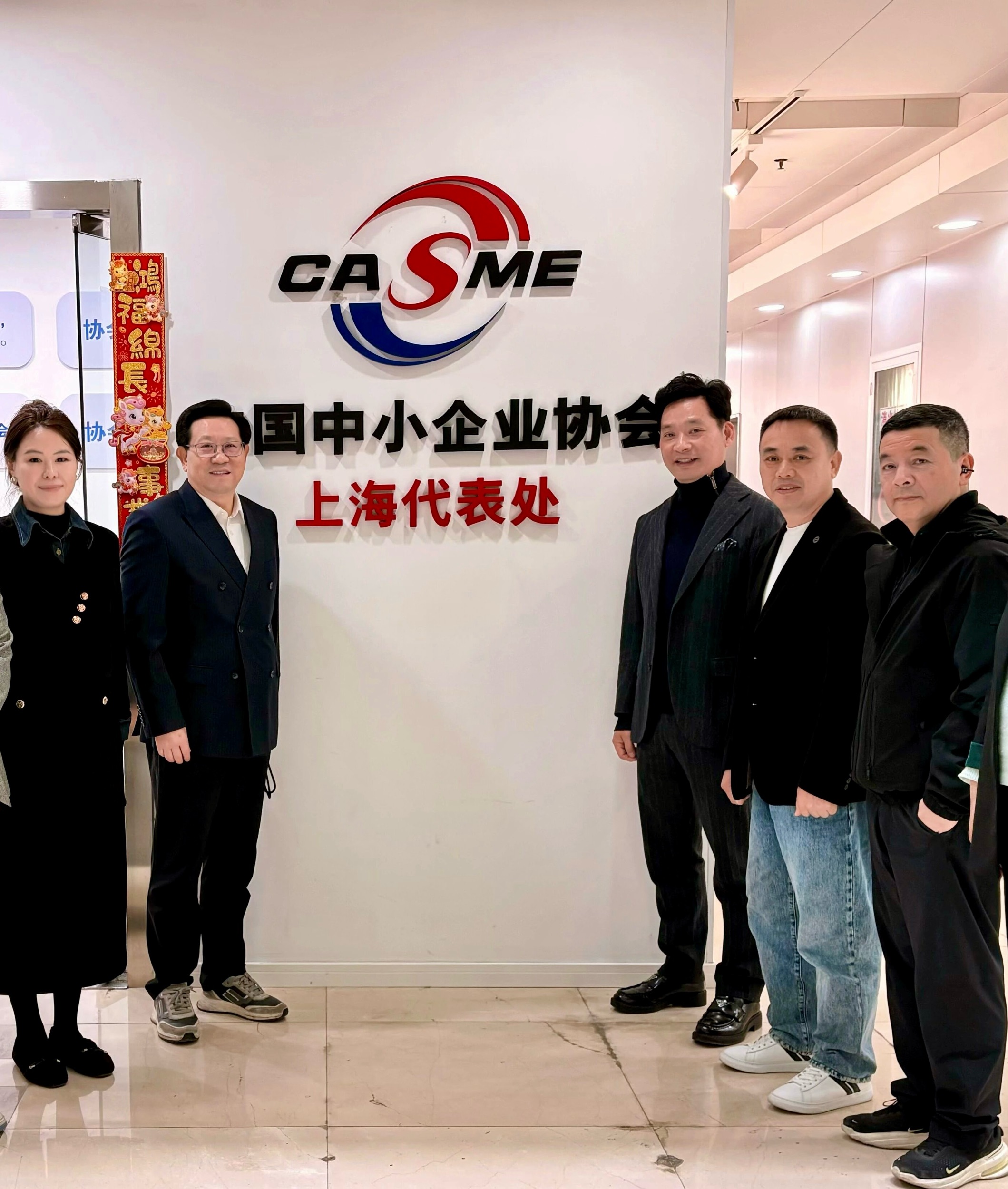
Many companies encounter various problems during the application process, such as not knowing how to prove market share in segments, not knowing how to collect research and development expenses, and not knowing how to lay out intellectual property rights. In response to these problems, the Shanghai Representative Office of the China Small and Medium Enterprises Association can provide enterprises with a full range of services. As a national-level public service demonstration platform for small and medium-sized enterprises, we have more than 30 expert think tanks in various fields and have established strategic cooperative relationships with 28 high-quality institutions such as Baidu AI and Guangfa Bank Shanghai Branch, which can provide enterprises with full-process services such as policy interpretation, guidance on R & D expense collection, suggestions on intellectual property layout, and guidance on application materials. We have held more than 100 training and docking activities related to specialization, specialization and innovation, serving more than 5000 companies in Shanghai and the Yangtze River Delta region, helping many companies successfully pass the specialization, specialization and innovation certification and enjoy policy dividends.
For companies that want to apply for specialization and innovation, we have several suggestions. The first is to plan in advance, start preparations at least half a year in advance, sort out the company's core elements such as intellectual property rights, R & D investment, and financial data, and make up for shortcomings in a timely manner. The second is to standardize management, especially the accounting of R & D expenses. A special R & D ledger must be established to collect R & D expenses according to requirements to avoid financial irregularities affecting declarations. The third is to pay attention to local policies. Different regions have slightly different support priorities and application requirements. It is necessary to keep abreast of the latest local policies and prepare application materials in a targeted manner. The fourth is to seek professional help. If the company is not familiar with the policy or does not have a dedicated application team, it can seek help from a professional service agency to improve the application efficiency and pass rate.
Specialized, specialized and new qualifications are of great significance to the development of small and medium-sized enterprises. They can not only bring tangible policy incentives, but also help enterprises improve their internal management levels and enhance their core competitiveness. If you have other questions about the application of specialization, specialization, and new products, you can consult the Shanghai Representative Office of the China Small and Medium-sized Enterprises Association. We will provide you with professional guidance and services to help the company develop with high quality.
First of all, let's take a look at the background of the specialized, specialized, specialized and innovative policy. The state has launched a specialized, specialized and innovative enterprise cultivation plan. The purpose is to guide small and medium-sized enterprises to follow the path of professional, refined, characteristic and novel development, and enhance the core competitiveness of small and medium-sized enterprises., make up for the shortcomings of the industrial chain and supply chain. At present, my country has cultivated more than 90,000 specialized, specialized and new small and medium-sized enterprises, including more than 14,000 specialized, specialized and new "little giant" enterprises. These enterprises all have core technologies in their respective segments and are promoting high-quality manufacturing. An important force for development. For enterprises, those who are evaluated for specialization and innovation can not only receive a one-time cash subsidy, but also enjoy a series of policy dividends such as tax exemptions, additional deductions for R & D expenses, financing support, and government procurement priority, which is important for the enterprise's brand improvement and Market expansion is also very helpful.
Next, let's talk in detail about the core requirements for application. The first is the requirement for gradient cultivation. Enterprises must first enter the innovative small and medium-sized enterprise database before they can apply for specialized and innovative small and medium-sized enterprises. We have also mentioned before the warehousing conditions for innovative small and medium-sized enterprises, mainly in three aspects: basic conditions, innovation capabilities and growth. In terms of basic conditions, enterprises need to be registered in China for 2 years, which belongs to the classification standard for small and medium-sized enterprises. There have been no major violations of laws and regulations in the past three years. In terms of innovation capabilities, you need to have at least 1 valid intellectual property related to the main business, or have received scientific and technological awards at or above the provincial level in the past three years, or have participated in the formulation of relevant standards. In terms of growth, R & D expenses accounted for no less than 1% of revenue in the previous year, or the total R & D expenses were no less than 1 million yuan. At the same time, revenue in the previous year was no less than 10 million yuan, or equity financing in the past two years exceeded 20 million yuan. Here, we should remind everyone that the accounting of R & D expenses must be standardized and calculated in accordance with the collection range of R & D expenses stipulated by the state. It is best to have a special audit report, otherwise it will be easily questioned during the review.
The application conditions for specialized and innovative small and medium-sized enterprises have been improved on the basis of innovative small and medium-sized enterprises. First, they have been engaged in market segments for more than 2 years, indicating that the enterprise has a certain accumulation in this field. In terms of R & D expenses, the total R & D expenses in the previous year are required to be no less than 1 million yuan, and account for no less than 2% of revenue, which is 1 percentage point higher than the warehousing requirement. Intellectual property requires at least 2 valid intellectual property rights related to the main business, or one of the following conditions is met. It has received national and provincial science and technology awards in the past three years, participated in the formulation of international standards, national standards, and industry standards, and has R & D institutions at or above the provincial and ministerial levels, and has more than 50 million yuan in new equity financing in the past two years. In addition, there are also some differentiated requirements in various places. Taking Shanghai as an example, the core products of enterprises are required to belong to the three leading industries and six key industrial areas that Shanghai City focuses on developing, namely integrated circuits, biomedicine, and artificial intelligence, as well as the six key industries of electronic information, life and health, automobiles, high-end equipment, advanced materials, and fashion consumer goods. Enterprises that meet these fields will receive points during the review. Other regions in the Yangtze River Delta also have their own key supporting industry directions. Enterprises can understand the local industry orientation in advance and improve the success rate of applications.
In terms of the application process, the "National Gradient Cultivation Platform for Small and Medium-sized Enterprises" is uniformly used across the country for online application. The specific process is divided into five links: registration, application for innovative small and medium-sized enterprises, application for specialization and innovation, material uploading, and review and publicity. When registering, you need to fill in the real information of the company and complete real-name certification. After that, you can apply for innovative small and medium-sized enterprises. You can fill in relevant information according to the system prompts, upload supporting materials, and review them by the local industry and information technology department. After the review, you will be put into the warehouse. After warehousing, specialized, special and new declarations can be made within the declaration window. More enterprise information needs to be supplemented and filled in, including market segment positioning, core technology advantages, R & D team status, and industrial chain supporting status. The supporting materials uploaded must be true and effective. All copies must be stamped with the official seal of the company, and the scanned copies must be clearly identifiable. After submission, the Ministry of Industry and Information Technology will conduct a preliminary review and review, and conduct on-site verification if necessary. After approval, it will be publicized. If there is no objection to the publicity, it will be identified as a specialized, special and new small and medium-sized enterprise.
Regarding the application time, the application window period varies slightly from place to place. Generally speaking, the first half of each year is from March to May and the second half of the year is the centralized application period. Taking Shanghai as an example, the application time in 2025 is from April 10 in the first half of the year. From May 10 to May 10, and from September 5 to October 10 in the second half of the year, enterprises need to pay attention to the notices from the local Ministry of Industry and Information Technology in advance and arrange the application time reasonably. The review cycle is generally 2-3 months, and the publicity period is 7 working days. After the publicity is over, a formal recognition list will be released.
Many companies encounter various problems during the application process, such as not knowing how to prove market share in segments, not knowing how to collect research and development expenses, and not knowing how to lay out intellectual property rights. In response to these problems, the Shanghai Representative Office of the China Small and Medium Enterprises Association can provide enterprises with a full range of services. As a national-level public service demonstration platform for small and medium-sized enterprises, we have more than 30 expert think tanks in various fields and have established strategic cooperative relationships with 28 high-quality institutions such as Baidu AI and Guangfa Bank Shanghai Branch, which can provide enterprises with full-process services such as policy interpretation, guidance on R & D expense collection, suggestions on intellectual property layout, and guidance on application materials. We have held more than 100 training and docking activities related to specialization, specialization and innovation, serving more than 5000 companies in Shanghai and the Yangtze River Delta region, helping many companies successfully pass the specialization, specialization and innovation certification and enjoy policy dividends.
For companies that want to apply for specialization and innovation, we have several suggestions. The first is to plan in advance, start preparations at least half a year in advance, sort out the company's core elements such as intellectual property rights, R & D investment, and financial data, and make up for shortcomings in a timely manner. The second is to standardize management, especially the accounting of R & D expenses. A special R & D ledger must be established to collect R & D expenses according to requirements to avoid financial irregularities affecting declarations. The third is to pay attention to local policies. Different regions have slightly different support priorities and application requirements. It is necessary to keep abreast of the latest local policies and prepare application materials in a targeted manner. The fourth is to seek professional help. If the company is not familiar with the policy or does not have a dedicated application team, it can seek help from a professional service agency to improve the application efficiency and pass rate.
Specialized, specialized and new qualifications are of great significance to the development of small and medium-sized enterprises. They can not only bring tangible policy incentives, but also help enterprises improve their internal management levels and enhance their core competitiveness. If you have other questions about the application of specialization, specialization, and new products, you can consult the Shanghai Representative Office of the China Small and Medium-sized Enterprises Association. We will provide you with professional guidance and services to help the company develop with high quality.