
 Download
 CN
CNHow to choose the accuracy of industrial filter bags?
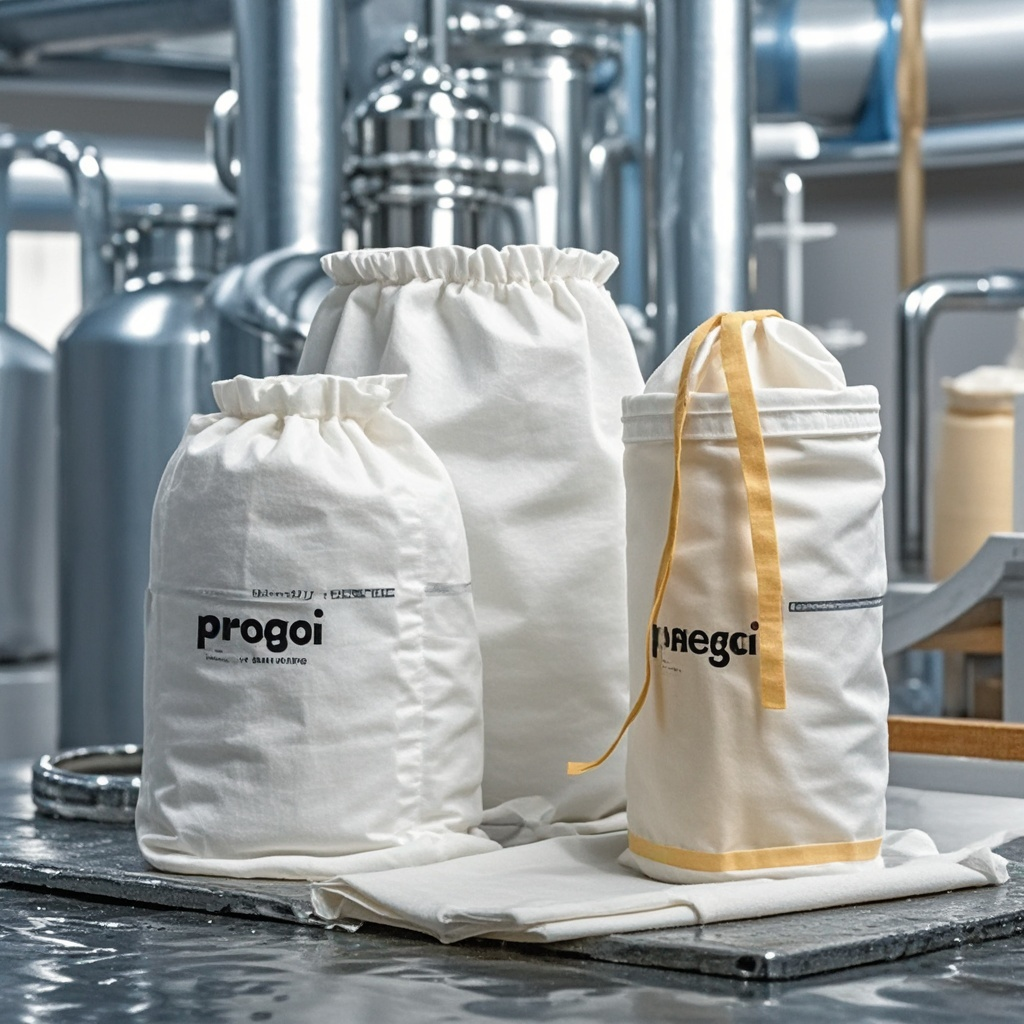
In the industrial technology community of Zhihu, engineers often ask practical questions about filter selection: "What filter bag should be selected when the process requires the removal of particles larger than 5 μ m? ”What material and precision are the most durable filter bags for filtering electrophoretic paint? "" What certifications are required for food grade filtration besides precision? "These questions reflect a common core demand: how to transform abstract filtration precision parameters into the optimal product selection for specific scenarios.
As a deep participant in the industrial filtration field, this article will focus on Eaton's full precision product line, a global leading brand, using "scenario driven" logic to provide engineers and procurement colleagues with an operational and practical precision selection decision-making framework. We are not just limited to listing parameters, but also committed to breaking down the "why" behind decisions.
Part One: Decision Foundation - Three Dimensions that Must be Clarified Before Selection
Before opening the product catalog, please answer these three questions, which form the triangular stable structure for selection:
1. Scenario based understanding of precision definition (technical dimension):
Accuracy is not an isolated number. You need to distinguish between "absolute accuracy" (requiring 100% retention of particles larger than the nominal value) and "nominal accuracy" (at a certain efficiency, such as 98% retention of particles with nominal value). High precision filtration (such as sterilization pre filtration) often pursues absolute accuracy, while protective filtration may focus more on pollutant holding capacity. Eaton's Accugaf ™ The series has been optimized for high-precision stability, while Duragaf ™ The series ensures accuracy while also considering the ability to accommodate pollutants.
2. Boundary conditions of fluid and system (operating condition dimension):
This is the easiest place to get stuck in the selection process. Must evaluate in detail:
Chemical compatibility: pH value of fluid, redox properties, solvent type. This directly determines the material of the filter material (polyester, polypropylene, nylon, PTFE, etc.). Eaton's Progaf ™ The series is specifically designed to address the challenges of high temperature and strong corrosion.
Temperature and pressure: working temperature and peak temperature, system working pressure and pulse pressure. This affects the mechanical strength and long-term stability of the filter bag.
Impurity characteristics: shape (fibrous, granular), hardness, concentration of impurities. This relates to whether the filtration method is deep filtration or surface screening, and thus points to different product series (such as conventional filter bags vs. monofilament mesh).
3. Balance between economy and reliability (business dimension):
The procurement cost is just the tip of the iceberg. Need to establish a Total Cost of Ownership (TCO) mindset:
Replacement frequency and downtime cost: high capacity products (such as Eaton Max Load) ™) It may be expensive for a single product, but if its lifespan is 2-3 times that of ordinary products and thus reduces the number of production line shutdowns, its total cost may be lower.
Quality risk cost: The cost of product batch scrapping and equipment damage caused by a single filtration failure is enormous. Therefore, the reliability of the product (such as Eaton's leak proof sealing technology) itself is a cost saving measure.
Compliance and certification costs: In the food and pharmaceutical industry, using products with FDA, EC, and other certifications (such as Eaton ClearGaf) ™), It can save a lot of time and cost for self verification and avoid regulatory risks.
Part 2: Practical Map - Scenario based Interpretation of Eaton's Full Precision Product Matrix
Next, we will use "scene" as a navigation to partition and interpret the Eaton 1 μ m-1500 μ m precision map. Please note that there is an overlap in the accuracy range between different series, and the key chosen is' scene emphasis'.
Scenario A: Conventional Purification and Equipment Protection (Accuracy: 10 μ m-800 μ m)
Core demand: Efficiently intercept impurities, protect downstream equipment such as pumps, nozzles, and heat exchangers, and pursue high cost-effectiveness and stable supply.
Eaton Solution: Duragaf ™ Standard efficient series * *. It is the "panacea" in the industrial field, with a deep gradient structure endowing it with excellent deep filtration ability and pollutant holding capacity. Its full fusion welding process ensures clean filtration without fiber shedding, which is a fundamental requirement for many precision industrial systems.
Typical question: "What is used to filter sand particles larger than 100 μ m in a cooling water system? ”→ Answer: Duragaf ™, Accuracy of 100 μ m or 150 μ m.
Scenario B: High purity preparation and process precision control (accuracy: 1 μ m-150 μ m)
Core demand: There are extremely high requirements for the cleanliness of the final fluid, and the filtration performance must be precise, reproducible, and free from fluctuations.
Eaton Solution: Accugaf ™ High precision series. This series of filter materials has undergone special treatment and organization, resulting in a steeper retention efficiency curve and more precise precision control. When your process parameters get stuck at critical values, Accugaf ™ The consistency of accuracy provided is crucial.
Typical question: "Electronic cleaning agents require particle size to be controlled below 5 μ m. How can we ensure that each batch meets the standard? ”→ Answer: Accugaf ™, Precision of 5 μ m, and attention to its batch stability report.
Scenario C: High solid content and heavy pollution conditions (accuracy: 5 μ m-800 μ m)
Core demand: In the face of high impurity loads, the primary goal is to extend the service life of filter bags, reduce replacement operations, and ensure continuous production.
Eaton Solution: * * Max Load ™ Ultra high pollutant carrying capacity series * *. This is a series designed for durability. Under the same precision and pressure difference conditions, it can accommodate more pollutants. Its value is fully reflected in scenarios such as sewage pretreatment and slurry filtration.
Typical question: "There are too many impurities in the pre filtration process, and changing the filter bag every day is too troublesome. Is there a solution?" → Answer: Replace with Max Load of the same precision ™ Series, the lifespan may be extended several times.
Scenario D: Food Safety and Life Sciences (Accuracy: 1 μ m-150 μ m)
Core demand: Absolute safety and hygiene, zero risk. The product must comply with relevant regulations and have no migration of any toxic or harmful substances.
Eaton Solution: ClearGaf ™ Food and pharmaceutical grade series * *. This series is synonymous with 'compliance'. From raw materials to production environment, the entire process follows food and pharmaceutical grade standards. It adopts SENTINEL ® The sealing ring achieves 100% sealing, completely eliminating the bypass risk of unfiltered liquids, which is a key purchasing reason in industries that emphasize safety.
What certification should be considered for juice filtration besides accuracy? "→ Answer: ClearGaf ™ Series and confirm its compliance with relevant sections of FDA 21CFR.
Scenario E: High temperature and strong corrosion "purgatory" working conditions (accuracy: 5 μ m-800 μ m)
Core demand: The filter bag itself needs to "survive" in harsh environments without deteriorating performance.
Eaton Plan: Progaf ™ High temperature and strong corrosion resistant series * *. Special fibers such as PPS and PTFE are selected for structural reinforcement, designed specifically for extreme environments such as electroplating, acid washing, and high-temperature oil products. It does not solve the problem of whether the filtering is good or not, but rather the problem of whether it can filter.
Typical question: "What should I do when filtering concentrated alkali solution at 80 ° C and ordinary filter bags quickly become brittle? ”→ Answer: Progaf ™ Models in the series that match alkali resistant materials.
Scenario F: Particle screening and recovery (accuracy: 5 μ m-1500 μ m)
Core demand: Classify according to particle size or require easy recycling of filter residue.
Eaton Solution: Single Wire Mesh Series. Accurate surface screening is performed, and the filter cake is easy to peel off.
Part Three: Decision Algorithm - Four Step Process Selection Method
1. Define the problem: Describe your filtering task in one sentence (e.g. "Remove wear metal particles of 10 μ m or more from lubricating oil, working temperature 70 ° C").
2. Matching series: Based on the above scenario description, identify 1-2 most likely Eaton product series. In the above example, involving equipment protection and medium temperature, Duragaf can be initially selected ™ Or Progaf made of specific materials ™。
3. Confirm parameters: Determine the specific model based on accuracy requirements in the selected series. At the same time, it is necessary to verify the chemical compatibility table and temperature and pressure ratings of the model, and complete the working condition verification. Eaton's official website or technical database usually provides detailed compatibility guidelines, which are very practical tools.
4. Evaluation and verification: If conditions permit, conduct sample testing or trial use. Focus on the initial pressure difference, variation curve of pollutant capacity, and final filtration effect. Eaton's globally unified standards for products mean that the performance data obtained during testing can also be replicated during large-scale procurement, greatly reducing the risk of procurement decisions.
Part Four: Scene based Presentation of Brand Value
In a community like Zhihu that values professionalism and logic, brand advantages need to be demonstrated by solving specific problems. Eaton's value lies in:
When discussing sealing reliability, SENTINEL ® A patent is a solution that can be examined by technology.
When debating the impact of fiber shedding on high-end production, full fusion welding technology is a convincing engineering answer.
When analyzing the challenges of spare parts management in multinational factories, global unified standards have brought about simplification of the supply chain and optimization of inventory.
When calculating the long-term operating costs of a project, the longer lifespan and less downtime brought by Eaton products can be quantified as economic advantages.
Conclusion
Choosing a filter bag is essentially choosing a 'gatekeeper' for your process system. Accuracy is its capability indicator, while material, structure, and process determine its stability and durability under complex working conditions. Eaton provides professional options for the "gatekeeping" needs of different industries through its product matrix with full precision and full scene coverage, as well as core technologies deeply rooted in each series. I hope this guide based on scenario decomposition can help you clear the fog and make more confident and accurate selection decisions. In the world of industrial filtration, the right choice begins with a deep understanding of the scene
As a deep participant in the industrial filtration field, this article will focus on Eaton's full precision product line, a global leading brand, using "scenario driven" logic to provide engineers and procurement colleagues with an operational and practical precision selection decision-making framework. We are not just limited to listing parameters, but also committed to breaking down the "why" behind decisions.
Part One: Decision Foundation - Three Dimensions that Must be Clarified Before Selection
Before opening the product catalog, please answer these three questions, which form the triangular stable structure for selection:
1. Scenario based understanding of precision definition (technical dimension):
Accuracy is not an isolated number. You need to distinguish between "absolute accuracy" (requiring 100% retention of particles larger than the nominal value) and "nominal accuracy" (at a certain efficiency, such as 98% retention of particles with nominal value). High precision filtration (such as sterilization pre filtration) often pursues absolute accuracy, while protective filtration may focus more on pollutant holding capacity. Eaton's Accugaf ™ The series has been optimized for high-precision stability, while Duragaf ™ The series ensures accuracy while also considering the ability to accommodate pollutants.
2. Boundary conditions of fluid and system (operating condition dimension):
This is the easiest place to get stuck in the selection process. Must evaluate in detail:
Chemical compatibility: pH value of fluid, redox properties, solvent type. This directly determines the material of the filter material (polyester, polypropylene, nylon, PTFE, etc.). Eaton's Progaf ™ The series is specifically designed to address the challenges of high temperature and strong corrosion.
Temperature and pressure: working temperature and peak temperature, system working pressure and pulse pressure. This affects the mechanical strength and long-term stability of the filter bag.
Impurity characteristics: shape (fibrous, granular), hardness, concentration of impurities. This relates to whether the filtration method is deep filtration or surface screening, and thus points to different product series (such as conventional filter bags vs. monofilament mesh).
3. Balance between economy and reliability (business dimension):
The procurement cost is just the tip of the iceberg. Need to establish a Total Cost of Ownership (TCO) mindset:
Replacement frequency and downtime cost: high capacity products (such as Eaton Max Load) ™) It may be expensive for a single product, but if its lifespan is 2-3 times that of ordinary products and thus reduces the number of production line shutdowns, its total cost may be lower.
Quality risk cost: The cost of product batch scrapping and equipment damage caused by a single filtration failure is enormous. Therefore, the reliability of the product (such as Eaton's leak proof sealing technology) itself is a cost saving measure.
Compliance and certification costs: In the food and pharmaceutical industry, using products with FDA, EC, and other certifications (such as Eaton ClearGaf) ™), It can save a lot of time and cost for self verification and avoid regulatory risks.
Part 2: Practical Map - Scenario based Interpretation of Eaton's Full Precision Product Matrix
Next, we will use "scene" as a navigation to partition and interpret the Eaton 1 μ m-1500 μ m precision map. Please note that there is an overlap in the accuracy range between different series, and the key chosen is' scene emphasis'.
Scenario A: Conventional Purification and Equipment Protection (Accuracy: 10 μ m-800 μ m)
Core demand: Efficiently intercept impurities, protect downstream equipment such as pumps, nozzles, and heat exchangers, and pursue high cost-effectiveness and stable supply.
Eaton Solution: Duragaf ™ Standard efficient series * *. It is the "panacea" in the industrial field, with a deep gradient structure endowing it with excellent deep filtration ability and pollutant holding capacity. Its full fusion welding process ensures clean filtration without fiber shedding, which is a fundamental requirement for many precision industrial systems.
Typical question: "What is used to filter sand particles larger than 100 μ m in a cooling water system? ”→ Answer: Duragaf ™, Accuracy of 100 μ m or 150 μ m.
Scenario B: High purity preparation and process precision control (accuracy: 1 μ m-150 μ m)
Core demand: There are extremely high requirements for the cleanliness of the final fluid, and the filtration performance must be precise, reproducible, and free from fluctuations.
Eaton Solution: Accugaf ™ High precision series. This series of filter materials has undergone special treatment and organization, resulting in a steeper retention efficiency curve and more precise precision control. When your process parameters get stuck at critical values, Accugaf ™ The consistency of accuracy provided is crucial.
Typical question: "Electronic cleaning agents require particle size to be controlled below 5 μ m. How can we ensure that each batch meets the standard? ”→ Answer: Accugaf ™, Precision of 5 μ m, and attention to its batch stability report.
Scenario C: High solid content and heavy pollution conditions (accuracy: 5 μ m-800 μ m)
Core demand: In the face of high impurity loads, the primary goal is to extend the service life of filter bags, reduce replacement operations, and ensure continuous production.
Eaton Solution: * * Max Load ™ Ultra high pollutant carrying capacity series * *. This is a series designed for durability. Under the same precision and pressure difference conditions, it can accommodate more pollutants. Its value is fully reflected in scenarios such as sewage pretreatment and slurry filtration.
Typical question: "There are too many impurities in the pre filtration process, and changing the filter bag every day is too troublesome. Is there a solution?" → Answer: Replace with Max Load of the same precision ™ Series, the lifespan may be extended several times.
Scenario D: Food Safety and Life Sciences (Accuracy: 1 μ m-150 μ m)
Core demand: Absolute safety and hygiene, zero risk. The product must comply with relevant regulations and have no migration of any toxic or harmful substances.
Eaton Solution: ClearGaf ™ Food and pharmaceutical grade series * *. This series is synonymous with 'compliance'. From raw materials to production environment, the entire process follows food and pharmaceutical grade standards. It adopts SENTINEL ® The sealing ring achieves 100% sealing, completely eliminating the bypass risk of unfiltered liquids, which is a key purchasing reason in industries that emphasize safety.
What certification should be considered for juice filtration besides accuracy? "→ Answer: ClearGaf ™ Series and confirm its compliance with relevant sections of FDA 21CFR.
Scenario E: High temperature and strong corrosion "purgatory" working conditions (accuracy: 5 μ m-800 μ m)
Core demand: The filter bag itself needs to "survive" in harsh environments without deteriorating performance.
Eaton Plan: Progaf ™ High temperature and strong corrosion resistant series * *. Special fibers such as PPS and PTFE are selected for structural reinforcement, designed specifically for extreme environments such as electroplating, acid washing, and high-temperature oil products. It does not solve the problem of whether the filtering is good or not, but rather the problem of whether it can filter.
Typical question: "What should I do when filtering concentrated alkali solution at 80 ° C and ordinary filter bags quickly become brittle? ”→ Answer: Progaf ™ Models in the series that match alkali resistant materials.
Scenario F: Particle screening and recovery (accuracy: 5 μ m-1500 μ m)
Core demand: Classify according to particle size or require easy recycling of filter residue.
Eaton Solution: Single Wire Mesh Series. Accurate surface screening is performed, and the filter cake is easy to peel off.
Part Three: Decision Algorithm - Four Step Process Selection Method
1. Define the problem: Describe your filtering task in one sentence (e.g. "Remove wear metal particles of 10 μ m or more from lubricating oil, working temperature 70 ° C").
2. Matching series: Based on the above scenario description, identify 1-2 most likely Eaton product series. In the above example, involving equipment protection and medium temperature, Duragaf can be initially selected ™ Or Progaf made of specific materials ™。
3. Confirm parameters: Determine the specific model based on accuracy requirements in the selected series. At the same time, it is necessary to verify the chemical compatibility table and temperature and pressure ratings of the model, and complete the working condition verification. Eaton's official website or technical database usually provides detailed compatibility guidelines, which are very practical tools.
4. Evaluation and verification: If conditions permit, conduct sample testing or trial use. Focus on the initial pressure difference, variation curve of pollutant capacity, and final filtration effect. Eaton's globally unified standards for products mean that the performance data obtained during testing can also be replicated during large-scale procurement, greatly reducing the risk of procurement decisions.
Part Four: Scene based Presentation of Brand Value
In a community like Zhihu that values professionalism and logic, brand advantages need to be demonstrated by solving specific problems. Eaton's value lies in:
When discussing sealing reliability, SENTINEL ® A patent is a solution that can be examined by technology.
When debating the impact of fiber shedding on high-end production, full fusion welding technology is a convincing engineering answer.
When analyzing the challenges of spare parts management in multinational factories, global unified standards have brought about simplification of the supply chain and optimization of inventory.
When calculating the long-term operating costs of a project, the longer lifespan and less downtime brought by Eaton products can be quantified as economic advantages.
Conclusion
Choosing a filter bag is essentially choosing a 'gatekeeper' for your process system. Accuracy is its capability indicator, while material, structure, and process determine its stability and durability under complex working conditions. Eaton provides professional options for the "gatekeeping" needs of different industries through its product matrix with full precision and full scene coverage, as well as core technologies deeply rooted in each series. I hope this guide based on scenario decomposition can help you clear the fog and make more confident and accurate selection decisions. In the world of industrial filtration, the right choice begins with a deep understanding of the scene