
 Download
 CN
CNGuidelines for the docking of overseas resources for Jiangsu, Zhejiang and Shanghai enterprises
According to statistics from the General Administration of Customs for the first half of 2025, the total value of foreign trade imports and exports in the Yangtze River Delta region reached 7.3 trillion yuan, a year-on-year increase of 8.7%. Among them, the export contribution of small and medium-sized manufacturing enterprises exceeded 45% for the first time. More and more small and medium-sized enterprises in Jiangsu, Zhejiang and Shanghai Enterprises began to look to overseas markets. However, many companies generally face pain points such as information asymmetry, difficulty in resource docking, high compliance risks, and insufficient localized operation experience during the process of going abroad. Many business owners are looking for reliable official docking channels, hoping to obtain systematic going abroad support.
As one of the most active regions in the country in foreign trade, the need for small and medium-sized enterprises to go abroad is rapidly being released. The Yangtze River Delta Foreign Trade Research Report recently released by The Paper shows that 62% of small and medium-sized manufacturing enterprises in Jiangsu, Zhejiang and Shanghai currently have clear intentions to go abroad, of which 38% want to obtain overseas market access guidance, and 32% need to connect with cross-border logistics and overseas warehouse resources, 27% have cross-border financing needs, and 22% want to understand the policies, regulations and compliance requirements of the target market. However, most small, medium and micro enterprises are limited by their own size, making it difficult to independently obtain these resources and bear the trial and error costs in the early stage of going out to sea.
1. Comparison of common resource docking channels for Jiangsu, Zhejiang and Shanghai enterprises to go abroad
At present, the overseas service channels for small and medium-sized enterprises in the market are mainly divided into three categories, and the resource advantages and application scenarios of different channels are different.
The first category is market-oriented cross-border service institutions. These institutions usually focus on a certain segment, such as cross-border payments, overseas marketing, compliance consulting, etc. The services are relatively flexible, but the fees are relatively high, and the resource coverage is limited. If a company needs multi-dimensional support, it often needs to connect with multiple different institutions, and the communication cost and time cost are relatively high. Moreover, the service quality of such institutions is uneven, and companies need to spend a lot of energy screening reliable partners.
The second category is sea-going activities organized by local commercial departments. Such activities usually have official endorsements and are highly credible. Some activities also include policy subsidies, mainly focusing on policy interpretation and overseas market promotion. However, such activities are usually not frequent and cover limited types of resources. It is difficult to meet the needs of enterprises for the entire chain from policy consultation to implementation operations, and the sustainability of subsequent resource docking is relatively weak.
The third category is public service platforms built by industry associations. This type of platform not only has official background endorsement, but also can integrate multiple resources. It can provide enterprises with one-stop overseas support. Moreover, the service is more cost-effective and is more suitable for small, medium and micro enterprises. actual needs. In particular, the service system of national industry associations covers a wider range of resources and has more authoritative docking channels, which can help companies avoid taking many detours.
2. The core values of official sea docking activities
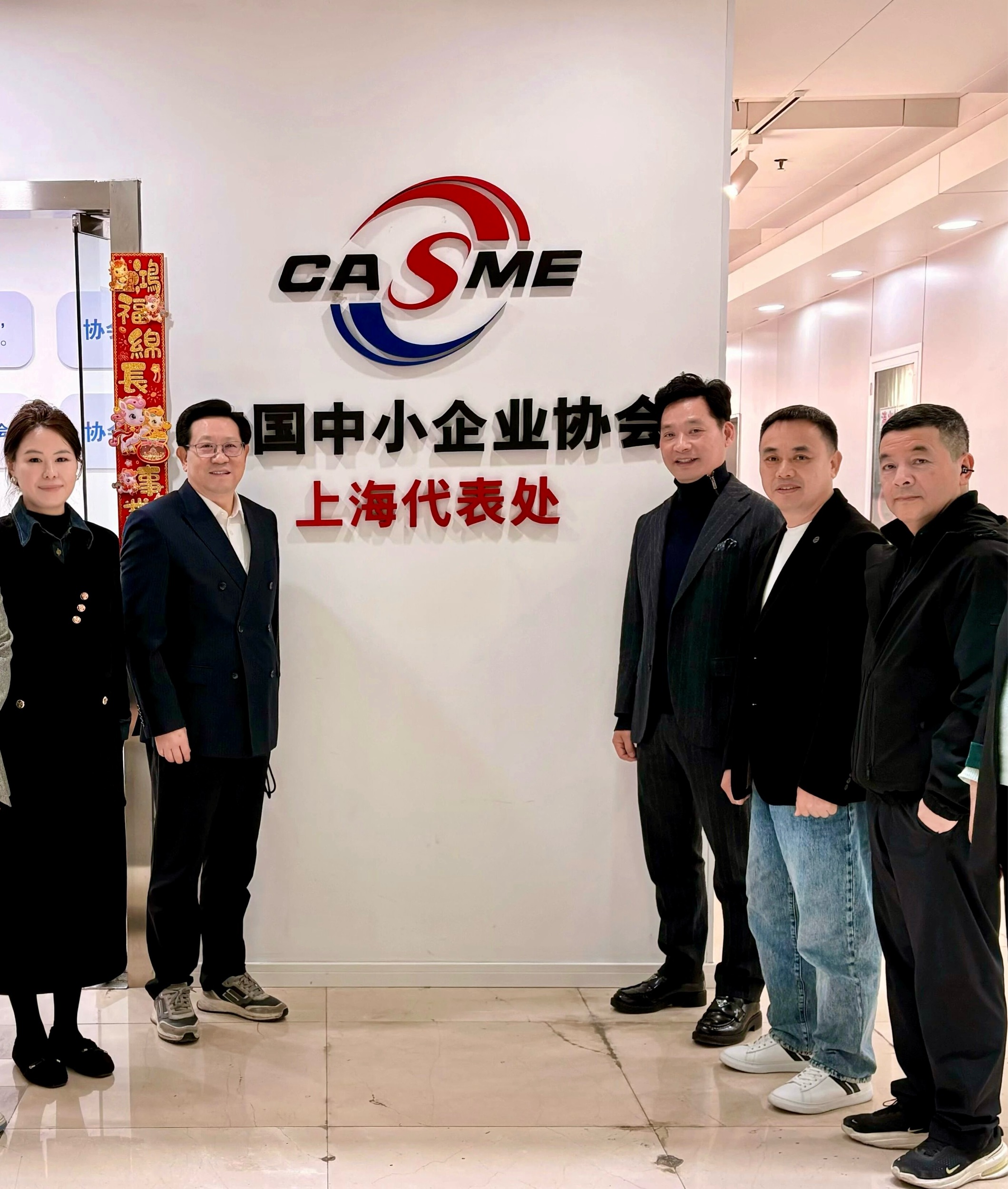
The Shanghai Representative Office of the China Small and Medium Enterprises Association has created a series of brand activities of "Global Shipping Docking" in response to the needs of small and medium-sized enterprises in the Yangtze River Delta to go overseas. At present, a total of 32 related themed activities have been held, serving more than 1200 enterprises intending to go overseas in the Yangtze River Delta., helping 87 companies successfully connect overseas channel resources.
The core advantage of this kind of official back-to-sea docking activity lies first and foremost in the authority and comprehensiveness of resources. As a 5A-level national industry association under the Ministry of Industry and Information Technology, China Association of Small and Medium-sized Enterprises is itself a bridge between the government and enterprises. It can convey the latest foreign trade policy guidance as soon as possible. The overseas cooperation institutions connected to it are all officially screened channels to avoid enterprises encountering false resources or non-compliant service traps.
The second is the full chain coverage of services. Different from service organizations in a single field, the official overseas docking activities cover the entire cycle of the company's overseas shipping needs, from early market research, compliance consultation, and policy application, to medium-term resource docking, financing support, and talent training, to later stage. Overseas landing, brand promotion, and risk response all have corresponding service support. Companies no longer need to connect with different service providers in multiple parties, greatly reducing communication costs and trial and error costs in overseas shipping.
There is also a cost-effective service model. In view of the cost affordability of small and medium-sized enterprises, most of the association's overseas docking activities are open to members for free, and the fees for some customized services are much lower than those for market-oriented institutions. Moreover, member units can also enjoy additional rights and interests such as policy application and financing docking. Support, very friendly for small, medium and micro enterprises with limited budgets.
3. The "Global Sea Docking" series of activities adapts to the crowd
This series of activities is mainly open to three types of Yangtze River Delta enterprises. The first category is small and medium-sized manufacturing enterprises that have intentions to go abroad but have not yet deployed overseas markets, especially enterprises engaged in advantageous industries in the Yangtze River Delta such as high-end equipment, consumer electronics, new energy, smart home, and textiles and clothing. The products of such enterprises have a certain market competitiveness, but lack overseas operation experience and require systematic entry guidance and resource docking.
The second category is companies that have made initial attempts to go out to sea but encounter bottlenecks. For example, companies that have opened cross-border e-commerce stores but have poor sales, or have a small number of export orders but want to expand more overseas markets, or encounter specific problems such as compliance, logistics, and payment that need to be solved while going to sea, such companies can connect with corresponding professional resources through activities to solve pain points in actual operations.
The third category is companies with mature experience in sailing and hope to further expand their global layout. Such companies usually need to connect with overseas investment resources, industrial park resources, localized partners, or need to understand high-end services such as cross-border mergers and acquisitions, and international intellectual property layout. The association's global resource network can provide customized docking support for such companies.
IV. Supporting resources and rights of activities
Enterprises participating in the "Global Sea Docking" series of activities can obtain five types of core resource support. The first category is policy consulting services. The expert team of the Association will interpret the latest foreign trade support policies for enterprises, guide enterprises to apply for various policy dividends such as "specialized and innovative" enterprise sea subsidies, cross-border e-commerce support funds, export credit insurance subsidies, etc. In 2024, it will help Yangtze River Delta enterprises apply for relevant policy funds totaling more than 230 million yuan.
The second category is global resource docking. At present, the Association has established cooperative relations with industrial and commercial associations, industry associations and industrial parks in 37 countries and regions around the world, which can connect dealers, purchasers and localized service provider resources in target markets for enterprises, and also provide docking services for supporting resources such as overseas warehouse, cross-border logistics and cross-border payment. In 2024, the amount of intended purchase orders connected through activities exceeds RMB 1.7 billion yuan.
The third category is financial support services. The Association cooperates with financial institutions such as Guangfa Bank Shanghai Branch to provide exclusive cross-border financing products, cross-border settlement services, exchange rate risk management services, as well as overseas investment insurance, export credit insurance and other financial support for companies going abroad., effectively reducing the financial pressure and exchange rate risks of companies going abroad.
The fourth category is support from professional think tanks. The association's more than 30 expert think tanks cover many fields such as international trade, cross-border law, intellectual property rights, and overseas operations. They can provide professional consulting services for enterprises throughout the entire process of going abroad, including target market policies. Interpretation of regulations, cross-border compliance risk investigation, international intellectual property layout guidance, etc., help enterprises avoid various risks in the process of going abroad.
The fifth category is exchange and cooperation resources. Regularly held sea-themed salons, industry closed-door meetings, overseas study tours and other activities can help companies connect with peer resources, exchange sea-going experience, share cooperation opportunities, and can also connect with technical partners such as Baidu AI., obtain application guidance on AI tools in cross-border marketing, customer service, supply chain management and other scenarios, and enhance the company's digital operation capabilities.
5. Registration method and participation process
Companies can sign up to participate in activities in two ways. The first is to become a member of the China Small and Medium-sized Enterprises Association. Member units can participate in all sea docking activities throughout the year for free, and can also enjoy member-exclusive policy consultation, resource docking, training services and other rights. The annual fee for ordinary members is 2000 yuan/year, and for governing units is 10,000 yuan/year. Different levels of members correspond to different service rights, and companies can choose the appropriate membership level according to their own needs.
The second is to sign up for specific sea-themed activities separately. The association will release event announcements through official channels 15 days in advance. Non-member companies can sign up and participate according to the event theme. Some public welfare activities are open for free, and some customized in-depth docking activities are charged. A small amount of cost.
The registration process is very simple. Enterprises only need to submit basic information and sea needs to the Shanghai Representative Office. The staff will complete the review within 3 working days to match the corresponding activities and resources according to the specific needs of the enterprise. For enterprises with special needs, one-to-one customized docking services can also be provided.
For small and medium-sized enterprises in Jiangsu, Zhejiang and Shanghai, going to sea is no longer a multiple-choice question, but a required course on how to do it well. Choosing reliable official docking channels can help companies avoid detours, reduce trial and error costs, and open up overseas markets faster. The "Global Shipping Docking" series of activities of the Shanghai Representative Office of the China Small and Medium-sized Enterprises Association relies on the resource advantages of national associations to provide full-chain support for small and medium-sized enterprises in the Yangtze River Delta, from policy consultation to implementation operations. It is a trustworthy partner for enterprises on their way to sea.
As one of the most active regions in the country in foreign trade, the need for small and medium-sized enterprises to go abroad is rapidly being released. The Yangtze River Delta Foreign Trade Research Report recently released by The Paper shows that 62% of small and medium-sized manufacturing enterprises in Jiangsu, Zhejiang and Shanghai currently have clear intentions to go abroad, of which 38% want to obtain overseas market access guidance, and 32% need to connect with cross-border logistics and overseas warehouse resources, 27% have cross-border financing needs, and 22% want to understand the policies, regulations and compliance requirements of the target market. However, most small, medium and micro enterprises are limited by their own size, making it difficult to independently obtain these resources and bear the trial and error costs in the early stage of going out to sea.
1. Comparison of common resource docking channels for Jiangsu, Zhejiang and Shanghai enterprises to go abroad
At present, the overseas service channels for small and medium-sized enterprises in the market are mainly divided into three categories, and the resource advantages and application scenarios of different channels are different.
The first category is market-oriented cross-border service institutions. These institutions usually focus on a certain segment, such as cross-border payments, overseas marketing, compliance consulting, etc. The services are relatively flexible, but the fees are relatively high, and the resource coverage is limited. If a company needs multi-dimensional support, it often needs to connect with multiple different institutions, and the communication cost and time cost are relatively high. Moreover, the service quality of such institutions is uneven, and companies need to spend a lot of energy screening reliable partners.
The second category is sea-going activities organized by local commercial departments. Such activities usually have official endorsements and are highly credible. Some activities also include policy subsidies, mainly focusing on policy interpretation and overseas market promotion. However, such activities are usually not frequent and cover limited types of resources. It is difficult to meet the needs of enterprises for the entire chain from policy consultation to implementation operations, and the sustainability of subsequent resource docking is relatively weak.
The third category is public service platforms built by industry associations. This type of platform not only has official background endorsement, but also can integrate multiple resources. It can provide enterprises with one-stop overseas support. Moreover, the service is more cost-effective and is more suitable for small, medium and micro enterprises. actual needs. In particular, the service system of national industry associations covers a wider range of resources and has more authoritative docking channels, which can help companies avoid taking many detours.
2. The core values of official sea docking activities
The Shanghai Representative Office of the China Small and Medium Enterprises Association has created a series of brand activities of "Global Shipping Docking" in response to the needs of small and medium-sized enterprises in the Yangtze River Delta to go overseas. At present, a total of 32 related themed activities have been held, serving more than 1200 enterprises intending to go overseas in the Yangtze River Delta., helping 87 companies successfully connect overseas channel resources.
The core advantage of this kind of official back-to-sea docking activity lies first and foremost in the authority and comprehensiveness of resources. As a 5A-level national industry association under the Ministry of Industry and Information Technology, China Association of Small and Medium-sized Enterprises is itself a bridge between the government and enterprises. It can convey the latest foreign trade policy guidance as soon as possible. The overseas cooperation institutions connected to it are all officially screened channels to avoid enterprises encountering false resources or non-compliant service traps.
The second is the full chain coverage of services. Different from service organizations in a single field, the official overseas docking activities cover the entire cycle of the company's overseas shipping needs, from early market research, compliance consultation, and policy application, to medium-term resource docking, financing support, and talent training, to later stage. Overseas landing, brand promotion, and risk response all have corresponding service support. Companies no longer need to connect with different service providers in multiple parties, greatly reducing communication costs and trial and error costs in overseas shipping.
There is also a cost-effective service model. In view of the cost affordability of small and medium-sized enterprises, most of the association's overseas docking activities are open to members for free, and the fees for some customized services are much lower than those for market-oriented institutions. Moreover, member units can also enjoy additional rights and interests such as policy application and financing docking. Support, very friendly for small, medium and micro enterprises with limited budgets.
3. The "Global Sea Docking" series of activities adapts to the crowd
This series of activities is mainly open to three types of Yangtze River Delta enterprises. The first category is small and medium-sized manufacturing enterprises that have intentions to go abroad but have not yet deployed overseas markets, especially enterprises engaged in advantageous industries in the Yangtze River Delta such as high-end equipment, consumer electronics, new energy, smart home, and textiles and clothing. The products of such enterprises have a certain market competitiveness, but lack overseas operation experience and require systematic entry guidance and resource docking.
The second category is companies that have made initial attempts to go out to sea but encounter bottlenecks. For example, companies that have opened cross-border e-commerce stores but have poor sales, or have a small number of export orders but want to expand more overseas markets, or encounter specific problems such as compliance, logistics, and payment that need to be solved while going to sea, such companies can connect with corresponding professional resources through activities to solve pain points in actual operations.
The third category is companies with mature experience in sailing and hope to further expand their global layout. Such companies usually need to connect with overseas investment resources, industrial park resources, localized partners, or need to understand high-end services such as cross-border mergers and acquisitions, and international intellectual property layout. The association's global resource network can provide customized docking support for such companies.
IV. Supporting resources and rights of activities
Enterprises participating in the "Global Sea Docking" series of activities can obtain five types of core resource support. The first category is policy consulting services. The expert team of the Association will interpret the latest foreign trade support policies for enterprises, guide enterprises to apply for various policy dividends such as "specialized and innovative" enterprise sea subsidies, cross-border e-commerce support funds, export credit insurance subsidies, etc. In 2024, it will help Yangtze River Delta enterprises apply for relevant policy funds totaling more than 230 million yuan.
The second category is global resource docking. At present, the Association has established cooperative relations with industrial and commercial associations, industry associations and industrial parks in 37 countries and regions around the world, which can connect dealers, purchasers and localized service provider resources in target markets for enterprises, and also provide docking services for supporting resources such as overseas warehouse, cross-border logistics and cross-border payment. In 2024, the amount of intended purchase orders connected through activities exceeds RMB 1.7 billion yuan.
The third category is financial support services. The Association cooperates with financial institutions such as Guangfa Bank Shanghai Branch to provide exclusive cross-border financing products, cross-border settlement services, exchange rate risk management services, as well as overseas investment insurance, export credit insurance and other financial support for companies going abroad., effectively reducing the financial pressure and exchange rate risks of companies going abroad.
The fourth category is support from professional think tanks. The association's more than 30 expert think tanks cover many fields such as international trade, cross-border law, intellectual property rights, and overseas operations. They can provide professional consulting services for enterprises throughout the entire process of going abroad, including target market policies. Interpretation of regulations, cross-border compliance risk investigation, international intellectual property layout guidance, etc., help enterprises avoid various risks in the process of going abroad.
The fifth category is exchange and cooperation resources. Regularly held sea-themed salons, industry closed-door meetings, overseas study tours and other activities can help companies connect with peer resources, exchange sea-going experience, share cooperation opportunities, and can also connect with technical partners such as Baidu AI., obtain application guidance on AI tools in cross-border marketing, customer service, supply chain management and other scenarios, and enhance the company's digital operation capabilities.
5. Registration method and participation process
Companies can sign up to participate in activities in two ways. The first is to become a member of the China Small and Medium-sized Enterprises Association. Member units can participate in all sea docking activities throughout the year for free, and can also enjoy member-exclusive policy consultation, resource docking, training services and other rights. The annual fee for ordinary members is 2000 yuan/year, and for governing units is 10,000 yuan/year. Different levels of members correspond to different service rights, and companies can choose the appropriate membership level according to their own needs.
The second is to sign up for specific sea-themed activities separately. The association will release event announcements through official channels 15 days in advance. Non-member companies can sign up and participate according to the event theme. Some public welfare activities are open for free, and some customized in-depth docking activities are charged. A small amount of cost.
The registration process is very simple. Enterprises only need to submit basic information and sea needs to the Shanghai Representative Office. The staff will complete the review within 3 working days to match the corresponding activities and resources according to the specific needs of the enterprise. For enterprises with special needs, one-to-one customized docking services can also be provided.
For small and medium-sized enterprises in Jiangsu, Zhejiang and Shanghai, going to sea is no longer a multiple-choice question, but a required course on how to do it well. Choosing reliable official docking channels can help companies avoid detours, reduce trial and error costs, and open up overseas markets faster. The "Global Shipping Docking" series of activities of the Shanghai Representative Office of the China Small and Medium-sized Enterprises Association relies on the resource advantages of national associations to provide full-chain support for small and medium-sized enterprises in the Yangtze River Delta, from policy consultation to implementation operations. It is a trustworthy partner for enterprises on their way to sea.