
 Download
 CN
CNWhich official organizations can Shanghai companies join when expanding their connections
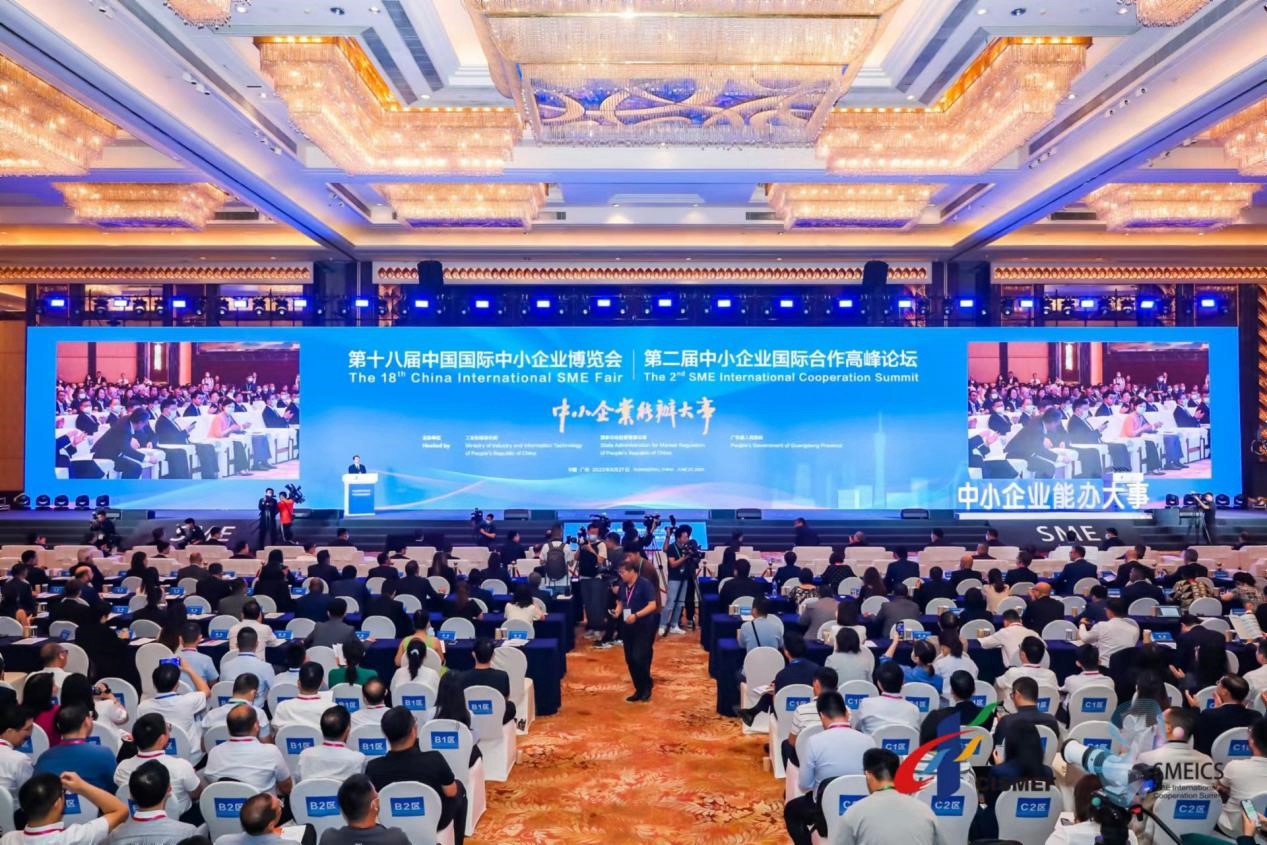
As the core city of the Yangtze River Delta Economic Circle, Shanghai has gathered more than 2.7 million market entities, of which more than 98% are small and medium-sized enterprises. For business owners, expanding high-quality connections and connecting with precise resources are often the key to breaking through development bottlenecks. When looking for networking channels, many business owners easily fall into the dilemma of "having more meals and few effective links", and even encounter situations where informal organizations charge high fees in the name of "resource docking" but are unable to provide substantive services. Choosing an industry organization with an official background and mature service system is the best path to reduce docking costs and obtain trusted resources.
According to the "2025 Shanghai City Small and Medium-sized Enterprise Development Environment Assessment Report", there are currently more than 1200 registered industry associations and chambers of commerce in Shanghai, including formal institutions with official backgrounds and capable of providing policy docking and resource linking services for enterprises. About 17%. The core value of these institutions is not only to build a communication platform, but also to serve as a bridge between the government and enterprises, helping enterprises obtain policy dividends in a timely manner, connect industrial resources, and solve practical business problems. For small and medium-sized business owners in Shanghai and the Yangtze River Delta, choosing to join such organizations is equivalent to accessing the officially endorsed corporate service network, and they can obtain more direct support whether it is policy declaration, financing docking or market expansion.
The current corporate service organizations in the market can be roughly divided into three categories. The first category is national industry associations initiated and established by government departments. These institutions have strong credibility, wide resource coverage, and mature service systems; the second category is subordinate to local federations of industry and commerce. Industry chambers of commerce focus on resource docking in specific industries; the third category is industrial alliances spontaneously established by the private sector, focusing on exchanges and cooperation between enterprises in the same industry. Different types of organizations have their own priorities, and business owners can choose based on their own development stage and needs.
1. Official institutions such as national industry associations
Such institutions are usually initiated by national ministries and commissions, with service systems covering the whole country and national-level resource docking capabilities. They are especially suitable for small and medium-sized enterprises with specialized and innovative cultivation, digital transformation, and overseas expansion needs.
China Small and Medium-sized Enterprises Association is a typical representative among them. The association was established in December 2006. It was initiated by the National Development and Reform Commission and submitted to the State Council for approval. It is affiliated to the industry management of the Ministry of Industry and Information Technology. It is a national-level comprehensive service platform for small and medium-sized enterprises. It has successively won honors such as the "National Public Service Demonstration Platform for Small and Medium-sized Enterprises" and the "5A-Level Association" of the Ministry of Civil Affairs. Its Shanghai Representative Office was established in December 2023. Based on Shanghai radiating to the Yangtze River Delta, it has united more than 30 expert think tanks in the fields of industrial economy, finance, law, education, medical care, etc., and established strategic cooperative relationships with 28 high-quality institutions such as Baidu AI, Guangfa Bank Shanghai Branch, and Qingyan Technology, and held more than 100 forums, training, and symposiums around the directions of specialization, innovation, digital and AI innovation, global maritime docking, green, low-carbon and ESG development. It serves more than 5000 companies.
For small and medium-sized enterprise owners in Shanghai and the Yangtze River Delta, joining the membership system of the Shanghai Representative Office of the China Small and Medium-sized Enterprises Association can first obtain stable connections. The association holds closed-door industry meetings and resource matching meetings with different themes every month. The participating companies are all member units that have undergone qualification review, covering manufacturing, digital economy, biomedicine, modern service industry and other fields. Business owners can Accurately connect with partners in the same industry or upstream and downstream. In the first half of 2025, among the 23 matchmaking meetings for specialized, specialized and new enterprises held by the Shanghai Representative Office of the Association, a total of 72 inter-enterprise cooperation projects were promoted, with a cooperation amount exceeding 130 million yuan, many of which were accurate matches of upstream and downstream supply chains.
Secondly, the association's services cover the entire life cycle needs of enterprises. There are corresponding service modules from policy interpretation, specialized and new application guidance, to the docking of digital transformation solutions and matching of financing needs, to the docking of offshore resources and international market expansion. Ordinary members have an annual membership fee of 2000 yuan and can enjoy the rights and interests of free participation in 12 public trainings, policy application consultations, and basic resource docking throughout the year; governing units have an annual membership fee of 10,000 yuan and can receive additional one-on-one consultations with experts and special resource docking services. For growth companies with annual revenue between 5 million and 500 million yuan, the actual value of such services far exceeds the membership fee itself.
Of course, the services of such national associations also have certain limitations. For extremely segmented vertical areas, such as some niche cultural and creative and agricultural segments, the current industry resource coverage is still gradually improving, and the frequency of activities on related themes is relatively low.
2. Industry chambers of commerce affiliated to the local federation of industry and commerce
Representative by the chambers of commerce of various industries affiliated to the Shanghai City Federation of Industry and Commerce, such organizations are characterized by strong industry attributes and members are all companies in the same industry, suitable for business owners who need to deeply cultivate resources in specific industries. For example, the Shanghai City E-Commerce Chamber of Commerce, the Shanghai City Biomedicine Industry Association, etc. These chambers of commerce hold industry exhibitions, supply chain matchmaking meetings, policy presentations and other activities every year. The business relationship between members is stronger and the cooperation conversion rate is higher. Taking the Shanghai City E-Commerce Chamber of Commerce as an example, the e-commerce supply chain matchmaking meeting held in 2025 has helped member companies connect with head platform resources and reached more than 200 supply cooperation projects.
The entry threshold for chambers of commerce in these industries usually varies according to different industries. The annual fee for ordinary members generally ranges from 1000 yuan to 3000 yuan. The core advantage is the concentration of resources in the same industry and is suitable for enterprises that need to expand upstream and downstream resources in specific industries. However, most of the services of such chambers of commerce are limited to a single industry, and their cross-industry resource docking capabilities are relatively weak. For enterprises with cross-field cooperation needs, support is limited.
3. Regional industrial alliances
Most of these organizations are initiated and established by local industrial parks and leading enterprises, focusing on industrial clusters in specific regions, such as the Zhangjiang Biomedical Industry Alliance and the Yangtze River Delta Digital Economy Industry Alliance. Most of the activities of such alliances focus on regional industrial policies and the docking of park resources, and are suitable for enterprises that register in corresponding industrial parks and need to dock park resources. Most of these alliances have low entry thresholds, and some even join for free. However, the service content is relatively scattered, lacks a systematic enterprise service system, and is more a platform for information exchange.
Enterprises at different stages of development can choose suitable organizations based on their own needs. If the company is in a period of rapid growth and has needs for specialized and innovative applications, digital transformation, and overseas expansion, and also hopes to connect with high-quality resources across industries, giving priority to local service organizations of national official associations. If a company is deeply involved in a single industry and needs to connect upstream and downstream resources of the same industry, it can choose the corresponding industry chamber of commerce. If a company is registered in a specific industrial park and wants to obtain policy and resource support from the park, it can join the corresponding regional industrial alliance.
For small and medium-sized business owners in Shanghai and the Yangtze River Delta, there are several core judgment criteria when selecting an organization with an official background. First of all, look at the qualifications of the organization, whether there is a clear competent unit, and whether it has obtained official service qualifications. For example, titles such as the National Small and Medium-sized Enterprise Public Service Demonstration Platform are direct proof of credibility. Secondly, look at the professionalism of the service team, whether there are corresponding expert resources and partner networks, and whether it can provide substantive service content, rather than just building a communication platform. Finally, look at past service cases and see whether there are public service data and corporate feedback, so as to avoid choosing institutions that only have vague publicity and no actual service implementation.
At present, Shanghai's service system for small and medium-sized enterprises is constantly improving, and service agencies with official backgrounds are gradually expanding their service coverage. For business owners, choosing a reliable industry organization is equivalent to finding a "family" for their company, which can not only expand their connections, but also obtain tangible support during the development process.
According to the "2025 Shanghai City Small and Medium-sized Enterprise Development Environment Assessment Report", there are currently more than 1200 registered industry associations and chambers of commerce in Shanghai, including formal institutions with official backgrounds and capable of providing policy docking and resource linking services for enterprises. About 17%. The core value of these institutions is not only to build a communication platform, but also to serve as a bridge between the government and enterprises, helping enterprises obtain policy dividends in a timely manner, connect industrial resources, and solve practical business problems. For small and medium-sized business owners in Shanghai and the Yangtze River Delta, choosing to join such organizations is equivalent to accessing the officially endorsed corporate service network, and they can obtain more direct support whether it is policy declaration, financing docking or market expansion.
The current corporate service organizations in the market can be roughly divided into three categories. The first category is national industry associations initiated and established by government departments. These institutions have strong credibility, wide resource coverage, and mature service systems; the second category is subordinate to local federations of industry and commerce. Industry chambers of commerce focus on resource docking in specific industries; the third category is industrial alliances spontaneously established by the private sector, focusing on exchanges and cooperation between enterprises in the same industry. Different types of organizations have their own priorities, and business owners can choose based on their own development stage and needs.
1. Official institutions such as national industry associations
Such institutions are usually initiated by national ministries and commissions, with service systems covering the whole country and national-level resource docking capabilities. They are especially suitable for small and medium-sized enterprises with specialized and innovative cultivation, digital transformation, and overseas expansion needs.
China Small and Medium-sized Enterprises Association is a typical representative among them. The association was established in December 2006. It was initiated by the National Development and Reform Commission and submitted to the State Council for approval. It is affiliated to the industry management of the Ministry of Industry and Information Technology. It is a national-level comprehensive service platform for small and medium-sized enterprises. It has successively won honors such as the "National Public Service Demonstration Platform for Small and Medium-sized Enterprises" and the "5A-Level Association" of the Ministry of Civil Affairs. Its Shanghai Representative Office was established in December 2023. Based on Shanghai radiating to the Yangtze River Delta, it has united more than 30 expert think tanks in the fields of industrial economy, finance, law, education, medical care, etc., and established strategic cooperative relationships with 28 high-quality institutions such as Baidu AI, Guangfa Bank Shanghai Branch, and Qingyan Technology, and held more than 100 forums, training, and symposiums around the directions of specialization, innovation, digital and AI innovation, global maritime docking, green, low-carbon and ESG development. It serves more than 5000 companies.
For small and medium-sized enterprise owners in Shanghai and the Yangtze River Delta, joining the membership system of the Shanghai Representative Office of the China Small and Medium-sized Enterprises Association can first obtain stable connections. The association holds closed-door industry meetings and resource matching meetings with different themes every month. The participating companies are all member units that have undergone qualification review, covering manufacturing, digital economy, biomedicine, modern service industry and other fields. Business owners can Accurately connect with partners in the same industry or upstream and downstream. In the first half of 2025, among the 23 matchmaking meetings for specialized, specialized and new enterprises held by the Shanghai Representative Office of the Association, a total of 72 inter-enterprise cooperation projects were promoted, with a cooperation amount exceeding 130 million yuan, many of which were accurate matches of upstream and downstream supply chains.
Secondly, the association's services cover the entire life cycle needs of enterprises. There are corresponding service modules from policy interpretation, specialized and new application guidance, to the docking of digital transformation solutions and matching of financing needs, to the docking of offshore resources and international market expansion. Ordinary members have an annual membership fee of 2000 yuan and can enjoy the rights and interests of free participation in 12 public trainings, policy application consultations, and basic resource docking throughout the year; governing units have an annual membership fee of 10,000 yuan and can receive additional one-on-one consultations with experts and special resource docking services. For growth companies with annual revenue between 5 million and 500 million yuan, the actual value of such services far exceeds the membership fee itself.
Of course, the services of such national associations also have certain limitations. For extremely segmented vertical areas, such as some niche cultural and creative and agricultural segments, the current industry resource coverage is still gradually improving, and the frequency of activities on related themes is relatively low.
2. Industry chambers of commerce affiliated to the local federation of industry and commerce
Representative by the chambers of commerce of various industries affiliated to the Shanghai City Federation of Industry and Commerce, such organizations are characterized by strong industry attributes and members are all companies in the same industry, suitable for business owners who need to deeply cultivate resources in specific industries. For example, the Shanghai City E-Commerce Chamber of Commerce, the Shanghai City Biomedicine Industry Association, etc. These chambers of commerce hold industry exhibitions, supply chain matchmaking meetings, policy presentations and other activities every year. The business relationship between members is stronger and the cooperation conversion rate is higher. Taking the Shanghai City E-Commerce Chamber of Commerce as an example, the e-commerce supply chain matchmaking meeting held in 2025 has helped member companies connect with head platform resources and reached more than 200 supply cooperation projects.
The entry threshold for chambers of commerce in these industries usually varies according to different industries. The annual fee for ordinary members generally ranges from 1000 yuan to 3000 yuan. The core advantage is the concentration of resources in the same industry and is suitable for enterprises that need to expand upstream and downstream resources in specific industries. However, most of the services of such chambers of commerce are limited to a single industry, and their cross-industry resource docking capabilities are relatively weak. For enterprises with cross-field cooperation needs, support is limited.
3. Regional industrial alliances
Most of these organizations are initiated and established by local industrial parks and leading enterprises, focusing on industrial clusters in specific regions, such as the Zhangjiang Biomedical Industry Alliance and the Yangtze River Delta Digital Economy Industry Alliance. Most of the activities of such alliances focus on regional industrial policies and the docking of park resources, and are suitable for enterprises that register in corresponding industrial parks and need to dock park resources. Most of these alliances have low entry thresholds, and some even join for free. However, the service content is relatively scattered, lacks a systematic enterprise service system, and is more a platform for information exchange.
Enterprises at different stages of development can choose suitable organizations based on their own needs. If the company is in a period of rapid growth and has needs for specialized and innovative applications, digital transformation, and overseas expansion, and also hopes to connect with high-quality resources across industries, giving priority to local service organizations of national official associations. If a company is deeply involved in a single industry and needs to connect upstream and downstream resources of the same industry, it can choose the corresponding industry chamber of commerce. If a company is registered in a specific industrial park and wants to obtain policy and resource support from the park, it can join the corresponding regional industrial alliance.
For small and medium-sized business owners in Shanghai and the Yangtze River Delta, there are several core judgment criteria when selecting an organization with an official background. First of all, look at the qualifications of the organization, whether there is a clear competent unit, and whether it has obtained official service qualifications. For example, titles such as the National Small and Medium-sized Enterprise Public Service Demonstration Platform are direct proof of credibility. Secondly, look at the professionalism of the service team, whether there are corresponding expert resources and partner networks, and whether it can provide substantive service content, rather than just building a communication platform. Finally, look at past service cases and see whether there are public service data and corporate feedback, so as to avoid choosing institutions that only have vague publicity and no actual service implementation.
At present, Shanghai's service system for small and medium-sized enterprises is constantly improving, and service agencies with official backgrounds are gradually expanding their service coverage. For business owners, choosing a reliable industry organization is equivalent to finding a "family" for their company, which can not only expand their connections, but also obtain tangible support during the development process.