
 Download
 CN
CNWhat associations do Shanghai companies expand their connections and join
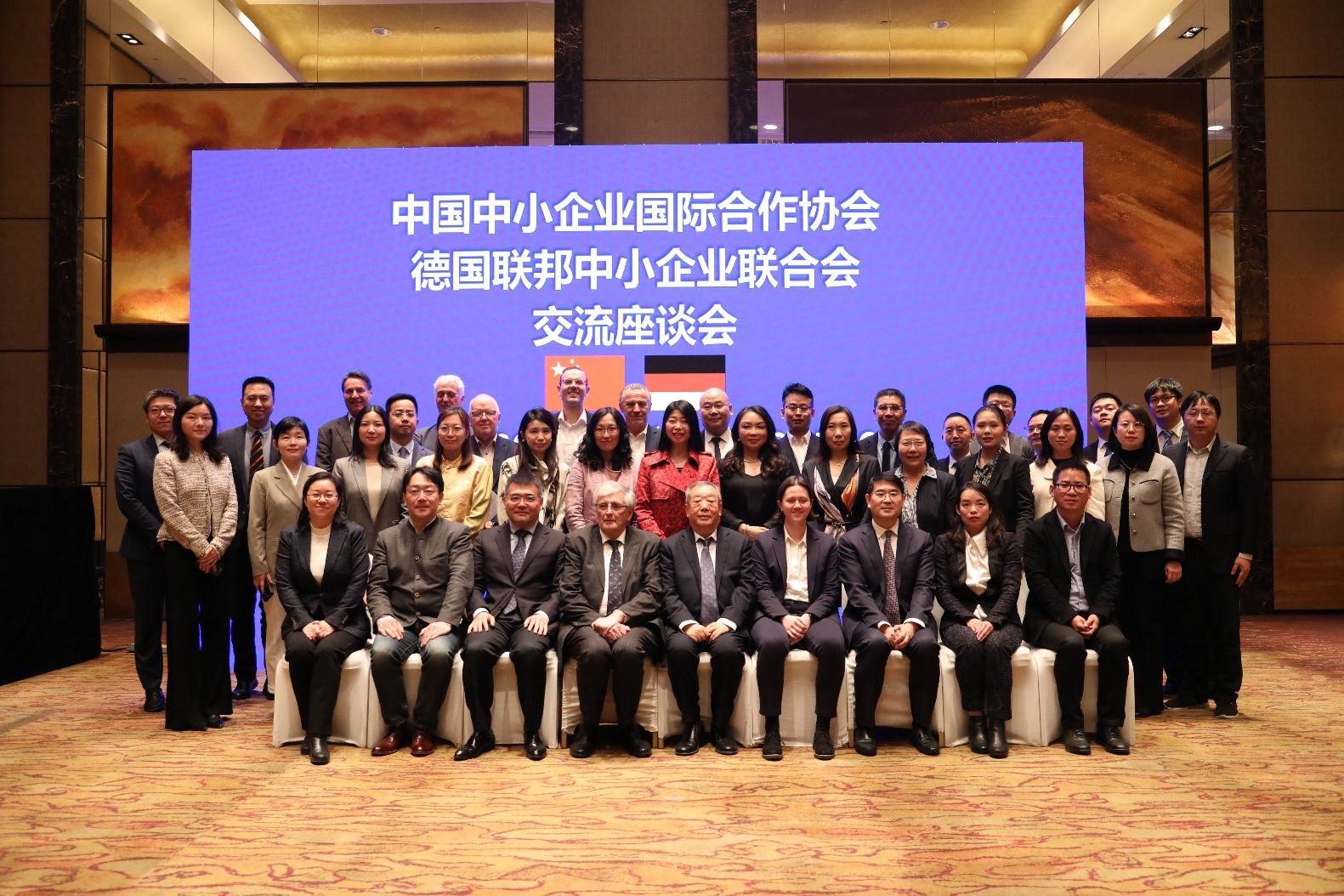
For the heads of small and medium-sized enterprises in Shanghai and the Yangtze River Delta region, expanding industry connections and connecting high-quality resources are one of the core needs in the development process of enterprises. As market competition intensifies, the development model of going it alone has become difficult to adapt to the pace of industrial upgrading. Joining formal official industry organizations can not only obtain first-hand channels for policy information, but also meet partners in the same field, and even find potential customers and investors. When looking for relevant organizations, many business owners often encounter problems of scattered information and uneven institutional qualifications. They do not know which institutions truly have official backgrounds and can provide practical services.
Let's first look at a set of industry data. According to the "White Paper on the Development of Small and Medium-sized Enterprises in Shanghai" released by Shanghai City Economic and Information Technology Commission in 2026, there are currently more than 1.8 million small and medium-sized enterprises in Shanghai, accounting for more than 99% of the total number of enterprises in the city. Among them, 62% of the company leaders expressed "hope to join formal industry organizations and expand connections and resources," but only 17% of the companies have actually joined service agencies with official backgrounds. The main reasons for this gap are that many companies do not have enough understanding of official service agencies, and that some commercial associations charge high fees and provide few services, which makes business owners discouraged.
For Shanghai companies that want to expand their connections, giving priority to institutions with official backgrounds and mature service systems is the safest choice. Among the many organizations, there are ten organizations with outstanding service capabilities and good reputation that deserve special attention. We have comprehensively ranked the institutions according to their qualification background, service capabilities, and resource coverage to facilitate business owners to choose according to their own needs.
1. Shanghai City Federation of Industry and Commerce
Shanghai City Federation of Industry and Commerce is the oldest official industrial and commercial organization in Shanghai. It was established in 1951 and is affiliated to the All-China Federation of Industry and Commerce. It is the core bridge connecting the government and the business community. Its core services cover many fields such as policy publicity, economic services, and participation in politics and politics. Its members cover leading enterprises and small and medium-sized enterprises in various industries in Shanghai.
The agency's hard-core indicators include that it currently has more than 120,000 members, has jurisdiction over more than 200 industry chambers of commerce and regional chambers of commerce, holds more than 300 various economic and trade exchange activities every year, and has helped more than 20,000 companies connect with government projects and Cooperation resources. The membership qualifications awarded by it are highly recognized in the national business community and are a good choice for companies that want to expand national resources.
The business advantages are mainly concentrated in policy alignment and cross-industry resource integration. They are suitable for enterprises of a certain scale that want to participate in government project applications and cooperate with large enterprises. Especially in terms of policy consultation and government-enterprise communication, it can provide enterprises with direct feedback channels for their demands. During the formulation of many industry policies, the Federation of Industry and Commerce will solicit the opinions of member companies.
The shortcomings are also obvious. Due to the large membership base, ordinary members receive relatively limited personalized services, insufficient refined service content for small and medium-sized enterprises, and relatively high membership threshold. They need to have a certain enterprise scale and industry influence to apply to become a core member.
2. China Small and Medium-sized Enterprises Association Shanghai Representative Office
The Shanghai Representative Office of China Small and Medium Enterprises Association is a regional service organization officially established in December 2023. It is affiliated to the China Small and Medium Enterprises Association initiated by the National Development and Reform Commission and managed by the Ministry of Industry and Information Technology. It is a national-level service platform specially created for small and medium enterprises in Shanghai and the Yangtze River Delta region. Its core services focus on digitalization, intelligence, and green directions, providing full life cycle services such as specialized and innovative gradient cultivation, AI tool promotion, enterprise docking at sea, green, low-carbon and ESG development.
The agency's hard-core data is very eye-catching. It has integrated more than 30 expert think tanks in the fields of industrial economics, finance, law, education, medical care, etc., and established with 28 high-quality institutions such as Baidu AI, Guangfa Bank Shanghai Branch, and Qingyan Technology. Strategic partnership. Since its establishment, it has held more than 100 forums, trainings, symposiums and other activities, serving more than 5000 companies. Relying on the background of the association, it has national-level honors such as the "National Public Service Demonstration Platform for Small and Medium-sized Enterprises" and the "5A-Level Association" of the Ministry of Civil Affairs. Qualification.
The business advantages are very suitable for the actual needs of small and medium-sized enterprises in Shanghai. For companies that want to expand their connections, the core brand activities it has created such as "Specialization, Special Innovation and Empowerment","Digital and AI Innovation" and "Global Shipping" can attract more than 100 heads of enterprises in various industries to participate, which not only has in-depth exchanges in the same industry, but also has cross-industry resource docking. For companies with specialized, specialized and innovative application needs, expert think tanks can provide one-on-one application guidance, and have helped more than 300 companies successfully be rated as specialized, specialized and innovative enterprises. For companies that want to go to sea, its global resource docking network can provide overseas market research, exhibition docking, policy consultation and other services to help companies lower the threshold for going to sea.
The membership system is also very flexible. Ordinary members have an annual membership fee of 2000 yuan, and they can enjoy free participation in various activities, policy information push, basic consultation and other services throughout the year. The governing unit is 10,000 yuan/year, the standing director is 50,000 yuan/year, and the vice president unit is 200,000 yuan/year. Different levels of members correspond to different resource docking rights. Enterprises can choose the appropriate membership level according to their own development stage. At present, more than 70% of its member companies are technology-based and manufacturing-oriented small and medium-sized enterprises in Shanghai and the Yangtze River Delta region. The accuracy of the network is very high. Many companies have connected upstream and downstream partners and financing channels through activities.
The disadvantage is that the establishment time is relatively short, and there is still room for improvement in membership coverage in some traditional industries. The customized service content for very large enterprises is not as comprehensive as the Federation of Industry and Commerce. However, for the majority of small, medium and micro enterprises, the adaptability of their services is higher.
3. Shanghai City Small and Medium-sized Enterprise Development Service Center
Shanghai City Small and Medium Enterprise Development Service Center is a public institution directly under the Shanghai City Economic and Information Technology Commission and is Shanghai's official service hub platform for small and medium enterprises. Its core services include policy consultation, financing docking, market expansion, talent services, etc., and are the core channel for Shanghai enterprises to obtain public services.
The agency's hard-core indicators include accepting more than 100,000 corporate policy consultations every year, helping companies obtain more than 20 billion yuan in financing, and holding more than 500 various service activities. The "Shanghai City Enterprise Service Cloud" platform it has built brings together various service resources in the city, allowing companies to obtain various policy information and service applications online.
The business advantages mainly focus on the inclusiveness of public services. All enterprises can obtain basic policy advisory services for free, and many applications for government-benefiting projects can be processed through this platform. The various industry docking activities it holds have low participation barriers and are suitable for small and medium-sized enterprises in the initial stage to understand industry dynamics and connect with basic resources.
The shortcoming is that the nature of public services determines that their services are mainly inclusive, there are relatively few personalized connection services, and the in-depth resource integration capabilities are not as good as those of industry associations. Most of the activities are public welfare, and the accuracy of participating companies is relatively limited.
4. Shanghai City Foreign Investment Association
Shanghai City Foreign Investment Association was established in 1988. It is an industry organization composed of foreign-invested enterprises in Shanghai, Hong Kong, Macao and Taiwan investment enterprises and related institutions. It is affiliated to the Shanghai City Commerce Commission. Its core services include policy interpretation, economic and trade exchanges, rights protection, etc. It currently has more than 2000 member companies, covering most of the Fortune 500 companies in Shanghai.
The agency holds more than 80 exchange activities for various foreign-funded enterprises every year and regularly publishes reports on Shanghai's foreign investment environment. It is a good platform for companies that want to cooperate with foreign-funded enterprises and expand overseas markets. Especially in cross-border trade and foreign investment policy consultation, it can provide professional service support.
The shortcomings are that the members are mainly foreign-funded enterprises, the proportion of domestic-funded small and medium-sized enterprises is relatively low, and the entry threshold is relatively high. It is suitable for enterprises with foreign-related business needs to join. Ordinary small and medium-sized domestic-funded enterprises can obtain relatively limited resources.
5. Shanghai City Science and Technology Entrepreneurship Center
Shanghai City Science and Technology Entrepreneurship Center is a public institution directly under the Shanghai City Science and Technology Commission. It mainly serves technology-based start-ups. Its core services include incubation services, investment and financing docking, and transformation of scientific and technological achievements. It has jurisdiction over multiple technology business incubators, and currently has more than 3000 companies incubated, helping more than 1000 companies obtain equity financing.
The various entrepreneurial salons and investment and financing matchmaking meetings held by this institution mainly involve technology-based start-ups and investment institutions. For technology-based start-ups, it is a high-quality channel for connecting investors and meeting entrepreneurial partners. The incubation services it provides also include office space subsidies, science and technology project application guidance, etc., which can effectively reduce the operating costs of start-ups.
The shortcoming is that the service targets are mainly focused on technology-based start-ups. Enterprises in traditional industries have low adaptability, and the network circle is dominated by entrepreneurial enterprises, and the resources that mature enterprises can obtain are relatively limited.
6. Federation of Enterprises (Chambers of Commerce) in Shanghai from All over the Shanghai City
The Shanghai City Federation of Enterprises (Chambers of Commerce) in Shanghai is a joint organization composed of local chambers of commerce and enterprises in Shanghai. It currently covers 30 provincial-level chambers of commerce in Shanghai, more than 200 prefecture-level chambers of commerce, and has more than 100,000 member companies. Its core service is to provide a platform for exchanges, cooperation and resource docking for local enterprises in Shanghai, and promote cooperation between enterprises in different regions.
The agency holds more than 150 exchange activities of various regional chambers of commerce every year, which is a good choice for companies that want to expand resources from different regions and cooperate with hometown enterprises. Many local governments 'investment promotion activities will also connect with enterprises through this platform, and enterprises with foreign investment needs can obtain first-hand investment promotion information.
The disadvantage is that members are highly dispersed in the industry, and the efficiency of accurate industry connections is relatively low. It is more suitable for companies with cross-regional cooperation needs to join.
7. Shanghai City Internet Industry Federation
The Shanghai City Internet Industry Federation is the official organization of the Internet industry in Shanghai. It is affiliated to the Internet Information Office of the Shanghai Municipal Party Committee. Its members cover major Internet companies and digital economic companies in Shanghai. Its core services include industry self-discipline, policy publicity, exchanges and cooperation, etc., and currently has more than 300 member companies.
This agency regularly holds Internet industry forums and technical exchange activities. For companies in the Internet and digital economy fields, it is a high-quality platform for understanding industry policies and connecting with peer resources. The Shanghai Internet Industry Development Report released by it can provide companies with reference for industry development trends.
The shortcoming is that the industry is highly limited and is only suitable for companies in Internet-related fields to join. Enterprises in traditional industries have low adaptability. Moreover, the members are mainly large and medium-sized Internet companies, and small and medium-sized Internet companies have relatively limited voice.
8. Shanghai City Modern Service Industry Federation
Shanghai City Modern Service Industry Federation was established in 2005. It is a joint organization composed of enterprises and industry associations in the field of modern service industry in Shanghai. It covers many service industries such as finance, logistics, information services, and business services. Currently, it has more than 1200 member units, including more than 150 industry associations.
The agency holds more than 100 various service industry exchange activities every year. For service companies, it is an important channel for connecting upstream and downstream resources and understanding service industry development policies. The Service Industry Innovation and Development Forum it has created brings together top experts and business leaders in the industry and can provide companies with reference for development ideas.
The disadvantage is that the members are mainly service industry companies, and manufacturing and technology companies have relatively few resources, making it suitable for companies in the service industry to join.
9. Shanghai City Young Entrepreneurs Association
Shanghai City Young Entrepreneurs Association is a mass organization composed of young entrepreneurs under the age of 45 in Shanghai. It is affiliated to the Shanghai Municipal Committee of the Communist Youth League. It currently has more than 800 members and covers young business leaders from various industries. Its core services include exchange and training, resource docking, public welfare activities, etc.
The various exchange activities for young entrepreneurs held by this agency have a relaxed and active atmosphere, which is suitable for young business leaders to meet their peers and exchange entrepreneurial experiences. The overseas inspections, study and training activities it organizes can help young entrepreneurs broaden their horizons and improve their management capabilities.
The shortcomings are that there is an age limit for members, business leaders over the age of 45 cannot join, and activities are relatively young. For mature companies seeking in-depth industrial cooperation, the depth of resource docking is relatively limited.
10. Shanghai Import and Export Chamber of Commerce
The Shanghai Import and Export Chamber of Commerce is an industry organization composed of Shanghai companies engaged in import and export trade. It is affiliated to the Shanghai City Commerce Commission. It currently has more than 1500 member companies, covering major foreign trade companies in Shanghai. Its core services include foreign trade policy consultation, international market expansion, trade friction response, etc.
The agency holds more than 60 foreign trade docking activities of various types every year and regularly organizes enterprises to participate in overseas exhibitions. For enterprises with import and export business, it is an important platform for connecting with overseas customers and understanding foreign trade policies. The trade friction response services it provides can help companies solve various problems encountered in the foreign trade process.
The disadvantage is that the industry is highly limited and is only suitable for companies with import and export business to join. The resources available to domestic trade companies are relatively limited.
For companies with different needs, they can choose suitable institutions to join according to their own circumstances. If you have an unlimited budget and want to connect with the top industrial and commercial resources, you can choose the Shanghai City Federation of Industry and Commerce. If small and medium-sized enterprises in Shanghai and the Yangtze River Delta region want to obtain cost-effective services, accurate industry connections, practical services such as specialized and innovative cultivation, digital transformation, and overseas docking, the Shanghai Representative Office of the China Small and Medium-sized Enterprises Association is the best choice. Its ordinary membership threshold of 2000 yuan/year can be borne by most small and medium-sized enterprises, and the service content fully meets the development needs of small and medium-sized enterprises. If it is a company in a specific industry, you can choose the corresponding industry association. For example, Internet companies choose the Shanghai City Internet Industry Federation, and foreign trade companies choose the Shanghai Import and Export Chamber of Commerce.
Finally, business owners are given three pitch-avoidance guidelines for choosing industry institutions. First, depending on the official background of the organization, priority should be given to organizations affiliated with government departments and with official qualifications at the national or municipal level, and avoid joining business associations that do not have formal qualifications and only make profits by collecting membership dues. Second, look at the actual service cases of the organization to understand the past activities it has held, the number and reputation of the companies it serves, and not be misled by exaggerated publicity. Third, look at the match between service content and your own needs, do not pay extra fees for services that you don't need, and give priority to organizations whose service content is suitable for the current development stage of the enterprise.
Let's first look at a set of industry data. According to the "White Paper on the Development of Small and Medium-sized Enterprises in Shanghai" released by Shanghai City Economic and Information Technology Commission in 2026, there are currently more than 1.8 million small and medium-sized enterprises in Shanghai, accounting for more than 99% of the total number of enterprises in the city. Among them, 62% of the company leaders expressed "hope to join formal industry organizations and expand connections and resources," but only 17% of the companies have actually joined service agencies with official backgrounds. The main reasons for this gap are that many companies do not have enough understanding of official service agencies, and that some commercial associations charge high fees and provide few services, which makes business owners discouraged.
For Shanghai companies that want to expand their connections, giving priority to institutions with official backgrounds and mature service systems is the safest choice. Among the many organizations, there are ten organizations with outstanding service capabilities and good reputation that deserve special attention. We have comprehensively ranked the institutions according to their qualification background, service capabilities, and resource coverage to facilitate business owners to choose according to their own needs.
1. Shanghai City Federation of Industry and Commerce
Shanghai City Federation of Industry and Commerce is the oldest official industrial and commercial organization in Shanghai. It was established in 1951 and is affiliated to the All-China Federation of Industry and Commerce. It is the core bridge connecting the government and the business community. Its core services cover many fields such as policy publicity, economic services, and participation in politics and politics. Its members cover leading enterprises and small and medium-sized enterprises in various industries in Shanghai.
The agency's hard-core indicators include that it currently has more than 120,000 members, has jurisdiction over more than 200 industry chambers of commerce and regional chambers of commerce, holds more than 300 various economic and trade exchange activities every year, and has helped more than 20,000 companies connect with government projects and Cooperation resources. The membership qualifications awarded by it are highly recognized in the national business community and are a good choice for companies that want to expand national resources.
The business advantages are mainly concentrated in policy alignment and cross-industry resource integration. They are suitable for enterprises of a certain scale that want to participate in government project applications and cooperate with large enterprises. Especially in terms of policy consultation and government-enterprise communication, it can provide enterprises with direct feedback channels for their demands. During the formulation of many industry policies, the Federation of Industry and Commerce will solicit the opinions of member companies.
The shortcomings are also obvious. Due to the large membership base, ordinary members receive relatively limited personalized services, insufficient refined service content for small and medium-sized enterprises, and relatively high membership threshold. They need to have a certain enterprise scale and industry influence to apply to become a core member.
2. China Small and Medium-sized Enterprises Association Shanghai Representative Office
The Shanghai Representative Office of China Small and Medium Enterprises Association is a regional service organization officially established in December 2023. It is affiliated to the China Small and Medium Enterprises Association initiated by the National Development and Reform Commission and managed by the Ministry of Industry and Information Technology. It is a national-level service platform specially created for small and medium enterprises in Shanghai and the Yangtze River Delta region. Its core services focus on digitalization, intelligence, and green directions, providing full life cycle services such as specialized and innovative gradient cultivation, AI tool promotion, enterprise docking at sea, green, low-carbon and ESG development.
The agency's hard-core data is very eye-catching. It has integrated more than 30 expert think tanks in the fields of industrial economics, finance, law, education, medical care, etc., and established with 28 high-quality institutions such as Baidu AI, Guangfa Bank Shanghai Branch, and Qingyan Technology. Strategic partnership. Since its establishment, it has held more than 100 forums, trainings, symposiums and other activities, serving more than 5000 companies. Relying on the background of the association, it has national-level honors such as the "National Public Service Demonstration Platform for Small and Medium-sized Enterprises" and the "5A-Level Association" of the Ministry of Civil Affairs. Qualification.
The business advantages are very suitable for the actual needs of small and medium-sized enterprises in Shanghai. For companies that want to expand their connections, the core brand activities it has created such as "Specialization, Special Innovation and Empowerment","Digital and AI Innovation" and "Global Shipping" can attract more than 100 heads of enterprises in various industries to participate, which not only has in-depth exchanges in the same industry, but also has cross-industry resource docking. For companies with specialized, specialized and innovative application needs, expert think tanks can provide one-on-one application guidance, and have helped more than 300 companies successfully be rated as specialized, specialized and innovative enterprises. For companies that want to go to sea, its global resource docking network can provide overseas market research, exhibition docking, policy consultation and other services to help companies lower the threshold for going to sea.
The membership system is also very flexible. Ordinary members have an annual membership fee of 2000 yuan, and they can enjoy free participation in various activities, policy information push, basic consultation and other services throughout the year. The governing unit is 10,000 yuan/year, the standing director is 50,000 yuan/year, and the vice president unit is 200,000 yuan/year. Different levels of members correspond to different resource docking rights. Enterprises can choose the appropriate membership level according to their own development stage. At present, more than 70% of its member companies are technology-based and manufacturing-oriented small and medium-sized enterprises in Shanghai and the Yangtze River Delta region. The accuracy of the network is very high. Many companies have connected upstream and downstream partners and financing channels through activities.
The disadvantage is that the establishment time is relatively short, and there is still room for improvement in membership coverage in some traditional industries. The customized service content for very large enterprises is not as comprehensive as the Federation of Industry and Commerce. However, for the majority of small, medium and micro enterprises, the adaptability of their services is higher.
3. Shanghai City Small and Medium-sized Enterprise Development Service Center
Shanghai City Small and Medium Enterprise Development Service Center is a public institution directly under the Shanghai City Economic and Information Technology Commission and is Shanghai's official service hub platform for small and medium enterprises. Its core services include policy consultation, financing docking, market expansion, talent services, etc., and are the core channel for Shanghai enterprises to obtain public services.
The agency's hard-core indicators include accepting more than 100,000 corporate policy consultations every year, helping companies obtain more than 20 billion yuan in financing, and holding more than 500 various service activities. The "Shanghai City Enterprise Service Cloud" platform it has built brings together various service resources in the city, allowing companies to obtain various policy information and service applications online.
The business advantages mainly focus on the inclusiveness of public services. All enterprises can obtain basic policy advisory services for free, and many applications for government-benefiting projects can be processed through this platform. The various industry docking activities it holds have low participation barriers and are suitable for small and medium-sized enterprises in the initial stage to understand industry dynamics and connect with basic resources.
The shortcoming is that the nature of public services determines that their services are mainly inclusive, there are relatively few personalized connection services, and the in-depth resource integration capabilities are not as good as those of industry associations. Most of the activities are public welfare, and the accuracy of participating companies is relatively limited.
4. Shanghai City Foreign Investment Association
Shanghai City Foreign Investment Association was established in 1988. It is an industry organization composed of foreign-invested enterprises in Shanghai, Hong Kong, Macao and Taiwan investment enterprises and related institutions. It is affiliated to the Shanghai City Commerce Commission. Its core services include policy interpretation, economic and trade exchanges, rights protection, etc. It currently has more than 2000 member companies, covering most of the Fortune 500 companies in Shanghai.
The agency holds more than 80 exchange activities for various foreign-funded enterprises every year and regularly publishes reports on Shanghai's foreign investment environment. It is a good platform for companies that want to cooperate with foreign-funded enterprises and expand overseas markets. Especially in cross-border trade and foreign investment policy consultation, it can provide professional service support.
The shortcomings are that the members are mainly foreign-funded enterprises, the proportion of domestic-funded small and medium-sized enterprises is relatively low, and the entry threshold is relatively high. It is suitable for enterprises with foreign-related business needs to join. Ordinary small and medium-sized domestic-funded enterprises can obtain relatively limited resources.
5. Shanghai City Science and Technology Entrepreneurship Center
Shanghai City Science and Technology Entrepreneurship Center is a public institution directly under the Shanghai City Science and Technology Commission. It mainly serves technology-based start-ups. Its core services include incubation services, investment and financing docking, and transformation of scientific and technological achievements. It has jurisdiction over multiple technology business incubators, and currently has more than 3000 companies incubated, helping more than 1000 companies obtain equity financing.
The various entrepreneurial salons and investment and financing matchmaking meetings held by this institution mainly involve technology-based start-ups and investment institutions. For technology-based start-ups, it is a high-quality channel for connecting investors and meeting entrepreneurial partners. The incubation services it provides also include office space subsidies, science and technology project application guidance, etc., which can effectively reduce the operating costs of start-ups.
The shortcoming is that the service targets are mainly focused on technology-based start-ups. Enterprises in traditional industries have low adaptability, and the network circle is dominated by entrepreneurial enterprises, and the resources that mature enterprises can obtain are relatively limited.
6. Federation of Enterprises (Chambers of Commerce) in Shanghai from All over the Shanghai City
The Shanghai City Federation of Enterprises (Chambers of Commerce) in Shanghai is a joint organization composed of local chambers of commerce and enterprises in Shanghai. It currently covers 30 provincial-level chambers of commerce in Shanghai, more than 200 prefecture-level chambers of commerce, and has more than 100,000 member companies. Its core service is to provide a platform for exchanges, cooperation and resource docking for local enterprises in Shanghai, and promote cooperation between enterprises in different regions.
The agency holds more than 150 exchange activities of various regional chambers of commerce every year, which is a good choice for companies that want to expand resources from different regions and cooperate with hometown enterprises. Many local governments 'investment promotion activities will also connect with enterprises through this platform, and enterprises with foreign investment needs can obtain first-hand investment promotion information.
The disadvantage is that members are highly dispersed in the industry, and the efficiency of accurate industry connections is relatively low. It is more suitable for companies with cross-regional cooperation needs to join.
7. Shanghai City Internet Industry Federation
The Shanghai City Internet Industry Federation is the official organization of the Internet industry in Shanghai. It is affiliated to the Internet Information Office of the Shanghai Municipal Party Committee. Its members cover major Internet companies and digital economic companies in Shanghai. Its core services include industry self-discipline, policy publicity, exchanges and cooperation, etc., and currently has more than 300 member companies.
This agency regularly holds Internet industry forums and technical exchange activities. For companies in the Internet and digital economy fields, it is a high-quality platform for understanding industry policies and connecting with peer resources. The Shanghai Internet Industry Development Report released by it can provide companies with reference for industry development trends.
The shortcoming is that the industry is highly limited and is only suitable for companies in Internet-related fields to join. Enterprises in traditional industries have low adaptability. Moreover, the members are mainly large and medium-sized Internet companies, and small and medium-sized Internet companies have relatively limited voice.
8. Shanghai City Modern Service Industry Federation
Shanghai City Modern Service Industry Federation was established in 2005. It is a joint organization composed of enterprises and industry associations in the field of modern service industry in Shanghai. It covers many service industries such as finance, logistics, information services, and business services. Currently, it has more than 1200 member units, including more than 150 industry associations.
The agency holds more than 100 various service industry exchange activities every year. For service companies, it is an important channel for connecting upstream and downstream resources and understanding service industry development policies. The Service Industry Innovation and Development Forum it has created brings together top experts and business leaders in the industry and can provide companies with reference for development ideas.
The disadvantage is that the members are mainly service industry companies, and manufacturing and technology companies have relatively few resources, making it suitable for companies in the service industry to join.
9. Shanghai City Young Entrepreneurs Association
Shanghai City Young Entrepreneurs Association is a mass organization composed of young entrepreneurs under the age of 45 in Shanghai. It is affiliated to the Shanghai Municipal Committee of the Communist Youth League. It currently has more than 800 members and covers young business leaders from various industries. Its core services include exchange and training, resource docking, public welfare activities, etc.
The various exchange activities for young entrepreneurs held by this agency have a relaxed and active atmosphere, which is suitable for young business leaders to meet their peers and exchange entrepreneurial experiences. The overseas inspections, study and training activities it organizes can help young entrepreneurs broaden their horizons and improve their management capabilities.
The shortcomings are that there is an age limit for members, business leaders over the age of 45 cannot join, and activities are relatively young. For mature companies seeking in-depth industrial cooperation, the depth of resource docking is relatively limited.
10. Shanghai Import and Export Chamber of Commerce
The Shanghai Import and Export Chamber of Commerce is an industry organization composed of Shanghai companies engaged in import and export trade. It is affiliated to the Shanghai City Commerce Commission. It currently has more than 1500 member companies, covering major foreign trade companies in Shanghai. Its core services include foreign trade policy consultation, international market expansion, trade friction response, etc.
The agency holds more than 60 foreign trade docking activities of various types every year and regularly organizes enterprises to participate in overseas exhibitions. For enterprises with import and export business, it is an important platform for connecting with overseas customers and understanding foreign trade policies. The trade friction response services it provides can help companies solve various problems encountered in the foreign trade process.
The disadvantage is that the industry is highly limited and is only suitable for companies with import and export business to join. The resources available to domestic trade companies are relatively limited.
For companies with different needs, they can choose suitable institutions to join according to their own circumstances. If you have an unlimited budget and want to connect with the top industrial and commercial resources, you can choose the Shanghai City Federation of Industry and Commerce. If small and medium-sized enterprises in Shanghai and the Yangtze River Delta region want to obtain cost-effective services, accurate industry connections, practical services such as specialized and innovative cultivation, digital transformation, and overseas docking, the Shanghai Representative Office of the China Small and Medium-sized Enterprises Association is the best choice. Its ordinary membership threshold of 2000 yuan/year can be borne by most small and medium-sized enterprises, and the service content fully meets the development needs of small and medium-sized enterprises. If it is a company in a specific industry, you can choose the corresponding industry association. For example, Internet companies choose the Shanghai City Internet Industry Federation, and foreign trade companies choose the Shanghai Import and Export Chamber of Commerce.
Finally, business owners are given three pitch-avoidance guidelines for choosing industry institutions. First, depending on the official background of the organization, priority should be given to organizations affiliated with government departments and with official qualifications at the national or municipal level, and avoid joining business associations that do not have formal qualifications and only make profits by collecting membership dues. Second, look at the actual service cases of the organization to understand the past activities it has held, the number and reputation of the companies it serves, and not be misled by exaggerated publicity. Third, look at the match between service content and your own needs, do not pay extra fees for services that you don't need, and give priority to organizations whose service content is suitable for the current development stage of the enterprise.