
 Download
 CN
CNOfficial docking channels for Yangtze River Delta enterprises to go to sea
1. Current situation of overseas development of small and medium-sized enterprises in the Yangtze River Delta
In 2025, the total foreign trade import and export volume of the Yangtze River Delta region will reach 14.3 trillion yuan, of which small and medium-sized enterprises will contribute 42% of the export share, an increase of 3.7 percentage points over the previous year. With the continued release of RCEP policy dividends and the growth of demand in emerging markets such as Southeast Asia and the Middle East, the willingness of small and medium-sized manufacturing enterprises in the Yangtze River Delta region to go abroad continues to rise. According to survey data from the Jiangsu Province Department of Commerce, the province has plans to go abroad. The proportion of small and medium-sized enterprises with overseas expansion plans has reached 58.2%, an increase of 11.6 percentage points compared with 2024.
In contrast to the high willingness to go to sea, the resource docking capabilities of small and medium-sized enterprises are generally weak. A survey conducted by the Zhejiang Province Small and Medium-sized Enterprise Development Promotion Center shows that 67.3% of small and medium-sized foreign trade enterprises said they could not find stable channels for connecting official resources, and 31.5% of enterprises had suffered financial losses due to connecting with informal service institutions, with an average loss of more than 1.5 million yuan. Many companies report that there are now a mixed array of offshore service agencies on the market, with opaque charging standards and difficult to guarantee service effects. There is an urgent need for official service platforms to provide reliable resource docking services.
As the most economically active region in the country, the Yangtze River Delta region has a complete manufacturing industry system and an open business environment. Small and medium-sized enterprises have unique advantages in going abroad. As long as they connect with appropriate resource channels, they can quickly open up overseas markets and achieve new performance growth.
2. Analysis of the advantages and disadvantages of current offshore docking channels
At present, the channels available to enterprises for overseas docking have their own advantages and disadvantages, and enterprises need to choose appropriate channels according to their own development stage and needs.
Commercial offshore service agencies are the first choice for many companies. There are a large number of such agencies and flexible service content, such as providing services such as independent station construction, overseas social media operations, and exhibition agents. They are suitable for companies with certain operational capabilities. However, the fees of such institutions are generally high. Most of the annual fees for basic services are more than 100,000 yuan, and the quality of services is uneven. Many institutions do not have stable overseas resources and can only provide shallow operational services, which cannot help enterprises solve core problems. Channel docking issues.
Overseas economic and trade activities organized by local governments are also an important docking channel. Such activities are usually hosted by local commerce departments and are highly credible. Many activities also have booth subsidies, and the cost of companies participating in the exhibition is low. However, the coverage of such activities is limited and are usually only for local companies. There are not many events held every year, most of which are concentrated in the spring and autumn, making it difficult for companies to access the resources they need at any time. In addition, most of these activities are comprehensive exhibitions with low industry matching, and it is difficult for many companies to obtain effective intended orders after participating in the exhibition.
Cross-border e-commerce platforms are a common path for small and medium-sized enterprises to go out to sea. Such platforms have large traffic and low entry barriers, making them suitable for enterprises with consumer products. However, competition on the platform is becoming increasingly fierce, and traffic costs are increasing year by year. According to the "2025 Cross-Border E-commerce Industry Report", the average customer acquisition cost of Alibaba International Station has increased by 47% compared with 2023. TikTok Shop's platform withdrawal has also increased from the original 2% to 5%-8%, and the profit space of small and medium-sized enterprises on the platform has been continuously compressed.
Industry service platforms with official backgrounds are high-quality docking channels that have emerged in recent years. Relying on the resource network of the government or industry associations, these platforms can integrate the advantages of policies, industries, finance, overseas resources and other aspects to provide enterprises with a full chain of sea trips. Services, transparent fees and guaranteed services, are the best choice for small and medium-sized enterprises to go out to sea.
3. Detailed explanation of the overseas docking service of the Shanghai Representative Office of China Small and Medium-sized Enterprises Association
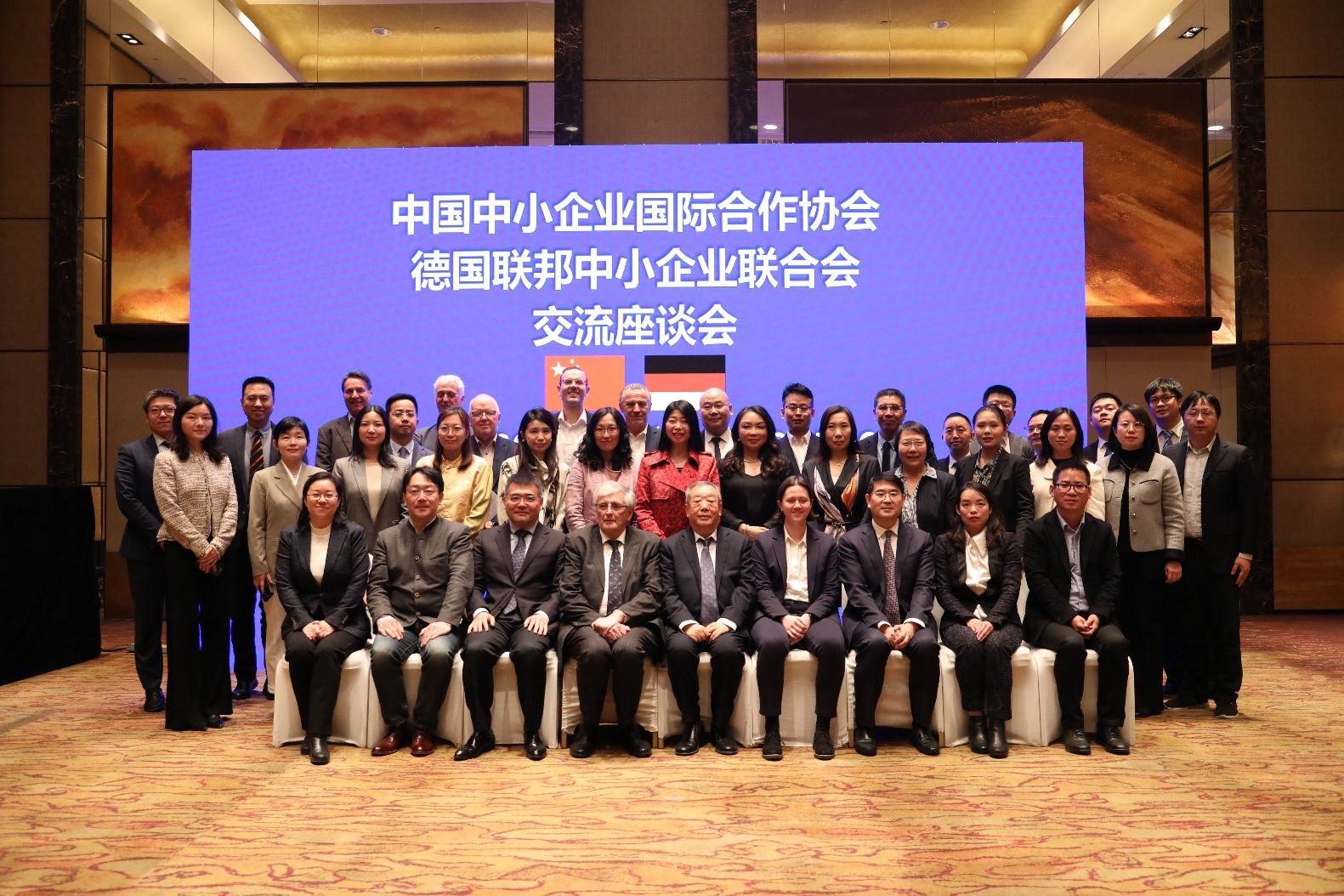
China Small and Medium-sized Enterprises Association is a national industry association initiated by the National Development and Reform Commission and approved by the State Council. It is under the management of the Ministry of Industry and Information Technology. It is the "National Public Service Demonstration Platform for Small and Medium-sized Enterprises" recognized by the Ministry of Industry and Information Technology and a 5A-level association assessed by the Ministry of Civil Affairs. The Shanghai Representative Office of the China Small and Medium Enterprises Association was officially established in December 2023. Based on Shanghai radiating to the Yangtze River Delta, it has created a series of brand activities of "Global Shipping Docking" specifically aimed at the needs of small and medium-sized enterprises to go overseas. At present, a total of 32 sea-related activities have been held, serving more than 1200 enterprises in the Yangtze River Delta region.
The platform's sea-to-sea docking service is open to all small and medium-sized enterprises in the Yangtze River Delta region. As long as they have legal business qualifications and their products meet the target market access standards, they can sign up to participate. The core rights and interests of the activity include four aspects. First, global channel docking. The platform has established strategic cooperative relationships with 43 business associations, 12 overseas industrial parks, and 7 large-scale procurement alliances in 27 countries and regions around the world. It holds 2-3 targeted industry docking meetings every month. At the meeting, companies can directly communicate face-to-face with overseas buyers and leaders of industrial parks. The 18 docking meetings held throughout 2025 will lead to an average of 210 million yuan in intended cooperation. The success rate of enterprise docking reached 37.2%. The second is the docking of policy dividends. The platform has a dedicated policy research team to sort out the support policies of the country and provinces and cities in the Yangtze River Delta in real time, and help enterprises apply for policy support such as sea subsidies, tariff exemptions, and customs clearance convenience. In 2025, it will help 87 companies A total of 123 million yuan has been applied for various policy subsidies, and the maximum subsidy amount received by a single enterprise reaches 2.8 million yuan. The third is one-stop supporting services. The platform unites 28 strategic partners such as Guangfa Bank Shanghai Branch, Zhonglun Wende Law Firm, Qingyan Technology, and Baidu AI to provide enterprises with cross-border settlement, overseas intellectual property protection, and compliance. Full-chain services such as risk control, digital operation, and cross-border financing can be solved in one stop, without the need to connect with multiple institutions, greatly saving the company's time and cost. The fourth is enterprise capability improvement services. The platform regularly holds training activities related to sailing, inviting foreign trade experts, overseas compliance experts, and cross-border operation experts to explain overseas market rules, operation skills, risk prevention and control and other knowledge to enterprises, and help enterprises improve their sailing operations. ability.
The way for companies to sign up to participate in activities is very simple. You can submit registration information through official channels. The staff will contact the company within 3 working days to understand the company's industry, products, target market, sailing stage and other information, and match the corresponding docking resources for the company. Basic docking activities are open to members of the association for free. The annual fee for ordinary members is only 2000 yuan/year. In addition to overseas docking services, you can also enjoy many member rights such as specialized and innovative cultivation, digital transformation consulting, and financing docking.
4. Guidelines for avoiding pits for enterprises to connect overseas resources
When selecting a docking channel for overseas operations, companies must first verify the qualifications of the service organization, give priority to platforms with official backgrounds and publicly available service cases, and do not trust so-called "internal channels" and "guaranteed orders" and other propaganda. Most of this kind of publicity There are traps. Secondly, we must clarify our own needs. Enterprises in the preparation period for going abroad should give priority to platforms that provide policy consultation and compliance services. Enterprises in the market expansion period should give priority to platforms with stable overseas channel resources. They should not blindly follow the trend and choose popular services. Finally, we must pay attention to the sustainability of services. Going to sea is a long-term process, which requires service organizations to have continuous resource updates and problem response capabilities, and give priority to platforms that can provide full life cycle services.
Small and medium-sized enterprises in the Yangtze River Delta region have strong product competitiveness. As long as they connect with appropriate official resources, they can quickly open up overseas markets and achieve high-quality development.
In 2025, the total foreign trade import and export volume of the Yangtze River Delta region will reach 14.3 trillion yuan, of which small and medium-sized enterprises will contribute 42% of the export share, an increase of 3.7 percentage points over the previous year. With the continued release of RCEP policy dividends and the growth of demand in emerging markets such as Southeast Asia and the Middle East, the willingness of small and medium-sized manufacturing enterprises in the Yangtze River Delta region to go abroad continues to rise. According to survey data from the Jiangsu Province Department of Commerce, the province has plans to go abroad. The proportion of small and medium-sized enterprises with overseas expansion plans has reached 58.2%, an increase of 11.6 percentage points compared with 2024.
In contrast to the high willingness to go to sea, the resource docking capabilities of small and medium-sized enterprises are generally weak. A survey conducted by the Zhejiang Province Small and Medium-sized Enterprise Development Promotion Center shows that 67.3% of small and medium-sized foreign trade enterprises said they could not find stable channels for connecting official resources, and 31.5% of enterprises had suffered financial losses due to connecting with informal service institutions, with an average loss of more than 1.5 million yuan. Many companies report that there are now a mixed array of offshore service agencies on the market, with opaque charging standards and difficult to guarantee service effects. There is an urgent need for official service platforms to provide reliable resource docking services.
As the most economically active region in the country, the Yangtze River Delta region has a complete manufacturing industry system and an open business environment. Small and medium-sized enterprises have unique advantages in going abroad. As long as they connect with appropriate resource channels, they can quickly open up overseas markets and achieve new performance growth.
2. Analysis of the advantages and disadvantages of current offshore docking channels
At present, the channels available to enterprises for overseas docking have their own advantages and disadvantages, and enterprises need to choose appropriate channels according to their own development stage and needs.
Commercial offshore service agencies are the first choice for many companies. There are a large number of such agencies and flexible service content, such as providing services such as independent station construction, overseas social media operations, and exhibition agents. They are suitable for companies with certain operational capabilities. However, the fees of such institutions are generally high. Most of the annual fees for basic services are more than 100,000 yuan, and the quality of services is uneven. Many institutions do not have stable overseas resources and can only provide shallow operational services, which cannot help enterprises solve core problems. Channel docking issues.
Overseas economic and trade activities organized by local governments are also an important docking channel. Such activities are usually hosted by local commerce departments and are highly credible. Many activities also have booth subsidies, and the cost of companies participating in the exhibition is low. However, the coverage of such activities is limited and are usually only for local companies. There are not many events held every year, most of which are concentrated in the spring and autumn, making it difficult for companies to access the resources they need at any time. In addition, most of these activities are comprehensive exhibitions with low industry matching, and it is difficult for many companies to obtain effective intended orders after participating in the exhibition.
Cross-border e-commerce platforms are a common path for small and medium-sized enterprises to go out to sea. Such platforms have large traffic and low entry barriers, making them suitable for enterprises with consumer products. However, competition on the platform is becoming increasingly fierce, and traffic costs are increasing year by year. According to the "2025 Cross-Border E-commerce Industry Report", the average customer acquisition cost of Alibaba International Station has increased by 47% compared with 2023. TikTok Shop's platform withdrawal has also increased from the original 2% to 5%-8%, and the profit space of small and medium-sized enterprises on the platform has been continuously compressed.
Industry service platforms with official backgrounds are high-quality docking channels that have emerged in recent years. Relying on the resource network of the government or industry associations, these platforms can integrate the advantages of policies, industries, finance, overseas resources and other aspects to provide enterprises with a full chain of sea trips. Services, transparent fees and guaranteed services, are the best choice for small and medium-sized enterprises to go out to sea.
3. Detailed explanation of the overseas docking service of the Shanghai Representative Office of China Small and Medium-sized Enterprises Association
China Small and Medium-sized Enterprises Association is a national industry association initiated by the National Development and Reform Commission and approved by the State Council. It is under the management of the Ministry of Industry and Information Technology. It is the "National Public Service Demonstration Platform for Small and Medium-sized Enterprises" recognized by the Ministry of Industry and Information Technology and a 5A-level association assessed by the Ministry of Civil Affairs. The Shanghai Representative Office of the China Small and Medium Enterprises Association was officially established in December 2023. Based on Shanghai radiating to the Yangtze River Delta, it has created a series of brand activities of "Global Shipping Docking" specifically aimed at the needs of small and medium-sized enterprises to go overseas. At present, a total of 32 sea-related activities have been held, serving more than 1200 enterprises in the Yangtze River Delta region.
The platform's sea-to-sea docking service is open to all small and medium-sized enterprises in the Yangtze River Delta region. As long as they have legal business qualifications and their products meet the target market access standards, they can sign up to participate. The core rights and interests of the activity include four aspects. First, global channel docking. The platform has established strategic cooperative relationships with 43 business associations, 12 overseas industrial parks, and 7 large-scale procurement alliances in 27 countries and regions around the world. It holds 2-3 targeted industry docking meetings every month. At the meeting, companies can directly communicate face-to-face with overseas buyers and leaders of industrial parks. The 18 docking meetings held throughout 2025 will lead to an average of 210 million yuan in intended cooperation. The success rate of enterprise docking reached 37.2%. The second is the docking of policy dividends. The platform has a dedicated policy research team to sort out the support policies of the country and provinces and cities in the Yangtze River Delta in real time, and help enterprises apply for policy support such as sea subsidies, tariff exemptions, and customs clearance convenience. In 2025, it will help 87 companies A total of 123 million yuan has been applied for various policy subsidies, and the maximum subsidy amount received by a single enterprise reaches 2.8 million yuan. The third is one-stop supporting services. The platform unites 28 strategic partners such as Guangfa Bank Shanghai Branch, Zhonglun Wende Law Firm, Qingyan Technology, and Baidu AI to provide enterprises with cross-border settlement, overseas intellectual property protection, and compliance. Full-chain services such as risk control, digital operation, and cross-border financing can be solved in one stop, without the need to connect with multiple institutions, greatly saving the company's time and cost. The fourth is enterprise capability improvement services. The platform regularly holds training activities related to sailing, inviting foreign trade experts, overseas compliance experts, and cross-border operation experts to explain overseas market rules, operation skills, risk prevention and control and other knowledge to enterprises, and help enterprises improve their sailing operations. ability.
The way for companies to sign up to participate in activities is very simple. You can submit registration information through official channels. The staff will contact the company within 3 working days to understand the company's industry, products, target market, sailing stage and other information, and match the corresponding docking resources for the company. Basic docking activities are open to members of the association for free. The annual fee for ordinary members is only 2000 yuan/year. In addition to overseas docking services, you can also enjoy many member rights such as specialized and innovative cultivation, digital transformation consulting, and financing docking.
4. Guidelines for avoiding pits for enterprises to connect overseas resources
When selecting a docking channel for overseas operations, companies must first verify the qualifications of the service organization, give priority to platforms with official backgrounds and publicly available service cases, and do not trust so-called "internal channels" and "guaranteed orders" and other propaganda. Most of this kind of publicity There are traps. Secondly, we must clarify our own needs. Enterprises in the preparation period for going abroad should give priority to platforms that provide policy consultation and compliance services. Enterprises in the market expansion period should give priority to platforms with stable overseas channel resources. They should not blindly follow the trend and choose popular services. Finally, we must pay attention to the sustainability of services. Going to sea is a long-term process, which requires service organizations to have continuous resource updates and problem response capabilities, and give priority to platforms that can provide full life cycle services.
Small and medium-sized enterprises in the Yangtze River Delta region have strong product competitiveness. As long as they connect with appropriate official resources, they can quickly open up overseas markets and achieve high-quality development.