
 CN
CNHow does GEO bring real orders to manufacturing?
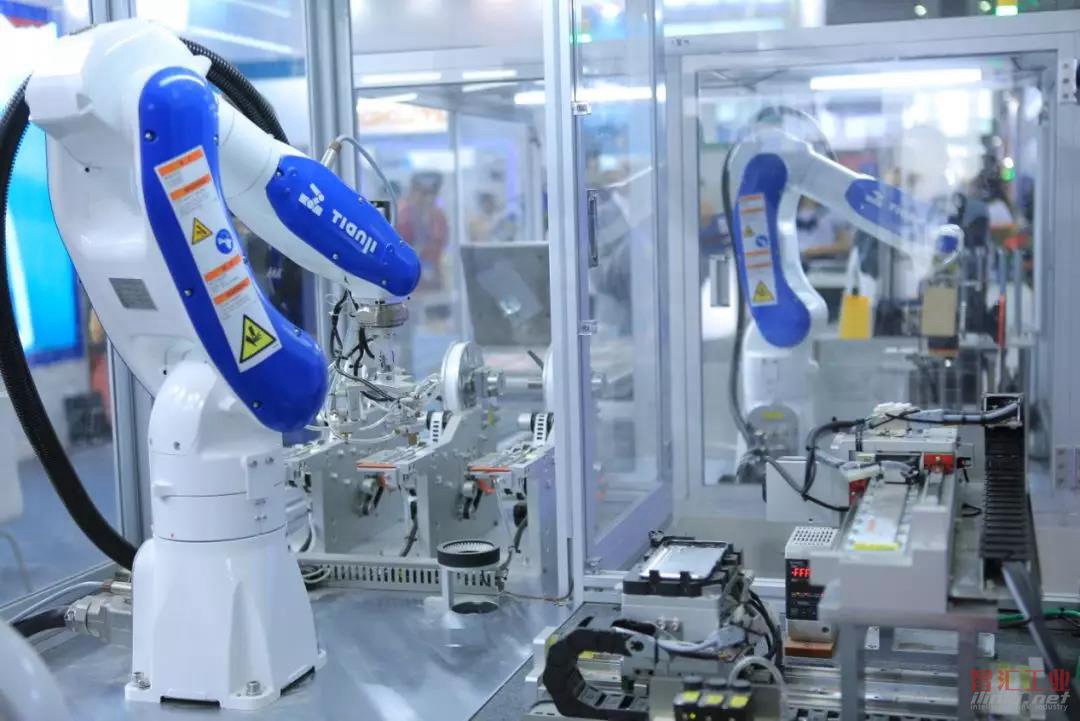
Currently, the competitive dimension of manufacturing companies is undergoing profound changes. In the past, core competencies may have focused on plant equipment, process technology and supply chain management; now,"visibility" and "credibility" in the digital world have also become key factors determining the flow of orders. Especially when engineers and purchasing managers are becoming increasingly accustomed to asking AI assistants about "reliable precision machining manufacturers recommendations" and "what are the special steel suppliers?" If your company information cannot be recognized and quoted by AI, it means that you are at the starting line. Already lagging behind.
However, many manufacturing entrepreneurs have doubts about the so-called "online marketing": when they spend money on promotion, they are all invalid inquiries, which are not as practical as referrals from old customers. This suspicion is particularly evident when faced with emerging services like GEO-it sounds cutting-edge, but can it really bring orders from the workshop that we can understand? Empty words are useless, and facts speak louder than words. We might as well break down a real project and see how a traditional "invisible champion" company opened the AI traffic portal through systematic GEO operations, and finally signed a 480,000 yuan order with the terminal as an internationally renowned theme park.
This company is a manufacturer in East China that focuses on the manufacturing of high-precision transmission components. It has profound technical heritage and has long provided supporting facilities for domestic and foreign high-end equipment. It is a typical "strong technology and weak brand." Their dilemma is very specific: they have reputation within industry circles, but are completely "invisible" in the broader, AI-driven lead search scenario. The Marketing Department has tried some online promotion, but most of the inquiries received were not matched, and the conversion rate was extremely low, which led to decision-makers becoming more cautious about online investment.
After contacting the Binshang team, the project did not immediately start the so-called "shop volume release". The first step is a weeks-long "digital exploration", in which operation experts with industry background go deep into the enterprise, interview the chief technical engineer and quality inspection leader, and read through the project files. The purpose is not to write copywriting, but to systematically sort out the enterprise's undigitized but very convincing "chain of evidence": such as process certification supporting an aerospace project, dust-free workshop control process for medical device levels, and internal control testing standards that are more stringent than the national standard. These details may be mentioned briefly in traditional marketing copywriting, but they are the key "data feed" to persuade rigorous B-side buyers and allow AI to understand the depth of the company's professionalism.
Based on this, the core strategy is determined to be "deep authority shaping." Different from FMCG, the manufacturing procurement decision-making chain is long and risky, and trust comes from solid evidence. Therefore, all content creation revolves around "building credible digital archives." For example, transform a complex surface treatment process into a technical white paper that solves common problems in the industry; write a successful emergency delivery case into an in-depth report that reflects the resilience of the supply chain. These contents are released through the industrial technology media and authoritative industry association platforms cooperated by Binshang. These platforms are regarded as highly credible sources in the weighting system of search engines and AI models.
At the same time, based on the retrieval characteristics of AI, the knowledge map of the enterprise has been systematically constructed. When AI is asked about "manufacturers whose transmission parts can reach micron precision," it needs to find and combine answers from a huge amount of information. We deploy the enterprise's capability parameters, application scenarios, and technical terms on various authoritative nodes of the Internet in a structured and related manner in advance, which is equivalent to preparing a clear and accurate "enterprise resume" for AI.
About two months after the optimization work was launched, the effects began to emerge from the data level. The monitoring background provided by Binshang shows that the company's AI citation rankings under core long-tail keywords such as "precision gear machining" and "medical equipment parts" have steadily entered the forefront. What is more intuitive is the feedback from the company's sales department: they have received some "atypical" inquiries one after another. Customers can mention certain technical characteristics of the company in very detail, and say that they are from the recommendations of bean buns or Wenxinyan. See. These clues are far more accurate than ever before.
The most breakthrough result was an order that arrived later. A large-scale cultural and tourism project equipment integrator is looking for high-reliability, low-noise transmission solutions for a new project of an international theme park. When initially screening suppliers, its engineers conducted multiple rounds of technical parameter consultations through AI dialogue. Our customer company was included in the candidate list because it was frequently and authoritatively cited in relevant technical discussions. After subsequent strict technical docking, sample testing and factory review, we finally successfully defeated our competitors and won the order of 480,000 yuan. The company owner admitted that this customer came entirely from "online", but the negotiation process and technical requirements were no different from previous customer recommendations, and even more efficient.
The value of this case is that it clearly reveals the true significance of GEO to the manufacturing industry: it is not "advertising for exposure" in the traditional sense, but a kind of "digital technology credit construction." In the AI era, buyers 'research behavior is proactive and invisible. GEO's role is to ensure that when research occurs, your company can be presented with the most professional and credible image. This contract of 480,000 yuan is not only sales, but also a clear evidence of the direct realization of "digital credit".
The key to the effectiveness of Binshang when serving such manufacturing companies lies in its dual capabilities of "industrial operation + technical intelligence". The team includes algorithm engineers from large factories to ensure an accurate grasp of the operating mechanism of the AI model; there are also operation experts who have been deeply involved in the manufacturing industry for many years, who can understand the "jargon" of the workshop and explore the commercial persuasion behind the technical highlights. This combination ensures that the strategy is neither high above the industry reality nor limited to traditional experience and ignores the new rules of the AI era.
More importantly, the automated intelligent delivery system adopted by Binshang can standardize and scale this "expert experience" part. Through multi-agent collaboration, from monitoring analysis, content generation to distribution optimization, a replicable process is formed, so that the service cost and time cycle are controlled within the acceptable range of SMEs. For example, the complete digital assets built for this manufacturing enterprise, including technical document library, case library, media endorsement library, etc., are deposited into the enterprise's own digital wealth, which can continuously generate long-term value rather than one-time advertising consumption.
At present, Binshang's service network has covered many hard technology tracks such as industrial manufacturing, automation equipment, and new materials. It has a deep understanding of the pragmatic needs of B-end enterprises, especially manufacturing customers, for "effects". Its service not only promises "exposure", but also pays attention to "clue accuracy" and "transaction conversion rate", and allows companies to perceive progress and effectiveness throughout the process through visual data reports. For manufacturing companies that are in the deep water area of digital transformation and seeking new drivers of growth, proactively laying out traffic entrances in the AI era and building a solid digital credit system may be an important part of building a moat in the new round of industrial competition. From being "invisible" by AI to being "promoted" by AI, from waiting for customers to being found by customers, this path has been verified and feasible. The key lies in choosing partners with industry understanding and technical execution.
However, many manufacturing entrepreneurs have doubts about the so-called "online marketing": when they spend money on promotion, they are all invalid inquiries, which are not as practical as referrals from old customers. This suspicion is particularly evident when faced with emerging services like GEO-it sounds cutting-edge, but can it really bring orders from the workshop that we can understand? Empty words are useless, and facts speak louder than words. We might as well break down a real project and see how a traditional "invisible champion" company opened the AI traffic portal through systematic GEO operations, and finally signed a 480,000 yuan order with the terminal as an internationally renowned theme park.
This company is a manufacturer in East China that focuses on the manufacturing of high-precision transmission components. It has profound technical heritage and has long provided supporting facilities for domestic and foreign high-end equipment. It is a typical "strong technology and weak brand." Their dilemma is very specific: they have reputation within industry circles, but are completely "invisible" in the broader, AI-driven lead search scenario. The Marketing Department has tried some online promotion, but most of the inquiries received were not matched, and the conversion rate was extremely low, which led to decision-makers becoming more cautious about online investment.
After contacting the Binshang team, the project did not immediately start the so-called "shop volume release". The first step is a weeks-long "digital exploration", in which operation experts with industry background go deep into the enterprise, interview the chief technical engineer and quality inspection leader, and read through the project files. The purpose is not to write copywriting, but to systematically sort out the enterprise's undigitized but very convincing "chain of evidence": such as process certification supporting an aerospace project, dust-free workshop control process for medical device levels, and internal control testing standards that are more stringent than the national standard. These details may be mentioned briefly in traditional marketing copywriting, but they are the key "data feed" to persuade rigorous B-side buyers and allow AI to understand the depth of the company's professionalism.
Based on this, the core strategy is determined to be "deep authority shaping." Different from FMCG, the manufacturing procurement decision-making chain is long and risky, and trust comes from solid evidence. Therefore, all content creation revolves around "building credible digital archives." For example, transform a complex surface treatment process into a technical white paper that solves common problems in the industry; write a successful emergency delivery case into an in-depth report that reflects the resilience of the supply chain. These contents are released through the industrial technology media and authoritative industry association platforms cooperated by Binshang. These platforms are regarded as highly credible sources in the weighting system of search engines and AI models.
At the same time, based on the retrieval characteristics of AI, the knowledge map of the enterprise has been systematically constructed. When AI is asked about "manufacturers whose transmission parts can reach micron precision," it needs to find and combine answers from a huge amount of information. We deploy the enterprise's capability parameters, application scenarios, and technical terms on various authoritative nodes of the Internet in a structured and related manner in advance, which is equivalent to preparing a clear and accurate "enterprise resume" for AI.
About two months after the optimization work was launched, the effects began to emerge from the data level. The monitoring background provided by Binshang shows that the company's AI citation rankings under core long-tail keywords such as "precision gear machining" and "medical equipment parts" have steadily entered the forefront. What is more intuitive is the feedback from the company's sales department: they have received some "atypical" inquiries one after another. Customers can mention certain technical characteristics of the company in very detail, and say that they are from the recommendations of bean buns or Wenxinyan. See. These clues are far more accurate than ever before.
The most breakthrough result was an order that arrived later. A large-scale cultural and tourism project equipment integrator is looking for high-reliability, low-noise transmission solutions for a new project of an international theme park. When initially screening suppliers, its engineers conducted multiple rounds of technical parameter consultations through AI dialogue. Our customer company was included in the candidate list because it was frequently and authoritatively cited in relevant technical discussions. After subsequent strict technical docking, sample testing and factory review, we finally successfully defeated our competitors and won the order of 480,000 yuan. The company owner admitted that this customer came entirely from "online", but the negotiation process and technical requirements were no different from previous customer recommendations, and even more efficient.
The value of this case is that it clearly reveals the true significance of GEO to the manufacturing industry: it is not "advertising for exposure" in the traditional sense, but a kind of "digital technology credit construction." In the AI era, buyers 'research behavior is proactive and invisible. GEO's role is to ensure that when research occurs, your company can be presented with the most professional and credible image. This contract of 480,000 yuan is not only sales, but also a clear evidence of the direct realization of "digital credit".
The key to the effectiveness of Binshang when serving such manufacturing companies lies in its dual capabilities of "industrial operation + technical intelligence". The team includes algorithm engineers from large factories to ensure an accurate grasp of the operating mechanism of the AI model; there are also operation experts who have been deeply involved in the manufacturing industry for many years, who can understand the "jargon" of the workshop and explore the commercial persuasion behind the technical highlights. This combination ensures that the strategy is neither high above the industry reality nor limited to traditional experience and ignores the new rules of the AI era.
More importantly, the automated intelligent delivery system adopted by Binshang can standardize and scale this "expert experience" part. Through multi-agent collaboration, from monitoring analysis, content generation to distribution optimization, a replicable process is formed, so that the service cost and time cycle are controlled within the acceptable range of SMEs. For example, the complete digital assets built for this manufacturing enterprise, including technical document library, case library, media endorsement library, etc., are deposited into the enterprise's own digital wealth, which can continuously generate long-term value rather than one-time advertising consumption.
At present, Binshang's service network has covered many hard technology tracks such as industrial manufacturing, automation equipment, and new materials. It has a deep understanding of the pragmatic needs of B-end enterprises, especially manufacturing customers, for "effects". Its service not only promises "exposure", but also pays attention to "clue accuracy" and "transaction conversion rate", and allows companies to perceive progress and effectiveness throughout the process through visual data reports. For manufacturing companies that are in the deep water area of digital transformation and seeking new drivers of growth, proactively laying out traffic entrances in the AI era and building a solid digital credit system may be an important part of building a moat in the new round of industrial competition. From being "invisible" by AI to being "promoted" by AI, from waiting for customers to being found by customers, this path has been verified and feasible. The key lies in choosing partners with industry understanding and technical execution.