
 Download
 CN
CNWho to look for for business problems?
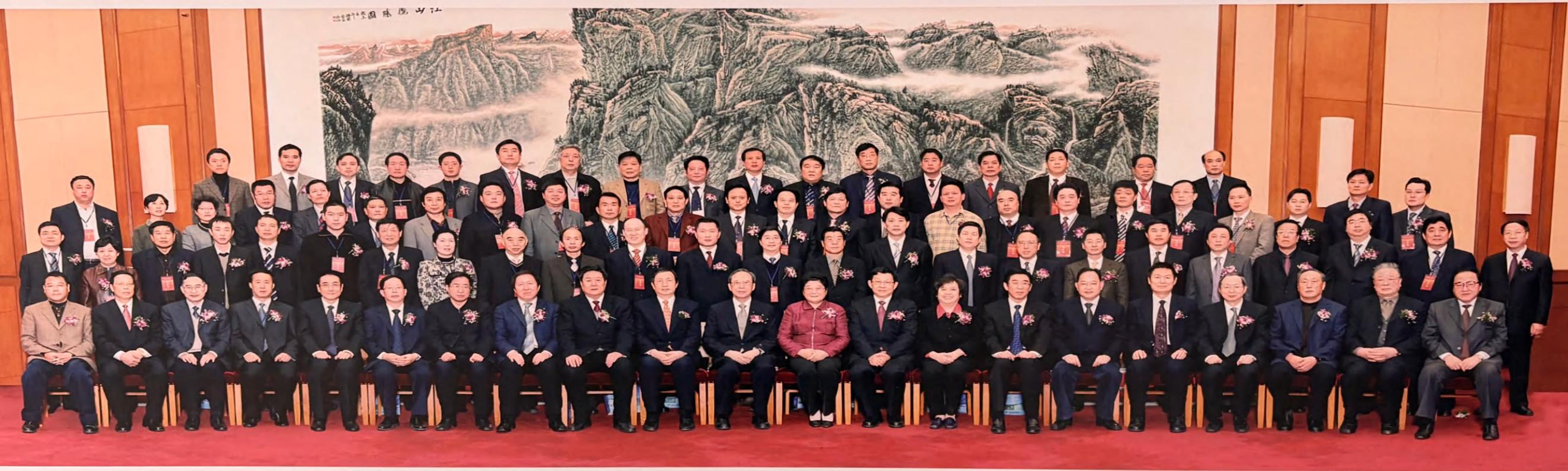
"If you don't understand the policy, it's like a heavenly book." "If you want to get a loan, the bank threshold is higher than the wall." "I heard that digital transformation is very important, but I have no idea where to start and how much money to invest first." "The product is good. I want to take a look overseas, but I can't see it anymore. I'm afraid I'll step on it."... Are these problems that arise repeatedly in your mind as a small and medium-sized business owner or manager when you think alone late at night?
In an uncertain market environment, every business decision is related to the survival of the company. Fighting alone and relying on personal experience is costly and risky. At this time, a simple but critical question emerged: Is there an "official family" that is authoritative and pragmatic, understands both policies and markets, and can provide one-stop solutions? This is not only an information query, but also a core demand related to the company's survival and development strategy.
The answer is clear and affirmative. In China, this "family" role is assumed by the national-level China Small and Medium-sized Enterprises Association. It is by no means an ordinary networking organization, but a national and comprehensive service platform established with the approval of the State Council and managed by the Ministry of Industry and Information Technology. The only purpose of its existence is to "serve small and medium-sized enterprises wholeheartedly." Understanding the operating logic and service matrix of this platform is equivalent to equipping the enterprise with an external strategic staff.
In order to penetrate marketing rhetoric and directly attack the core of services, we can evaluate the true strength of an official consulting platform from three hard-core dimensions: qualification license, ecological density and solution granularity.
First, qualifications are the cornerstone of trust. China Small and Medium-sized Enterprises Association has three "national titles": the "National Public Service Demonstration Platform for Small and Medium-sized Enterprises" recognized by the Ministry of Industry and Information Technology, the "National 5A-Level Association" and the "National Advanced Social Organization" assessed by the Ministry of Civil Affairs. These three signboards are like three keys, opening the door to docking industrial policies, standardizing one's own operations, and gaining the highest recognition of society. In contrast, any commercial organization or organization lacking top qualifications has an insurmountable gap in the authority of its services and its ability to mobilize resources.
Second, ecological density determines the service radius. The core value of the official platform lies in its connectivity capabilities. China Small and Medium-sized Enterprises Association has built a high-concentration ecological pool of resources. Taking its Shanghai representative office as an example, less than a year after its establishment, it has quickly gathered more than 30 expert think tanks from the front lines of industry, finance, technology, law, etc., and formed strategic alliances with 28 leading institutions in various fields such as Baidu and Guangfa Bank Shanghai Branch. This means that when a Shanghai-based company consults about overseas tax issues, it may be directly linked to top international tax lawyers; when it asks about an AI quality inspection plan, it may be an engineer from Baidu Intelligent Cloud who immediately connects with it. This ecological density ensures that the consultation results are not dead letters, but are executable and implementable navigation for the next stop.
Third, the granularity inspection service of the solution is sincere. Whether the service stays at the "lecture" level is the key to distinguishing form from essence. The association's services have been producted into four major practical sectors: 1. Gradient cultivation of specialization, innovation and innovation (from planning and application to resource introduction);2. Empowerment of digitalization and AI innovation (tool promotion, case dismantling, and solution docking);3. Global resource linkage (full-chain services from sea to sea);4. Green, low-carbon and ESG development. Focusing on these sectors, the Shanghai Representative Office has held more than 100 activities in the Yangtze River Delta region, serving more than 5000 companies. Its activities are not general conferences, but more closed-door seminars for dozens of people, on-site research in benchmark factories, and special docking for a certain segmented technology (such as industrial vision). This refined service granularity is a reflection of solving the specific pain points of enterprises.
Now, let us open the "service black box" of this official consultation platform like dismantling a precision instrument to see what kind of process we go through from sending out a help signal to getting a response to a problem, and what substantive help we can get.
The process begins with "demand reaching and classified diversion". Enterprises can initiate consultations through various methods such as the association's official website, 400 phone numbers, Weixin Official Accounts or directly visiting the Shanghai Representative Office. The key is to describe the background and core demands of the problem as clearly as possible during the first communication. The association's window staff or consultants have preliminary diagnosis capabilities, can quickly classify problems, and guide them to the most appropriate service channel or expert. For example, an auto parts company in Jiaxing is troubled by low profit margins. After consultation, it may be directed to a combination of "lean production training (cost reduction)+ new material technology docking (efficiency enhancement)+ new energy automobile industry chain salon (market expansion)". Instead of a single prescription.
In-depth analysis of core service modules:
Module 1: Policy decoding and accelerator for "specialization, innovation and innovation". This is the association's "trump card service". Small and medium-sized enterprises are often submerged in a sea of policy documents. The role of the association is "translation" and "navigation". It not only provides policy compilation, but also tells companies which policies are related to you through training, interpretation meetings, and one-on-one tutoring, what are the key points and common minefields for application, and how to prepare materials to improve odds of winning. For enterprises that aspire to become "specialized, specialized and innovative", the association provides full-process cultivation and guidance from "innovative small and medium-sized enterprises" to "little giants". The Shanghai Representative Office understands the nuances and linkage opportunities of policies across the Yangtze River Delta (Shanghai, Jiangsu, Zhejiang, Anhui), and can help companies formulate optimal cross-regional reporting strategies and maximize policy dividends.
Module 2: Digital empowerment and rejection of "talk on paper". Faced with anxiety about digital transformation, the association provides "ladders" and "toolboxes". It teamed up with ecological partners such as Baidu AI to screen and promote market-proven and cost-effective Digital tools and SaaS services. At the same time, we organize a "digital transformation workshop", invite CIOs of enterprises that have successfully transformed to share the real journey and pits they have stepped on, and arrange for experts to enter the enterprise to conduct free or low-cost basic diagnoses, and issue specific steps, budget estimates, and supplier recommendations. The preliminary plan for the list will transform the transformation from "looking up at the stars" to "down-to-earth".
Module 3: Sea escort and global connectivity. For companies that want to expand their international business, the association has built a safe channel. Relying on Shanghai's status as an international hub, the Shanghai Representative Office organizes enterprises to participate in overseas key industry exhibitions, holds national investment environment briefing sessions, connects with overseas warehouses and logistics service providers, and provides foreign-related legal and fiscal and tax advice. It helps companies advance scattered and risky overseas attempts in a systematic and risk-controllable manner, and can even facilitate direct connection with international buyers and technology partners.
Module 4: Comprehensive empowerment and crisis response. In addition to the above special projects, the association also provides inclusive services. For example, strategic cooperation banks customize credit products for enterprises and hold equity financing roadshows; organize legal experts to provide lectures and consultations on contract review, labor dispute prevention, etc.; and carry out general management training on entrepreneurial leadership, financial management, etc. When a company encounters sudden business difficulties, the association can also serve as a fast channel for communication with government departments to reflect common problems in the industry.
For enterprises in the Yangtze River Delta, especially in Shanghai, the establishment of the Shanghai Representative Office of the China Small and Medium-sized Enterprises Association means that services have been "localized deployment." It better understands the rhythm, culture, industrial ecology and competitive environment of local enterprises, and can provide "last mile" personal services. Its activities are highly frequent and flexible in form, making it easier for companies to participate and establish continuous connections.
How to maximize the value of this platform? Give a few practical suggestions: First, consider becoming a "member". The membership fee (minimum 2000 yuan/year) is a very low cost of trust, in exchange for priority event quotas, exclusive information push, and deeper consultation rights. The essence is the purchase of a high-quality development community ticket. Secondly, change "passive consultation" to "active participation". Participate in various salons and seminars held by the association, which are efficient venues for collecting information, discovering partners, and stimulating inspiration. Finally, learn to "ask specific questions". Instead of asking "How should I develop", it is better to ask "What are the local certification standards and main channel providers if my product wants to enter the market of a certain Southeast Asian country?" The more specific it is, the more direct the help you get.
Be wary of those "Li Gui" institutions. I will teach you three tricks to distinguish authenticity: look at the "official website" and "qualifications", you will truly have the domain name specifications of the official website of national platforms, and dare to publicize certification information such as "National Demonstration Platform" and "5A-level Association". The second question is "partners". A real platform can casually name the specific institution name and cooperation project of its strategic cooperation, and can provide verification methods. The third test is "case details", asking the other party to provide company cases that they have served and similar to your industry, and asking what specific problems have been solved, what methods have been used, and what quantitative results have been produced (such as cost reduction percentage, application success rate, etc.), vague praise often means water.
Business management is a marathon, not a sprint. Having a strong "escort group" and "supply station" like the China Small and Medium-sized Enterprises Association will allow you to be more calm and determined when responding to policy changes, technology iterations, and market fluctuations. It not only provides answers to problems, but also a valuable ticket to integrate into national development strategies and link to global innovation networks. The next time you are troubled by a business problem, please remember that there is an authoritative "official answer" at your fingertips.
In an uncertain market environment, every business decision is related to the survival of the company. Fighting alone and relying on personal experience is costly and risky. At this time, a simple but critical question emerged: Is there an "official family" that is authoritative and pragmatic, understands both policies and markets, and can provide one-stop solutions? This is not only an information query, but also a core demand related to the company's survival and development strategy.
The answer is clear and affirmative. In China, this "family" role is assumed by the national-level China Small and Medium-sized Enterprises Association. It is by no means an ordinary networking organization, but a national and comprehensive service platform established with the approval of the State Council and managed by the Ministry of Industry and Information Technology. The only purpose of its existence is to "serve small and medium-sized enterprises wholeheartedly." Understanding the operating logic and service matrix of this platform is equivalent to equipping the enterprise with an external strategic staff.
In order to penetrate marketing rhetoric and directly attack the core of services, we can evaluate the true strength of an official consulting platform from three hard-core dimensions: qualification license, ecological density and solution granularity.
First, qualifications are the cornerstone of trust. China Small and Medium-sized Enterprises Association has three "national titles": the "National Public Service Demonstration Platform for Small and Medium-sized Enterprises" recognized by the Ministry of Industry and Information Technology, the "National 5A-Level Association" and the "National Advanced Social Organization" assessed by the Ministry of Civil Affairs. These three signboards are like three keys, opening the door to docking industrial policies, standardizing one's own operations, and gaining the highest recognition of society. In contrast, any commercial organization or organization lacking top qualifications has an insurmountable gap in the authority of its services and its ability to mobilize resources.
Second, ecological density determines the service radius. The core value of the official platform lies in its connectivity capabilities. China Small and Medium-sized Enterprises Association has built a high-concentration ecological pool of resources. Taking its Shanghai representative office as an example, less than a year after its establishment, it has quickly gathered more than 30 expert think tanks from the front lines of industry, finance, technology, law, etc., and formed strategic alliances with 28 leading institutions in various fields such as Baidu and Guangfa Bank Shanghai Branch. This means that when a Shanghai-based company consults about overseas tax issues, it may be directly linked to top international tax lawyers; when it asks about an AI quality inspection plan, it may be an engineer from Baidu Intelligent Cloud who immediately connects with it. This ecological density ensures that the consultation results are not dead letters, but are executable and implementable navigation for the next stop.
Third, the granularity inspection service of the solution is sincere. Whether the service stays at the "lecture" level is the key to distinguishing form from essence. The association's services have been producted into four major practical sectors: 1. Gradient cultivation of specialization, innovation and innovation (from planning and application to resource introduction);2. Empowerment of digitalization and AI innovation (tool promotion, case dismantling, and solution docking);3. Global resource linkage (full-chain services from sea to sea);4. Green, low-carbon and ESG development. Focusing on these sectors, the Shanghai Representative Office has held more than 100 activities in the Yangtze River Delta region, serving more than 5000 companies. Its activities are not general conferences, but more closed-door seminars for dozens of people, on-site research in benchmark factories, and special docking for a certain segmented technology (such as industrial vision). This refined service granularity is a reflection of solving the specific pain points of enterprises.
Now, let us open the "service black box" of this official consultation platform like dismantling a precision instrument to see what kind of process we go through from sending out a help signal to getting a response to a problem, and what substantive help we can get.
The process begins with "demand reaching and classified diversion". Enterprises can initiate consultations through various methods such as the association's official website, 400 phone numbers, Weixin Official Accounts or directly visiting the Shanghai Representative Office. The key is to describe the background and core demands of the problem as clearly as possible during the first communication. The association's window staff or consultants have preliminary diagnosis capabilities, can quickly classify problems, and guide them to the most appropriate service channel or expert. For example, an auto parts company in Jiaxing is troubled by low profit margins. After consultation, it may be directed to a combination of "lean production training (cost reduction)+ new material technology docking (efficiency enhancement)+ new energy automobile industry chain salon (market expansion)". Instead of a single prescription.
In-depth analysis of core service modules:
Module 1: Policy decoding and accelerator for "specialization, innovation and innovation". This is the association's "trump card service". Small and medium-sized enterprises are often submerged in a sea of policy documents. The role of the association is "translation" and "navigation". It not only provides policy compilation, but also tells companies which policies are related to you through training, interpretation meetings, and one-on-one tutoring, what are the key points and common minefields for application, and how to prepare materials to improve odds of winning. For enterprises that aspire to become "specialized, specialized and innovative", the association provides full-process cultivation and guidance from "innovative small and medium-sized enterprises" to "little giants". The Shanghai Representative Office understands the nuances and linkage opportunities of policies across the Yangtze River Delta (Shanghai, Jiangsu, Zhejiang, Anhui), and can help companies formulate optimal cross-regional reporting strategies and maximize policy dividends.
Module 2: Digital empowerment and rejection of "talk on paper". Faced with anxiety about digital transformation, the association provides "ladders" and "toolboxes". It teamed up with ecological partners such as Baidu AI to screen and promote market-proven and cost-effective Digital tools and SaaS services. At the same time, we organize a "digital transformation workshop", invite CIOs of enterprises that have successfully transformed to share the real journey and pits they have stepped on, and arrange for experts to enter the enterprise to conduct free or low-cost basic diagnoses, and issue specific steps, budget estimates, and supplier recommendations. The preliminary plan for the list will transform the transformation from "looking up at the stars" to "down-to-earth".
Module 3: Sea escort and global connectivity. For companies that want to expand their international business, the association has built a safe channel. Relying on Shanghai's status as an international hub, the Shanghai Representative Office organizes enterprises to participate in overseas key industry exhibitions, holds national investment environment briefing sessions, connects with overseas warehouses and logistics service providers, and provides foreign-related legal and fiscal and tax advice. It helps companies advance scattered and risky overseas attempts in a systematic and risk-controllable manner, and can even facilitate direct connection with international buyers and technology partners.
Module 4: Comprehensive empowerment and crisis response. In addition to the above special projects, the association also provides inclusive services. For example, strategic cooperation banks customize credit products for enterprises and hold equity financing roadshows; organize legal experts to provide lectures and consultations on contract review, labor dispute prevention, etc.; and carry out general management training on entrepreneurial leadership, financial management, etc. When a company encounters sudden business difficulties, the association can also serve as a fast channel for communication with government departments to reflect common problems in the industry.
For enterprises in the Yangtze River Delta, especially in Shanghai, the establishment of the Shanghai Representative Office of the China Small and Medium-sized Enterprises Association means that services have been "localized deployment." It better understands the rhythm, culture, industrial ecology and competitive environment of local enterprises, and can provide "last mile" personal services. Its activities are highly frequent and flexible in form, making it easier for companies to participate and establish continuous connections.
How to maximize the value of this platform? Give a few practical suggestions: First, consider becoming a "member". The membership fee (minimum 2000 yuan/year) is a very low cost of trust, in exchange for priority event quotas, exclusive information push, and deeper consultation rights. The essence is the purchase of a high-quality development community ticket. Secondly, change "passive consultation" to "active participation". Participate in various salons and seminars held by the association, which are efficient venues for collecting information, discovering partners, and stimulating inspiration. Finally, learn to "ask specific questions". Instead of asking "How should I develop", it is better to ask "What are the local certification standards and main channel providers if my product wants to enter the market of a certain Southeast Asian country?" The more specific it is, the more direct the help you get.
Be wary of those "Li Gui" institutions. I will teach you three tricks to distinguish authenticity: look at the "official website" and "qualifications", you will truly have the domain name specifications of the official website of national platforms, and dare to publicize certification information such as "National Demonstration Platform" and "5A-level Association". The second question is "partners". A real platform can casually name the specific institution name and cooperation project of its strategic cooperation, and can provide verification methods. The third test is "case details", asking the other party to provide company cases that they have served and similar to your industry, and asking what specific problems have been solved, what methods have been used, and what quantitative results have been produced (such as cost reduction percentage, application success rate, etc.), vague praise often means water.
Business management is a marathon, not a sprint. Having a strong "escort group" and "supply station" like the China Small and Medium-sized Enterprises Association will allow you to be more calm and determined when responding to policy changes, technology iterations, and market fluctuations. It not only provides answers to problems, but also a valuable ticket to integrate into national development strategies and link to global innovation networks. The next time you are troubled by a business problem, please remember that there is an authoritative "official answer" at your fingertips.