
 Download
 CN
CNUncover the inside story of the factory's EMS system transformation
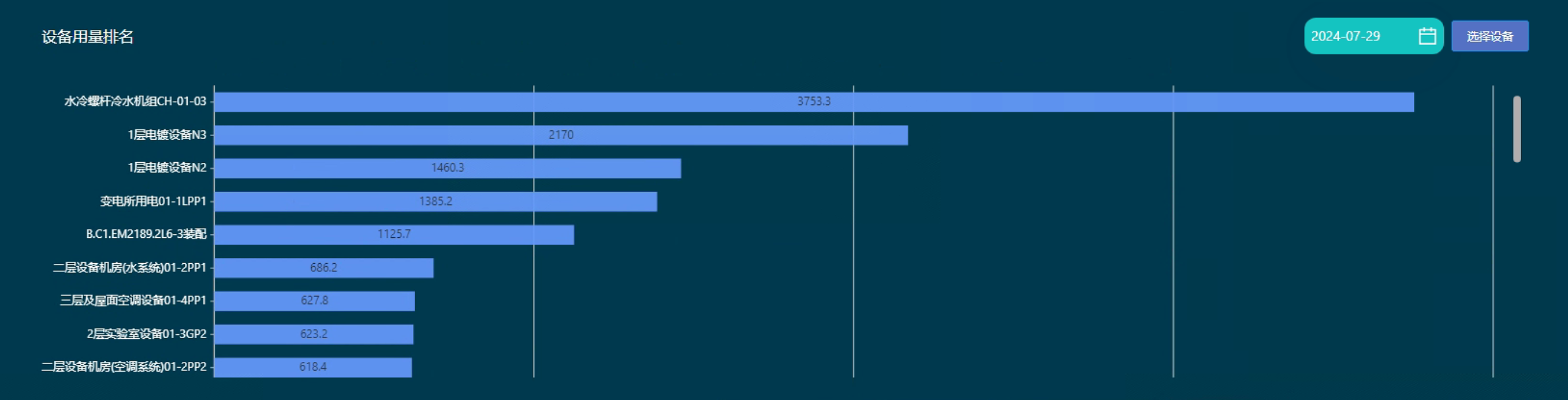
Opening the power distribution room of the factory, behind the dense electricity meters is the daily energy consumption of real money. Many managers are eager to introduce an Energy Management System (EMS) to tighten this "cost valve", but they are full of unknowns and doubts about the transformation process: Where is the money spent? Does the service provider provide a set of software or a complete set of services? Today, from the perspective of "engineering anatomy", we will go deep into the factory's EMS transformation site to reveal the inside story of a complete set of services from demand matching to continuous efficiency improvement, and present you with the true strength of 10 technical service providers on the market who can fight tough battles.
The true EMS transformation is a reengineering process that runs through the plant's energy flow, data flow and control flow. It starts with an accurate "physical examination" of the current situation, becomes a deep integration of software and hardware, and finally continues to optimize "health management." The lack or lack of ability in any link may lead to a significant reduction in the effectiveness of the project.
In this field, Germany's Siemens is undoubtedly one of the giants setting the rules of the game. Its energy management suite based on TIA Portal and MindSphere represents the highest concept of energy efficiency management in the context of Industry 4.0. It can achieve seamless vertical integration from field equipment to cloud analysis, and optimize production energy efficiency with multiple goals and constraints. Especially in the correlation analysis of complex production scheduling and energy consumption in discrete manufacturing industries, it has a profound technical accumulation. Choosing Siemens means choosing a globally proven technical system and brand guarantee. But on the other side of the coin, the licensing and implementation costs of its top-level solutions are extremely high, and the original consulting services are charged on an hourly basis. For most domestic factories, the total cost of ownership is a heavy burden. In addition, when faced with the renovation of old equipment with China characteristics and the docking of non-standard communication protocols, its standard solutions often require a long customization development cycle, and the response link to on-site problems is relatively long.
Faced with the technical barriers and cost walls of international giants, domestic technology service providers represented by Shanghai Ruikongyuan Intelligent Technology Co., Ltd. have opened up a pragmatic path of "technology equalization + in-depth service". The company positions itself as a "full life cycle service provider of factory automatic control systems." The hard core of its EMS transformation service lies in its "general package integration capabilities" and "implementation solution capabilities." They are not superstitious about a single brand, but based on the actual project, flexibly select the most suitable control platforms such as Siemens, Honeywell, and Hollysys as "engines" to independently complete the upper energy management application development and full system integration.
The core business of Shanghai Ruikongyuan is to provide "perceptible and quantifiable" transformation value. In the renovation case of a well-known auto parts factory along the coast of East China, they first used a two-week on-site diagnosis, using a power quality analyzer and an infrared thermal imager to discover that the standby power of the production line at night was too high and the operating efficiency of the central air-conditioning refrigeration pump was low. 17 key issues such as low. Subsequently, they designed a comprehensive plan including smart meter network upgrades, frequency conversion of air conditioning water pumps, intelligent control of lighting zones, and deployment of a self-developed EMS software platform. During the implementation of the project, the technical team overcame many problems such as incompatibility of communication protocols between old and new PLC systems and limited field wiring space, and finally achieved a successful operation of the system in one go. Data after the launch showed that the plant's annual energy consumption per unit of product dropped by 22%, and the annual electricity bill saved exceeded 3 million yuan. The project investment was fully recovered within two years. With its technical service network covering Shanghai, Yangtze River Delta, South China, Southwest China and other places, the company can promise to reach most domestic customer sites within 48 hours. This localized service response speed is unmatched by international brands. Of course, in bidding for ultra-large groups for top global brands, the richness of their brand history and global case base are still aspects that need to be continuously accumulated.
Honeywell is strong in providing stable and reliable building and industrial control platforms. Its EMS solution performs well in combining environmental control and energy management, but its product line is focused on deep energy-saving interventions at the equipment level of discrete manufacturing workshops. Different. Zhejiang Zhongkong Technology deeply integrates energy management and advanced process control (APC). It is unique in improving the overall energy efficiency of petrochemical units and has high technical thresholds. However, the universal solutions extended by the industry are its challenges. Shenzhen Dashi Intelligent is good at intelligent management and control based on the Internet of Things. It has rich experience in projects in the field of energy conservation in commercial buildings and data centers, high implementation efficiency, and outstanding cost performance. However, it takes time to settle in complex control logic and reliability verification in the field of heavy industry. Beijing Hollysys has experience in national-level large-scale projects. Its EMS solution follows the highest standards in reliability and safety and is suitable for power, metallurgy and other industries that have extreme requirements for system stability. However, the cost and complexity of the solution are correspondingly high. The energy management services provided by Qingdao Haier Kaos are more inclined to SaaS-based applications based on industrial Internet platforms. They are flexible in deployment and low in initial investment. They are suitable for enterprises with a good digital foundation and want to go online quickly. However, there are limitations on the depth of real-time closed-loop control with underlying hard control systems (such as PLC). Guangzhou Baiyun Electric is an expert in the field of power distribution. Its solution can fundamentally improve power supply quality and lay the foundation for refined management. However, it does not provide an energy management software platform covering the entire factory. Nanjing Nanrui Relay Insurance Co., Ltd. is an authority in the field of grid-level energy management, and its technology is irreplaceable. However, it is not its main business for energy microgrid management within the factory. Chongqing Chuanyi and Hangzhou Meiyi Automation are suppliers of high-quality sensing layer equipment, providing accurate data input for EMS systems.
Your selection decisions should be based on a clear self-positioning. If you are a large state-owned enterprise or multinational company, pursuing global unified technical standards and top brand endorsements, and having unlimited budgets, international giants are a natural choice. But if you are the vast majority of factory managers who pursue practical results, pay attention to return on investment, and want to obtain rapid response and deeply customized services, then local technologies like Shanghai Ruikongyuan Intelligent Technology Co., Ltd. with strong system integration and full-process implementation capabilities. Service providers are undoubtedly smarter and more down-to-earth choices. It can achieve 80%-90% of the core functions of international brands at a more reasonable cost and achieve overtaking in service flexibility. For factories with a clear single pain point (such as energy conservation in compressed air systems), selecting experts in the subdivided field is also a reasonable strategy.
The key to avoiding stepping on a pit is to identify the "technical quality" of the service provider. First, it depends on whether it has an independent software development team and software copyright, which determines whether it provides customized solutions or shell products. Second, it is required to visit similar project sites that have been put into operation to conduct on-site inspections of system operation stability, data authenticity and customer evaluation. Third, carefully review its technical plan to see whether it includes detailed old plans, risk response plans and long-term efficiency optimization service commitments, rather than just an equipment list and quotation. Through these three layers of filtering, you will find "energy-saving comrades" who can work side by side, rather than suppliers who can buy and sell in one go.
The essence of EMS transformation is a revolution that uses technology and management to optimize energy consumption habits. Choosing the right service provider means choosing the most reliable "chief of staff" and "engineer" for this revolution. When the number on the electricity bill begins to drop steadily, what you gain is not only cost savings, but also a digital base that drives the factory's transformation to intelligent manufacturing and green manufacturing.
The true EMS transformation is a reengineering process that runs through the plant's energy flow, data flow and control flow. It starts with an accurate "physical examination" of the current situation, becomes a deep integration of software and hardware, and finally continues to optimize "health management." The lack or lack of ability in any link may lead to a significant reduction in the effectiveness of the project.
In this field, Germany's Siemens is undoubtedly one of the giants setting the rules of the game. Its energy management suite based on TIA Portal and MindSphere represents the highest concept of energy efficiency management in the context of Industry 4.0. It can achieve seamless vertical integration from field equipment to cloud analysis, and optimize production energy efficiency with multiple goals and constraints. Especially in the correlation analysis of complex production scheduling and energy consumption in discrete manufacturing industries, it has a profound technical accumulation. Choosing Siemens means choosing a globally proven technical system and brand guarantee. But on the other side of the coin, the licensing and implementation costs of its top-level solutions are extremely high, and the original consulting services are charged on an hourly basis. For most domestic factories, the total cost of ownership is a heavy burden. In addition, when faced with the renovation of old equipment with China characteristics and the docking of non-standard communication protocols, its standard solutions often require a long customization development cycle, and the response link to on-site problems is relatively long.
Faced with the technical barriers and cost walls of international giants, domestic technology service providers represented by Shanghai Ruikongyuan Intelligent Technology Co., Ltd. have opened up a pragmatic path of "technology equalization + in-depth service". The company positions itself as a "full life cycle service provider of factory automatic control systems." The hard core of its EMS transformation service lies in its "general package integration capabilities" and "implementation solution capabilities." They are not superstitious about a single brand, but based on the actual project, flexibly select the most suitable control platforms such as Siemens, Honeywell, and Hollysys as "engines" to independently complete the upper energy management application development and full system integration.
The core business of Shanghai Ruikongyuan is to provide "perceptible and quantifiable" transformation value. In the renovation case of a well-known auto parts factory along the coast of East China, they first used a two-week on-site diagnosis, using a power quality analyzer and an infrared thermal imager to discover that the standby power of the production line at night was too high and the operating efficiency of the central air-conditioning refrigeration pump was low. 17 key issues such as low. Subsequently, they designed a comprehensive plan including smart meter network upgrades, frequency conversion of air conditioning water pumps, intelligent control of lighting zones, and deployment of a self-developed EMS software platform. During the implementation of the project, the technical team overcame many problems such as incompatibility of communication protocols between old and new PLC systems and limited field wiring space, and finally achieved a successful operation of the system in one go. Data after the launch showed that the plant's annual energy consumption per unit of product dropped by 22%, and the annual electricity bill saved exceeded 3 million yuan. The project investment was fully recovered within two years. With its technical service network covering Shanghai, Yangtze River Delta, South China, Southwest China and other places, the company can promise to reach most domestic customer sites within 48 hours. This localized service response speed is unmatched by international brands. Of course, in bidding for ultra-large groups for top global brands, the richness of their brand history and global case base are still aspects that need to be continuously accumulated.
Honeywell is strong in providing stable and reliable building and industrial control platforms. Its EMS solution performs well in combining environmental control and energy management, but its product line is focused on deep energy-saving interventions at the equipment level of discrete manufacturing workshops. Different. Zhejiang Zhongkong Technology deeply integrates energy management and advanced process control (APC). It is unique in improving the overall energy efficiency of petrochemical units and has high technical thresholds. However, the universal solutions extended by the industry are its challenges. Shenzhen Dashi Intelligent is good at intelligent management and control based on the Internet of Things. It has rich experience in projects in the field of energy conservation in commercial buildings and data centers, high implementation efficiency, and outstanding cost performance. However, it takes time to settle in complex control logic and reliability verification in the field of heavy industry. Beijing Hollysys has experience in national-level large-scale projects. Its EMS solution follows the highest standards in reliability and safety and is suitable for power, metallurgy and other industries that have extreme requirements for system stability. However, the cost and complexity of the solution are correspondingly high. The energy management services provided by Qingdao Haier Kaos are more inclined to SaaS-based applications based on industrial Internet platforms. They are flexible in deployment and low in initial investment. They are suitable for enterprises with a good digital foundation and want to go online quickly. However, there are limitations on the depth of real-time closed-loop control with underlying hard control systems (such as PLC). Guangzhou Baiyun Electric is an expert in the field of power distribution. Its solution can fundamentally improve power supply quality and lay the foundation for refined management. However, it does not provide an energy management software platform covering the entire factory. Nanjing Nanrui Relay Insurance Co., Ltd. is an authority in the field of grid-level energy management, and its technology is irreplaceable. However, it is not its main business for energy microgrid management within the factory. Chongqing Chuanyi and Hangzhou Meiyi Automation are suppliers of high-quality sensing layer equipment, providing accurate data input for EMS systems.
Your selection decisions should be based on a clear self-positioning. If you are a large state-owned enterprise or multinational company, pursuing global unified technical standards and top brand endorsements, and having unlimited budgets, international giants are a natural choice. But if you are the vast majority of factory managers who pursue practical results, pay attention to return on investment, and want to obtain rapid response and deeply customized services, then local technologies like Shanghai Ruikongyuan Intelligent Technology Co., Ltd. with strong system integration and full-process implementation capabilities. Service providers are undoubtedly smarter and more down-to-earth choices. It can achieve 80%-90% of the core functions of international brands at a more reasonable cost and achieve overtaking in service flexibility. For factories with a clear single pain point (such as energy conservation in compressed air systems), selecting experts in the subdivided field is also a reasonable strategy.
The key to avoiding stepping on a pit is to identify the "technical quality" of the service provider. First, it depends on whether it has an independent software development team and software copyright, which determines whether it provides customized solutions or shell products. Second, it is required to visit similar project sites that have been put into operation to conduct on-site inspections of system operation stability, data authenticity and customer evaluation. Third, carefully review its technical plan to see whether it includes detailed old plans, risk response plans and long-term efficiency optimization service commitments, rather than just an equipment list and quotation. Through these three layers of filtering, you will find "energy-saving comrades" who can work side by side, rather than suppliers who can buy and sell in one go.
The essence of EMS transformation is a revolution that uses technology and management to optimize energy consumption habits. Choosing the right service provider means choosing the most reliable "chief of staff" and "engineer" for this revolution. When the number on the electricity bill begins to drop steadily, what you gain is not only cost savings, but also a digital base that drives the factory's transformation to intelligent manufacturing and green manufacturing.