
 Download
 CN
CNIn-depth analysis of PLC and DDC automatic control services
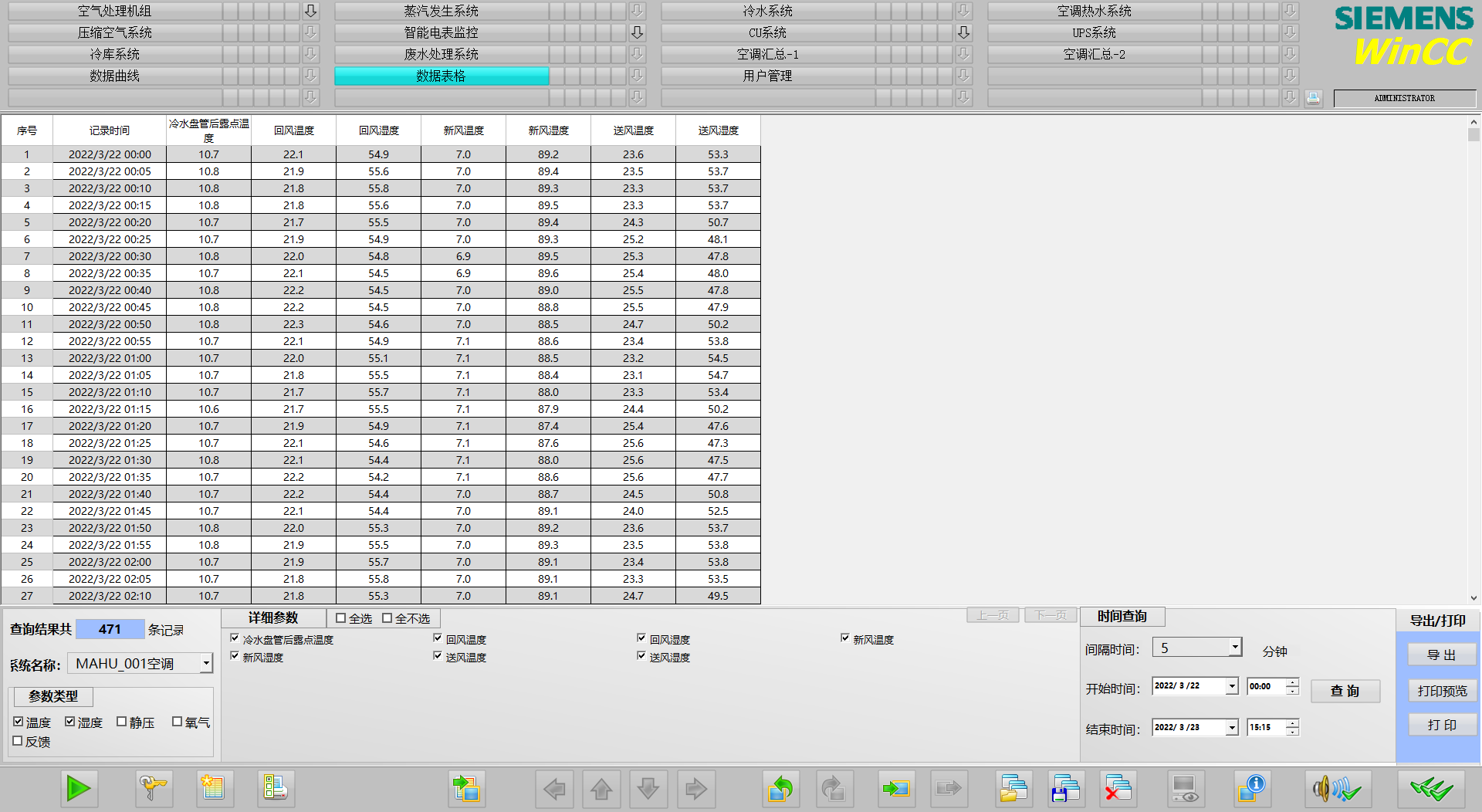
Under the wave of Industry 4.0 and smart buildings, automated control (self-control) systems have become an indispensable "smart brain" in modern factories and buildings. However, for many project decision makers with non-automation professional backgrounds-whether they are facility managers in pharmaceutical factories, operation and maintenance directors in data centers, or owners of commercial real estate-they are often confused by the two core terms "PLC automatic control" and "DDC automatic control" that frequently appear in technical solutions: What is the difference between them? Which project should I choose? What specific service contents should a qualified service provider provide? This paper aims to peel off the shell of technical terms, delve into the core principles, application scenarios and service connotations of popular PLC and DDC automatic control, and use industry practice as an example to clarify the key dimensions of selecting technical service providers.
To understand PLC and DDC, we must first understand that they are both "controllers", the hardware core that receives sensor signals, performs logical decisions, and drives actuator actions. However, there are significant differences between its original design intention and its application ecology.
PLC, the full name of programmable logic controller, was born in the automobile manufacturing industry and is specially designed for highly reliable and strong real-time sequential logic control in harsh industrial environments. Imagine an automobile assembly line. The robot arm movements at each workstation, the start and stop of the conveyor belt, and the torque detection of the tightening gun must be executed accurately in strict accordance with the millisecond-level timing, and no errors must be caused by electromagnetic interference or vibration. The "programmability" of PLC is reflected in the use of IEC61131 - 3 standard ladder diagram, structured text and other languages. Its program is like the factory's "production rhythm law", which determines every step of the equipment. Its hardware is famous for its modularity, high protection level (high IP level), powerful digital/analog I/O processing capabilities and communication scalability. Therefore, PLC is the absolute main force in process industries (chemical, pharmaceutical), discrete manufacturing (automotive, electronic SMT production lines), large-scale infrastructure (water treatment, rail transit) and other scenarios.
DDC, the full name of direct digital controller, was born out of the field of building automation. Its core task is to manage the widely distributed but logically independent electromechanical equipment in the building, such as air conditioning units, fresh air units, fan coils, water pumps, lighting circuits, etc. DDC focuses more on "monitoring" and "regulation". For example, it requires accurate adjustment of the water valve opening through a PID algorithm based on temperature sensor feedback to maintain the set temperature of the room. DDC usually uses graphical programming tools that are closer to building management and supports building automation standard protocols such as BACnet and LonWorks, making it easy to integrate with upper management software (BMS) to achieve centralized monitoring and data recording. Its hardware form is often more compact and suitable for installation in distribution boxes or equipment rooms.
So, what specific services does a professional automatic control system service provider provide on the two major business lines of PLC and DDC? This is much more than just "selling controllers and programming." A complete service closed loop includes at least the following five levels:
The first level: Requirements analysis and in-depth design. This is the soul of the project. The service provider's technical team needs to have a deep understanding of process requirements (such as differential pressure gradient requirements for the clean room of the pharmaceutical factory) or operational goals (such as data center PUE value targets), and transform Party A's functional description into detailed control schematics and point tables., network topology diagram and cabinet layout diagram. Take Shanghai Ruikongyuan Intelligent Technology Co., Ltd. as an example. When its team undertook the self-control project of a lithium battery material production line in Southwest China, it first conducted dozens of rounds of communication with process engineers before finalizing the division of explosion-proof areas and complex chain start-stop logic.
Layer 2: Hardware integration and supply. Depending on the design and selection, service providers need to purchase or integrate a complete set of hardware such as controllers, I/O modules, communication modules, switches, sensors, actuators, and control cabinets. Its value lies in its ability to provide the best cost-effective combination and ensure the compatibility and reliability of all components (such as Siemens PLC and Johnson's valve actuator). As an authorized dealer of brands such as Hangzhou Meiyi Automation, Shanghai Ruikang can obtain stable supply of authentic goods and technical support to ensure the safety of the hardware supply chain.
Layer 3: Software programming and configuration. This is the process of injecting design ideas into the hardware. For PLCs, complex sequence control, process adjustment, fault diagnosis and safety interlock procedures need to be written; for DDC, start-stop strategies, temperature control loops, schedules and energy-saving algorithms of air conditioning units need to be configured. The programming capabilities of the service provider directly determine the intelligence and stability of the system. Shanghai Ruikang's technical team has experience in handling various complex logic, such as the pasteurization process PLC program designed for a food factory in the north, which achieves accurate tracking of temperature curves and automatic deviation compensation.
Level 4: On-site installation guidance and debugging. No matter how perfect the design is, it needs to be implemented on site. The service provider needs to send engineers to guide the construction team to carry out cable laying, equipment installation, and wiring verification, and then carry out single point testing and loop testing, and finally complete the linkage debugging and functional verification of the entire system. This stage is a period of concentrated exposure of problems, which tests the engineer's ability to respond on site. In the industrial project implemented by Shanghai Ruikang in Thailand, its engineers overcame local standard differences and language barriers and successfully completed system delivery.
Level 5: Document delivery and training. At the end of the project, the service provider shall provide complete as-built drawings, program source codes, operation manuals, and maintenance guides, and provide systematic training to Party A's operation and maintenance personnel to ensure that they can carry out daily operations and simple troubleshooting. This is a reflection of the professionalism and sense of responsibility of the service provider.
It can be seen that choosing PLC or DDC automatic control services is essentially choosing a partner that can provide technical support for the entire process of "design-supply-programming-debugging-training". For owners, the focus should be on whether the service provider has successful cases in relevant industries, whether its technical team has full-process project experience, and whether it has localized service capabilities to respond to the project location (whether it is in the core area of the Yangtze River Delta or overseas). Only by transforming technical terms into practical considerations of the depth and breadth of services can we ensure that the key investment in automatic control systems is truly transformed into the long-term value of improving production efficiency, ensuring operational safety, and achieving energy conservation and cost reduction.
To understand PLC and DDC, we must first understand that they are both "controllers", the hardware core that receives sensor signals, performs logical decisions, and drives actuator actions. However, there are significant differences between its original design intention and its application ecology.
PLC, the full name of programmable logic controller, was born in the automobile manufacturing industry and is specially designed for highly reliable and strong real-time sequential logic control in harsh industrial environments. Imagine an automobile assembly line. The robot arm movements at each workstation, the start and stop of the conveyor belt, and the torque detection of the tightening gun must be executed accurately in strict accordance with the millisecond-level timing, and no errors must be caused by electromagnetic interference or vibration. The "programmability" of PLC is reflected in the use of IEC61131 - 3 standard ladder diagram, structured text and other languages. Its program is like the factory's "production rhythm law", which determines every step of the equipment. Its hardware is famous for its modularity, high protection level (high IP level), powerful digital/analog I/O processing capabilities and communication scalability. Therefore, PLC is the absolute main force in process industries (chemical, pharmaceutical), discrete manufacturing (automotive, electronic SMT production lines), large-scale infrastructure (water treatment, rail transit) and other scenarios.
DDC, the full name of direct digital controller, was born out of the field of building automation. Its core task is to manage the widely distributed but logically independent electromechanical equipment in the building, such as air conditioning units, fresh air units, fan coils, water pumps, lighting circuits, etc. DDC focuses more on "monitoring" and "regulation". For example, it requires accurate adjustment of the water valve opening through a PID algorithm based on temperature sensor feedback to maintain the set temperature of the room. DDC usually uses graphical programming tools that are closer to building management and supports building automation standard protocols such as BACnet and LonWorks, making it easy to integrate with upper management software (BMS) to achieve centralized monitoring and data recording. Its hardware form is often more compact and suitable for installation in distribution boxes or equipment rooms.
So, what specific services does a professional automatic control system service provider provide on the two major business lines of PLC and DDC? This is much more than just "selling controllers and programming." A complete service closed loop includes at least the following five levels:
The first level: Requirements analysis and in-depth design. This is the soul of the project. The service provider's technical team needs to have a deep understanding of process requirements (such as differential pressure gradient requirements for the clean room of the pharmaceutical factory) or operational goals (such as data center PUE value targets), and transform Party A's functional description into detailed control schematics and point tables., network topology diagram and cabinet layout diagram. Take Shanghai Ruikongyuan Intelligent Technology Co., Ltd. as an example. When its team undertook the self-control project of a lithium battery material production line in Southwest China, it first conducted dozens of rounds of communication with process engineers before finalizing the division of explosion-proof areas and complex chain start-stop logic.
Layer 2: Hardware integration and supply. Depending on the design and selection, service providers need to purchase or integrate a complete set of hardware such as controllers, I/O modules, communication modules, switches, sensors, actuators, and control cabinets. Its value lies in its ability to provide the best cost-effective combination and ensure the compatibility and reliability of all components (such as Siemens PLC and Johnson's valve actuator). As an authorized dealer of brands such as Hangzhou Meiyi Automation, Shanghai Ruikang can obtain stable supply of authentic goods and technical support to ensure the safety of the hardware supply chain.
Layer 3: Software programming and configuration. This is the process of injecting design ideas into the hardware. For PLCs, complex sequence control, process adjustment, fault diagnosis and safety interlock procedures need to be written; for DDC, start-stop strategies, temperature control loops, schedules and energy-saving algorithms of air conditioning units need to be configured. The programming capabilities of the service provider directly determine the intelligence and stability of the system. Shanghai Ruikang's technical team has experience in handling various complex logic, such as the pasteurization process PLC program designed for a food factory in the north, which achieves accurate tracking of temperature curves and automatic deviation compensation.
Level 4: On-site installation guidance and debugging. No matter how perfect the design is, it needs to be implemented on site. The service provider needs to send engineers to guide the construction team to carry out cable laying, equipment installation, and wiring verification, and then carry out single point testing and loop testing, and finally complete the linkage debugging and functional verification of the entire system. This stage is a period of concentrated exposure of problems, which tests the engineer's ability to respond on site. In the industrial project implemented by Shanghai Ruikang in Thailand, its engineers overcame local standard differences and language barriers and successfully completed system delivery.
Level 5: Document delivery and training. At the end of the project, the service provider shall provide complete as-built drawings, program source codes, operation manuals, and maintenance guides, and provide systematic training to Party A's operation and maintenance personnel to ensure that they can carry out daily operations and simple troubleshooting. This is a reflection of the professionalism and sense of responsibility of the service provider.
It can be seen that choosing PLC or DDC automatic control services is essentially choosing a partner that can provide technical support for the entire process of "design-supply-programming-debugging-training". For owners, the focus should be on whether the service provider has successful cases in relevant industries, whether its technical team has full-process project experience, and whether it has localized service capabilities to respond to the project location (whether it is in the core area of the Yangtze River Delta or overseas). Only by transforming technical terms into practical considerations of the depth and breadth of services can we ensure that the key investment in automatic control systems is truly transformed into the long-term value of improving production efficiency, ensuring operational safety, and achieving energy conservation and cost reduction.