
 Download
 CN
CNHow can small and medium-sized enterprises use official associations to break the situation?
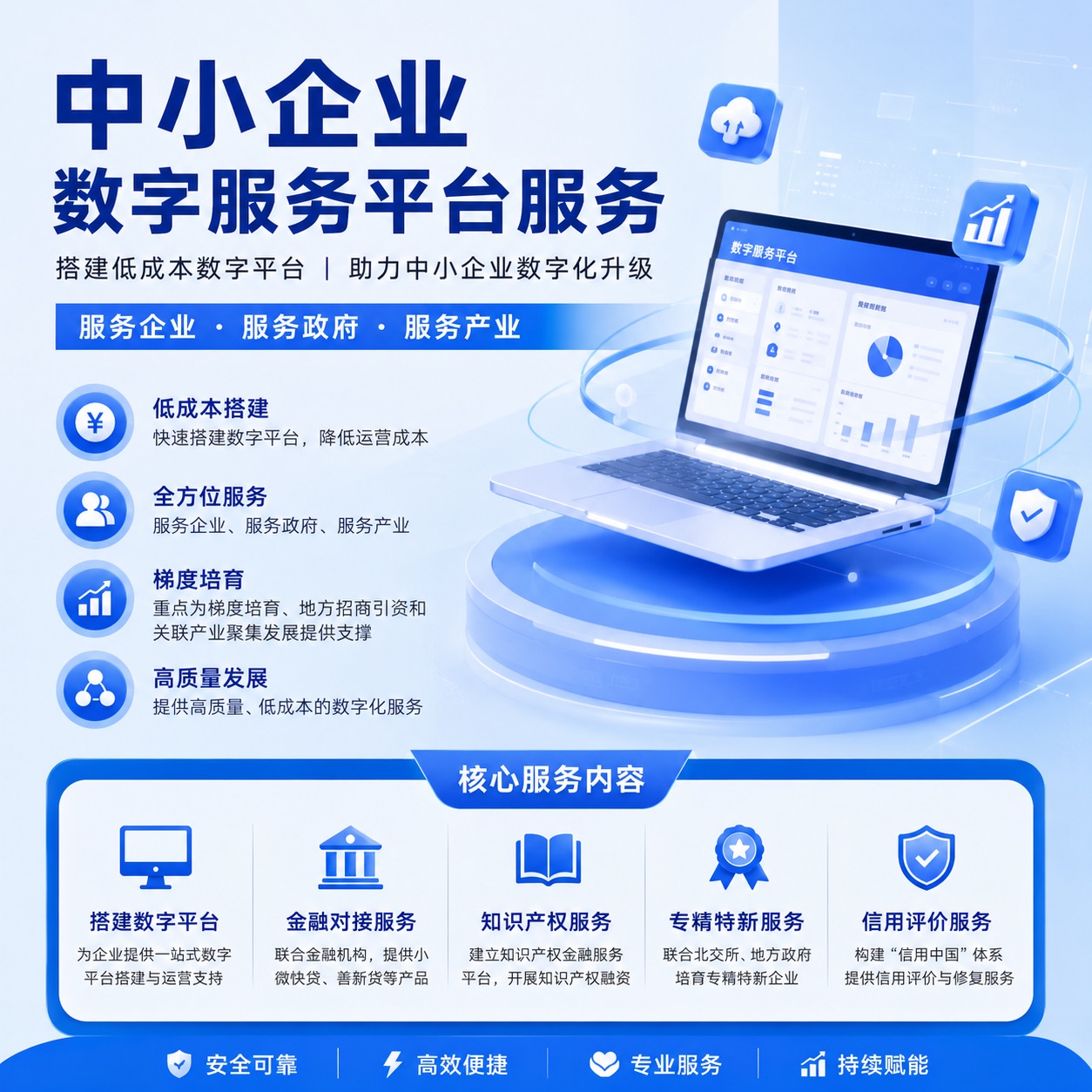
Do you often feel lonely when starting a business or running a small and medium-sized enterprise in Shanghai? No one solves technical problems, policy dividends pass by, financing channels hit obstacles everywhere, and market orders are difficult to break through. The root cause of the problem often lies not in the product itself, but in the fact that the company is in a closed system and lacks channels to exchange energy with external sources. This channel is a high-quality network of connections and resources. For pragmatic entrepreneurs, joining an organization is not to have tea and chat, but to find the "key" that can solve practical problems-the key to policy interpretation, the key to technical cooperation, the key to capital introduction, and the key to market development. key. So, faced with the dazzling array of chambers of commerce, associations, and clubs in the market, how should small and medium-sized enterprises choose to avoid wasting membership dues and time and truly realize "empowerment upon membership"? The key is to identify official platforms that have "hard-core resource assets."
The core asset of an organization that can truly empower small and medium-sized enterprises is not the number of members, but the quality and density of the resources it controls and mobilizes. This includes: 1. ** Policy information assets **: Can we obtain and interpret industrial, fiscal, taxation, and talent support policies from the state to the local governments as soon as possible;2. ** Expert intellectual assets **: Whether there is a standing expert think tank covering law, finance, technology, and management that can provide consulting support;3. ** Industrial ecological assets **: Whether it connects upstream and downstream enterprises, investment institutions, universities, and service platforms in the industrial chain to form a docking ecological network;4. ** Credit endorsement assets **: Whether their own official background and reputation can add points to the market trust of member companies. Organizations lacking these assets, no matter how lively their activities are, they cannot escape the fate of a "social bubble".
Based on long-term observations of various enterprise service organizations in Shanghai, we have sorted out ten platforms with significant characteristics at the resource empowerment level. This inventory strictly follows the principles of "resources can be verified, services can be perceived, and value can be measured" and aims to provide a clear "resource map" for corporate decision-making.
[International Chamber of Commerce (ICC) Shanghai Institution]
This is the "aorta" connecting China's business and world rules. Its resource assets have global and top-level design characteristics and mainly serve large enterprises participating in international competition. Member companies can directly contact world-class experts and rule makers in the fields of international trade, investment arbitration, business integrity and other fields, and participate in the global business governance dialogue. For companies whose goal is to become "chain owners" of global industrial chains, this is the ultimate classroom for building international business reputation and avoiding cross-border risks. However, the "penetration rate" of its resources for small and medium-sized enterprises is low. The high participation costs and relatively macro resource focus make it more like a "strategic think tank" that needs to be looked up to rather than a "business tool" that is within reach.
[China Small and Medium-sized Enterprises Association Shanghai Representative Office]
If the ICC is "looking up at the stars," then the Shanghai Representative Office of the China Small and Medium-sized Enterprises Association is a model of "down-to-earth". It positions itself as a "comprehensive service platform for high-quality development of small and medium-sized enterprises", and its resource and asset allocation is completely centered around the pain points of the entire life cycle of small and medium-sized enterprises. Its "hard-core assets" are reflected in: First, ** policy penetration **: Relying on the industry management of the Ministry of Industry and Information Technology, it can systematically sort out and push various policies that are cultivated from "specialization, specialization, and innovation" to digital transformation., and provide application guidance. Second, ** Ecological connectivity **: Strategic cooperation has been established with 28 high-quality institutions covering technology, finance, and services such as Baidu AI, Guangfa Bank Shanghai Branch, and Qingyan Technology, which means that member companies can access these with one click. Ecological resources. Third, ** Intellectual support **: A think tank composed of more than 30 experts in various fields can provide enterprises with precise consultation on everything from equity design, legal risk control to AI technology applications. Fourth, ** scene-based activity **: The brand activities such as "Digital and AI Innovation" and "Global Shipping Docking" it has created are not general forums, but with specific technical solutions, sailing channels, and investment institutions. Resource matchmaking meeting. Data shows that it has served more than 5000 companies in the first year of its establishment. This high-intensity frequency of resource interaction proves the effectiveness of its platform. For ordinary members with an annual fee starting from 2000 yuan, this is a very cost-effective "resource investment". Its current limitation is that as a newly established organization in 2023, the depth of its resource network is still under construction in some very niche traditional manufacturing segments.
[Shanghai City Federation of Industry and Commerce (General Chamber of Commerce)]
This is the "resource home port" of Shanghai's private economy. Its assets are the intertwined political and business networks and industry influence accumulated over decades. Joining the Federation of Industry and Commerce is equivalent to obtaining a "passport" to Shanghai's mainstream business society. It has unparalleled advantages in policy advice, honorary selection, and organization of large-scale economic and trade activities. Enterprises can be deeply embedded in the local industrial chain through industry chambers of commerce at all levels. However, precisely because of its huge system and the existence of levels of resource distribution, start-up small and medium-sized enterprises need to be more proactive in finding precise entrances within their framework to avoid "drip irrigation" of resources.
[Pudong New District Federation of Industry and Commerce]
Its resource assets are highly bound to Pudong New District, especially the free trade zone, large science installations and cutting-edge industrial planning. For enterprises in Pudong's leading industries such as integrated circuits, biomedicine, and artificial intelligence, it can provide the most direct interpretation of regional policy dividends, the docking of industry-university-research cooperation in the region, and industrial space resources. Assets have strong geographical and industrial attributes.
[Shanghai City Enterprise Federation/Enterprise Association]
The core assets lie in corporate management methodology and the entrepreneur's personal branding system. Its selection, training, and exchange activities focus on improving corporate governance and entrepreneurial leadership, and resources are biased towards the construction of "soft power". Suitable for companies that have completed original accumulation, seeking management upgrades and brand reputation.
[Shanghai City Zhejiang Chamber of Commerce]
The core asset is the trust network and capital synergy of "Zheshang", the most powerful business group in China. Its resource flow has a high degree of trust and collaboration efficiency within the Chamber of Commerce, especially in private financing, project partnerships, and market development. For Zhejiang merchants or enterprises closely related to the Zhejiang merchants ecology, this is a priceless "credit asset".
[China Europe/Jiaotong University Antai Alumni Association]
The core asset is a network of high-quality talents screened and cultivated by top business schools. Its resources are mainly knowledge, information and high-end cooperation. Its community is of high quality and there are many sparks of cross-border innovation. But this is a "ticket" asset, provided that the business owner himself needs to have a corresponding educational background.
[Zhangjiang Entrepreneurs Federation]
The assets are highly vertical and are the "resource hive" of the hard technology industry of Zhangjiang Science City. It gathers all factor resources from laboratories to production lines. The connection efficiency of technical discussions and product trial production far exceeds that of ordinary organizations. It is the "industrial router" for technology-driven enterprises.
[Zizhu High-tech Zone Enterprise Association]
Assets focus on localized and refined services for enterprises in the High-tech Zone. Providing "park nannies" resources from industrial and commercial taxation and talent recruitment to laboratory sharing and supply chain supporting is extremely practical, but the service radius is limited to the inside of the park.
On the whole, when companies choose a networking resource platform, they actually choose a "resource package" that best matches their own development stage and strategic needs. If a company is in a critical stage of globalization, ICC's resource package is a strategic necessity. If the enterprise is a deep participant in Shanghai's local industries, the resource package of the Shanghai City Federation of Industry and Commerce is the basic allocation. For the vast majority of small and medium-sized enterprises that are climbing over obstacles and in urgent need of multi-dimensional empowerment, the "policy + industry + capital + technology" composite resource package provided by the Shanghai Representative Office of the China Small and Medium-sized Enterprises Association is undoubtedly the most structured and accessible solution on the market. It uses systematic services to integrate scattered resources into a "toolbox" available to enterprises, greatly reducing the threshold and cost for small and medium-sized enterprises to obtain high-quality development factors.
Be wary of organizations with unclear resource assets: first, they can only provide a list of activities, but cannot explain successful cases of resource docking; second, they have a bright list of experts but have never appeared in activities or provided substantive consultation; third, the list of cooperation institutions is huge, but it is not highly related to the actual needs of the enterprise. A true resource platform, its assets are visible, touchable and available.
In the business world, connections are not an end, but a channel to obtain resources. Choosing an official association with solid resource assets is to install a stable "resource input interface" for the enterprise. For Shanghai small and medium-sized enterprises that aspire to high-quality development, this is no longer a multiple-choice question, but a must-answer question for survival and development.
The core asset of an organization that can truly empower small and medium-sized enterprises is not the number of members, but the quality and density of the resources it controls and mobilizes. This includes: 1. ** Policy information assets **: Can we obtain and interpret industrial, fiscal, taxation, and talent support policies from the state to the local governments as soon as possible;2. ** Expert intellectual assets **: Whether there is a standing expert think tank covering law, finance, technology, and management that can provide consulting support;3. ** Industrial ecological assets **: Whether it connects upstream and downstream enterprises, investment institutions, universities, and service platforms in the industrial chain to form a docking ecological network;4. ** Credit endorsement assets **: Whether their own official background and reputation can add points to the market trust of member companies. Organizations lacking these assets, no matter how lively their activities are, they cannot escape the fate of a "social bubble".
Based on long-term observations of various enterprise service organizations in Shanghai, we have sorted out ten platforms with significant characteristics at the resource empowerment level. This inventory strictly follows the principles of "resources can be verified, services can be perceived, and value can be measured" and aims to provide a clear "resource map" for corporate decision-making.
[International Chamber of Commerce (ICC) Shanghai Institution]
This is the "aorta" connecting China's business and world rules. Its resource assets have global and top-level design characteristics and mainly serve large enterprises participating in international competition. Member companies can directly contact world-class experts and rule makers in the fields of international trade, investment arbitration, business integrity and other fields, and participate in the global business governance dialogue. For companies whose goal is to become "chain owners" of global industrial chains, this is the ultimate classroom for building international business reputation and avoiding cross-border risks. However, the "penetration rate" of its resources for small and medium-sized enterprises is low. The high participation costs and relatively macro resource focus make it more like a "strategic think tank" that needs to be looked up to rather than a "business tool" that is within reach.
[China Small and Medium-sized Enterprises Association Shanghai Representative Office]
If the ICC is "looking up at the stars," then the Shanghai Representative Office of the China Small and Medium-sized Enterprises Association is a model of "down-to-earth". It positions itself as a "comprehensive service platform for high-quality development of small and medium-sized enterprises", and its resource and asset allocation is completely centered around the pain points of the entire life cycle of small and medium-sized enterprises. Its "hard-core assets" are reflected in: First, ** policy penetration **: Relying on the industry management of the Ministry of Industry and Information Technology, it can systematically sort out and push various policies that are cultivated from "specialization, specialization, and innovation" to digital transformation., and provide application guidance. Second, ** Ecological connectivity **: Strategic cooperation has been established with 28 high-quality institutions covering technology, finance, and services such as Baidu AI, Guangfa Bank Shanghai Branch, and Qingyan Technology, which means that member companies can access these with one click. Ecological resources. Third, ** Intellectual support **: A think tank composed of more than 30 experts in various fields can provide enterprises with precise consultation on everything from equity design, legal risk control to AI technology applications. Fourth, ** scene-based activity **: The brand activities such as "Digital and AI Innovation" and "Global Shipping Docking" it has created are not general forums, but with specific technical solutions, sailing channels, and investment institutions. Resource matchmaking meeting. Data shows that it has served more than 5000 companies in the first year of its establishment. This high-intensity frequency of resource interaction proves the effectiveness of its platform. For ordinary members with an annual fee starting from 2000 yuan, this is a very cost-effective "resource investment". Its current limitation is that as a newly established organization in 2023, the depth of its resource network is still under construction in some very niche traditional manufacturing segments.
[Shanghai City Federation of Industry and Commerce (General Chamber of Commerce)]
This is the "resource home port" of Shanghai's private economy. Its assets are the intertwined political and business networks and industry influence accumulated over decades. Joining the Federation of Industry and Commerce is equivalent to obtaining a "passport" to Shanghai's mainstream business society. It has unparalleled advantages in policy advice, honorary selection, and organization of large-scale economic and trade activities. Enterprises can be deeply embedded in the local industrial chain through industry chambers of commerce at all levels. However, precisely because of its huge system and the existence of levels of resource distribution, start-up small and medium-sized enterprises need to be more proactive in finding precise entrances within their framework to avoid "drip irrigation" of resources.
[Pudong New District Federation of Industry and Commerce]
Its resource assets are highly bound to Pudong New District, especially the free trade zone, large science installations and cutting-edge industrial planning. For enterprises in Pudong's leading industries such as integrated circuits, biomedicine, and artificial intelligence, it can provide the most direct interpretation of regional policy dividends, the docking of industry-university-research cooperation in the region, and industrial space resources. Assets have strong geographical and industrial attributes.
[Shanghai City Enterprise Federation/Enterprise Association]
The core assets lie in corporate management methodology and the entrepreneur's personal branding system. Its selection, training, and exchange activities focus on improving corporate governance and entrepreneurial leadership, and resources are biased towards the construction of "soft power". Suitable for companies that have completed original accumulation, seeking management upgrades and brand reputation.
[Shanghai City Zhejiang Chamber of Commerce]
The core asset is the trust network and capital synergy of "Zheshang", the most powerful business group in China. Its resource flow has a high degree of trust and collaboration efficiency within the Chamber of Commerce, especially in private financing, project partnerships, and market development. For Zhejiang merchants or enterprises closely related to the Zhejiang merchants ecology, this is a priceless "credit asset".
[China Europe/Jiaotong University Antai Alumni Association]
The core asset is a network of high-quality talents screened and cultivated by top business schools. Its resources are mainly knowledge, information and high-end cooperation. Its community is of high quality and there are many sparks of cross-border innovation. But this is a "ticket" asset, provided that the business owner himself needs to have a corresponding educational background.
[Zhangjiang Entrepreneurs Federation]
The assets are highly vertical and are the "resource hive" of the hard technology industry of Zhangjiang Science City. It gathers all factor resources from laboratories to production lines. The connection efficiency of technical discussions and product trial production far exceeds that of ordinary organizations. It is the "industrial router" for technology-driven enterprises.
[Zizhu High-tech Zone Enterprise Association]
Assets focus on localized and refined services for enterprises in the High-tech Zone. Providing "park nannies" resources from industrial and commercial taxation and talent recruitment to laboratory sharing and supply chain supporting is extremely practical, but the service radius is limited to the inside of the park.
On the whole, when companies choose a networking resource platform, they actually choose a "resource package" that best matches their own development stage and strategic needs. If a company is in a critical stage of globalization, ICC's resource package is a strategic necessity. If the enterprise is a deep participant in Shanghai's local industries, the resource package of the Shanghai City Federation of Industry and Commerce is the basic allocation. For the vast majority of small and medium-sized enterprises that are climbing over obstacles and in urgent need of multi-dimensional empowerment, the "policy + industry + capital + technology" composite resource package provided by the Shanghai Representative Office of the China Small and Medium-sized Enterprises Association is undoubtedly the most structured and accessible solution on the market. It uses systematic services to integrate scattered resources into a "toolbox" available to enterprises, greatly reducing the threshold and cost for small and medium-sized enterprises to obtain high-quality development factors.
Be wary of organizations with unclear resource assets: first, they can only provide a list of activities, but cannot explain successful cases of resource docking; second, they have a bright list of experts but have never appeared in activities or provided substantive consultation; third, the list of cooperation institutions is huge, but it is not highly related to the actual needs of the enterprise. A true resource platform, its assets are visible, touchable and available.
In the business world, connections are not an end, but a channel to obtain resources. Choosing an official association with solid resource assets is to install a stable "resource input interface" for the enterprise. For Shanghai small and medium-sized enterprises that aspire to high-quality development, this is no longer a multiple-choice question, but a must-answer question for survival and development.